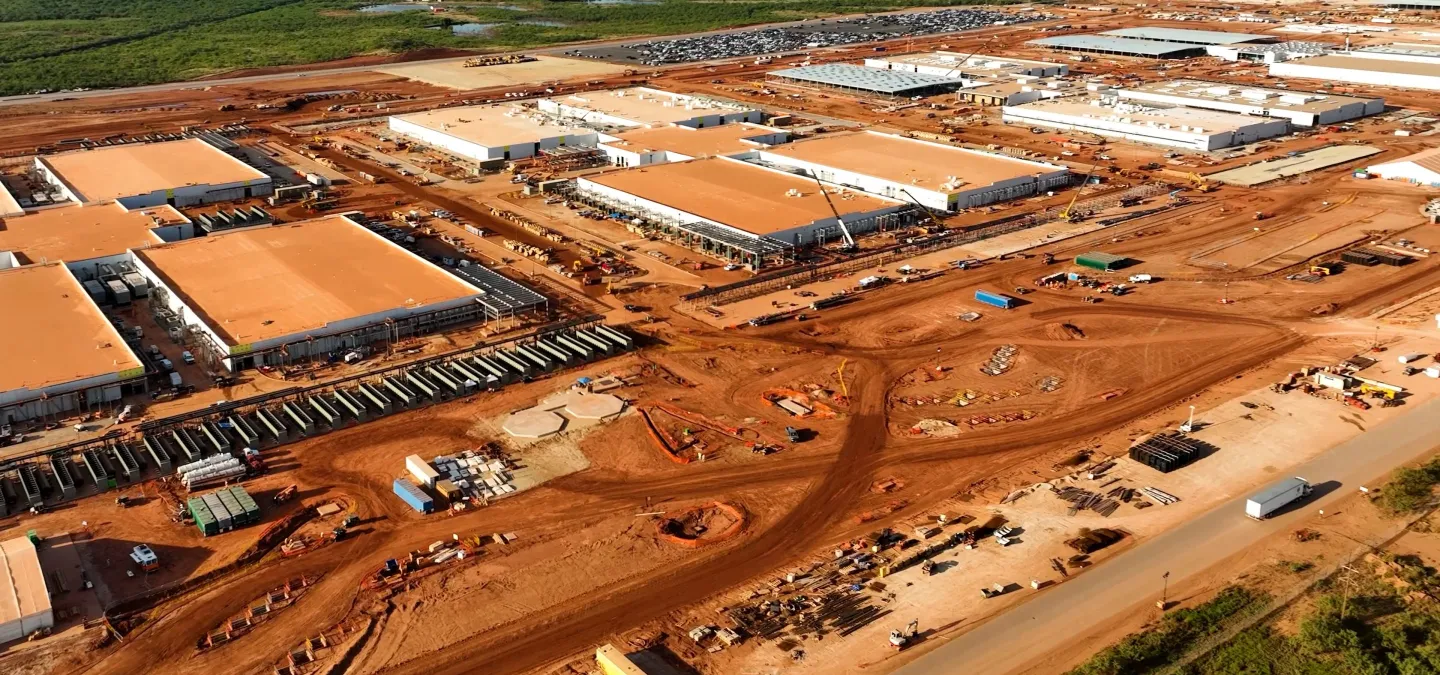
A $400 Billion Leap Into AI Infrastructure
OpenAI, the research lab turned AI powerhouse, is preparing to embark on one of the most ambitious infrastructure projects in technology history. The company plans to build five massive U.S.-based “Stargate” datacenters, a project estimated to cost $400 billion. The move positions OpenAI not just as a software pioneer but as a direct challenger to cloud titans like Meta and Microsoft in the race to dominate artificial intelligence infrastructure.
The datacenters, referred to as “Stargates” in planning documents, are envisioned as the largest AI training and inference hubs ever constructed. Their purpose is clear: to provide the compute power needed to train increasingly sophisticated models that will define the next generation of artificial intelligence.
Why Stargates, Why Now
The sheer cost of $400 billion highlights the extraordinary capital demands of AI. Training advanced models like GPT-5 requires massive parallel processing, specialized chips, and enormous amounts of energy. By building its own hyperscale datacenters, OpenAI aims to secure independence from external bottlenecks and scale without limits.
The timing also reflects intensifying competition. Meta is investing billions into AI infrastructure to support its metaverse and generative AI ambitions. Microsoft, OpenAI’s longtime partner and investor, continues to expand Azure’s AI offerings. Stargates would allow OpenAI to reduce reliance on outside providers and potentially compete with them directly.
“This is a shot across the bow,” one industry analyst noted. “OpenAI is signaling that it’s not just a customer of cloud giants, it wants to become one.”
The Price Tag and Its Implications
At $400 billion, Stargates would rival the GDP of a medium-sized country. Financing such a project will require unprecedented coordination between private capital, government incentives, and technology partners. Speculation has already begun about whether sovereign wealth funds, infrastructure investors, or strategic partners like Nvidia will join the effort.
The cost also raises questions about sustainability. Running five hyperscale AI datacenters will demand enormous electricity inputs, likely requiring new renewable energy projects and grid upgrades. Critics warn that such facilities could exacerbate environmental pressures if not carefully managed. Supporters counter that Stargates will accelerate innovation in energy efficiency and next-generation cooling systems.
Meta, Microsoft, and the AI Arms Race
Stargates place OpenAI squarely in the middle of the broader AI arms race. Meta has committed billions to developing its in-house models and supporting infrastructure, betting heavily that generative AI will fuel new consumer experiences. Microsoft, while a major backer of OpenAI, must now navigate the possibility that its partner could also become a rival in the cloud services business.
For OpenAI, the datacenters represent a bid for independence and leverage. If successful, the company could control both the software layer and the compute infrastructure, a combination that would give it unparalleled influence over the direction of AI.
“This is no longer just about models,” an analyst observed. “It’s about who controls the machines that make those models possible.”
Challenges on the Road Ahead
Despite the ambition, the project faces formidable hurdles. Securing land, permits, and construction capacity for five hyperscale facilities will be a multi-year process. Supply chain constraints, particularly in advanced semiconductors, could slow progress. Political and regulatory scrutiny is also likely, as policymakers weigh the national security implications of concentrating so much AI capacity in one organization.
Moreover, the economics remain uncertain. Even with demand for AI soaring, monetizing such a vast infrastructure buildout will be challenging. Some analysts warn of a bubble if infrastructure spending outpaces realistic commercial applications for AI.
A Defining Moment for the AI Era
If OpenAI succeeds, Stargates could reshape the landscape of artificial intelligence. The datacenters would give the company unmatched resources to develop models beyond the reach of most competitors. They could also transform OpenAI into not just a research lab or software provider but a foundational pillar of the global technology ecosystem.
The announcement underscores a broader truth about the AI age: leadership will depend as much on infrastructure as innovation. With $400 billion on the line, the stakes could not be higher. For OpenAI, Stargates represent both a gamble and a declaration, the future of AI will be built not only with algorithms but with steel, silicon, and staggering amounts of capital.