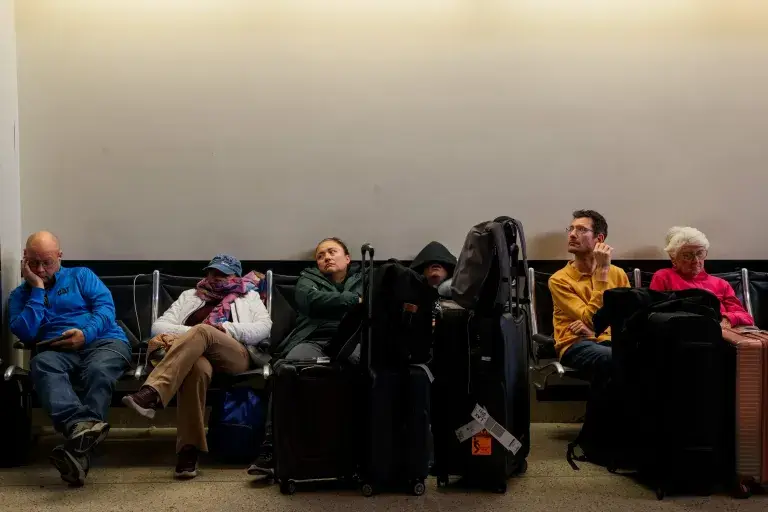
American travelers are heading into the next travel cycle with a new assumption: the flight may not go as planned. A Hopper Technology Solutions survey of more than 1,000 U.S. travelers found that 89% of people expecting to fly in the next 12 months worry that delays or cancellations could affect their trip.
That level of flight disruption anxiety is now shaping booking behavior, not just airport mood. Nearly one in four travelers described themselves as extremely concerned, while flexibility products such as refundable fares, cancellation options and disruption assistance are moving from optional extras to practical safeguards.
Delays Are No Longer Seen as Rare Events
Hopper Technology Solutions said more than 58 million seats scheduled to leave U.S. airports were hit by significant disruption in 2025, compared with 50 million in 2019. The company defines a significant disruption day as one when more than 10% of scheduled departing capacity is either delayed by more than two hours or canceled within a 24-hour period.
Hayley Berg, lead economist at HTS, said these disruption days have become more common since the pandemic, rising to nearly 20 a year across the United States. She said airlines have improved their own operations after difficult summer seasons in 2021 and 2022, but many disruptions now stem from factors carriers cannot fully manage, including weather, air traffic control staffing and airport security constraints.
The survey also shows how poorly many travelers feel served when problems occur. More than half of travelers who experienced a delay of at least two hours or a cancellation said they were not proactively told about it. Instead, they found out through gate agents, airport announcements or their own checks of airline apps.
Only 15% of disrupted travelers said they had a resolution within 30 minutes. Another 43% were still trying to work out their next step more than two hours later, while 7% said they never reached a resolution.
The Cost Is Measured in Cash and Time
The financial impact is becoming harder to ignore. Among travelers who faced a major disruption, 42% paid out of pocket for costs such as hotels, meals or ground transport. Most of those expenses were not reimbursed. Of that group, 60% spent at least $100, and 26% spent more than $200.
Travelers also reported softer losses that do not show up on airline balance sheets. HTS found that 62% lost meaningful time, half experienced added stress or anxiety, 31% lost time with family and one in five missed a planned event or experience.
The findings matter for the broader travel sector because confidence is now part of the purchase decision. Hotels, tour operators, travel platforms and card issuers all depend on consumers feeling that a trip can be managed if the first plan fails. That creates a stronger market for ancillary travel protection products, but it also raises expectations for faster service and clearer rules.
U.S. policy has moved in the same direction. The Department of Transportation says its airline cancellation and delay dashboard shows what services airlines commit to providing when delays or cancellations are within their control. The DOT also finalized rules requiring automatic cash refunds when airlines cancel or significantly change flights and passengers are owed a refund.
Flexibility Is Becoming a Booking Requirement
HTS said 84% of travelers now consider the ability to change or cancel a flight at least somewhat important. For hotels, the figure rises to 87%. Sixty percent said they would likely add a Cancel for Any Reason option when booking a flight, rising to 90% among travelers taking at least 13 trips a year.
The company’s own products, including Disruption Assistance and Cancel for Any Reason, are designed to answer that demand. Disruption Assistance lets travelers who face a qualifying delay or cancellation either rebook on another airline or keep the airline’s replacement itinerary and receive a refund of the original ticket price.
For airlines, the signal is clear. Reliability remains essential, but travelers are increasingly paying for control when reliability fails. This summer, the brands that win loyalty may not be the ones that avoid every disruption, but the ones that help customers recover from them fastest.