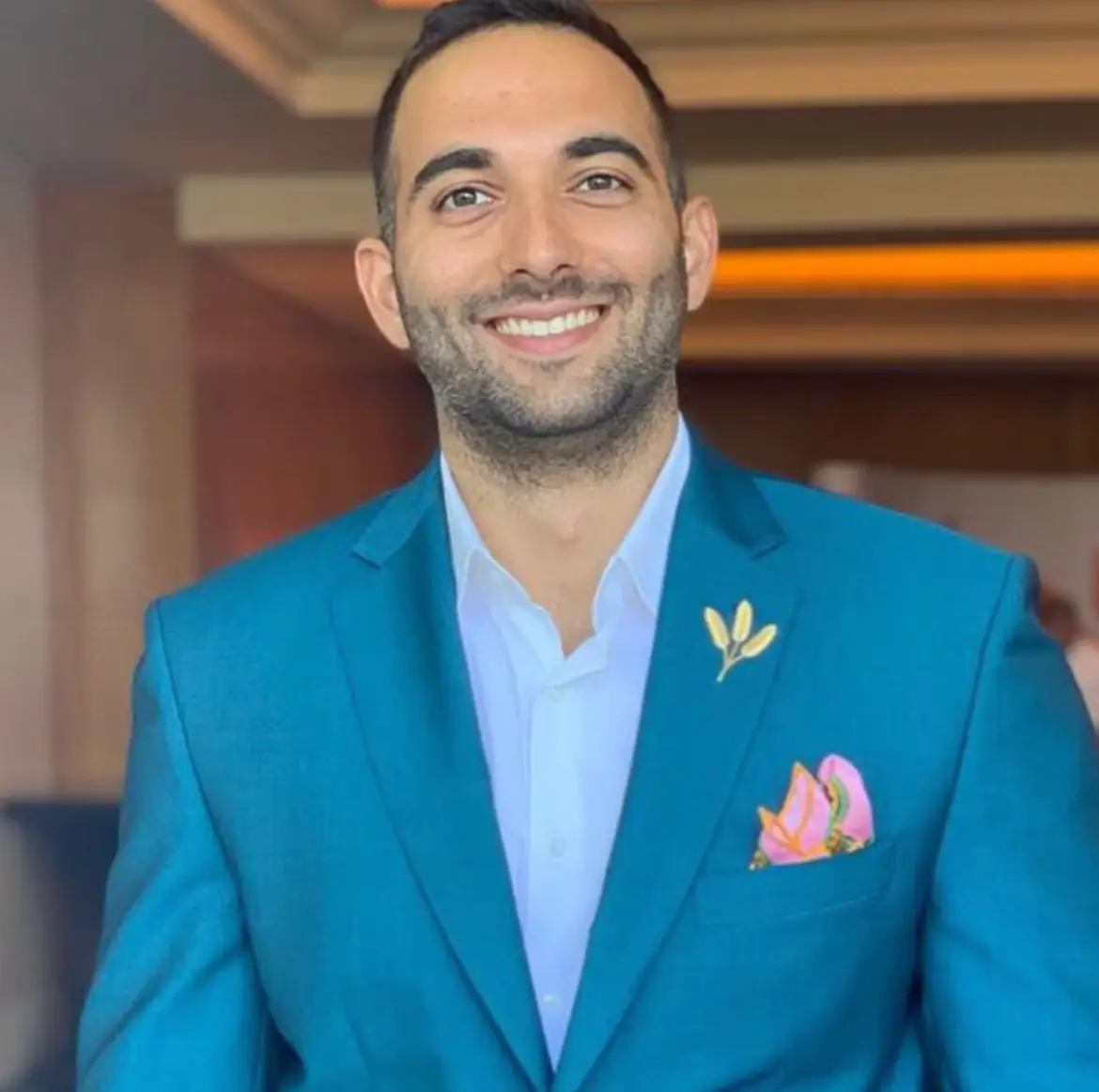
A late-night thought about finding the right outfit for a work trip became the starting point for a business career that now stretches across fashion technology, creator commerce, startup mentoring, and media. Arthur Bizdikian did not arrive in fashion through the traditional route of luxury houses or design schools. His early academic interests were tied to environmental health and public health, with a curiosity about innovation and transformation that eventually pulled him into the startup world.
Today, Bizdikian is part of a new generation of founders trying to change how commerce works online. Through ventures including Lemonade Fashion and Pipp, he has focused on creator-led retail, ethical consumerism, and platforms designed to connect brands more directly with audiences that care about values as much as aesthetics.
Alongside his entrepreneurial work, he has also become a familiar voice within Lebanon’s startup scene through his role hosting the Innovation Park Show on Virgin Radio and mentoring emerging founders. Arthur Bizdikian’s career has unfolded during one of the most difficult economic periods in Lebanon’s modern history, which makes the scale of his ambitions all the more notable.
The Work Trip That Became a Fashion Startup
Before entering fashion technology, Bizdikian spent time working with startup accelerators, innovation programs, and organisations including UNICEF. What pulled him toward entrepreneurship was less about clothing itself and more about the gap he noticed between personal identity and online shopping experiences.
The idea behind Lemonade Fashion emerged after he struggled to recreate the experience of custom tailoring through digital platforms. Growing up around fashion-oriented influences, he understood the emotional side of clothing purchases, particularly the relationship customers build with designers and tailors. That disconnect became the opening for a business idea.
Within a short period, he and his co-founders launched Lemonade Fashion, combining social commerce with custom-made fashion. The company expanded internationally, with designers and collaborators spread across the United States, Europe, the Middle East, and Southeast Asia.
Bizdikian has spoken openly about the fear that came with entering an unfamiliar industry. Fashion was not his original field, and building a startup from Lebanon added another layer of uncertainty. Instead of waiting for certainty, he focused on momentum, pushing the team to make consistent progress even when the path ahead was unclear. That approach helped the company gain early recognition, including startup competition wins in Armenia, where Bizdikian’s Armenian heritage also strengthened his personal ties to the country.
Why Creator Commerce Has Become One of Retail’s Fastest-Growing Sectors
The market Arthur Bizdikian operates in has changed dramatically over the past decade. Creator-led commerce has moved from influencer marketing experiments into a serious global business category. According to Statista, the global influencer marketing market exceeded $24 billion in 2024, driven by brands shifting advertising budgets toward creators with highly engaged audiences.
At the same time, social commerce continues to grow rapidly. Grand View Research has projected substantial expansion in global social commerce over the next decade as younger consumers increasingly discover and purchase products directly through social platforms rather than traditional e-commerce websites.
Fashion and beauty brands have become central players in this shift. Consumers increasingly expect transparency around sourcing, sustainability, and production ethics. McKinsey’s State of Fashion reports have repeatedly highlighted that Gen Z shoppers are placing greater importance on brand values, authenticity, and community connection when making purchasing decisions.
That creates opportunities for platforms like Pipp, which focus on creator-driven discovery while also emphasising values-based commerce. Yet it also creates difficult operational challenges. Creator loyalty can be unpredictable, customer acquisition costs continue to rise, and platforms must compete against giant ecosystems built by TikTok, Meta, Amazon, and Shopify.
For founders operating from smaller startup markets like Lebanon, additional barriers exist. Currency instability, limited venture capital access, and regional economic pressures make scaling considerably harder than in Silicon Valley or London. Despite this, Lebanon continues to produce entrepreneurs who build globally from day one, often because domestic markets alone are too small to sustain ambitious technology companies.
The creator economy itself is also maturing. Early influencer culture often prioritised visibility above substance. The newer wave of commerce startups is more focused on conversion, trust, and long-term audience relationships. Consumers increasingly expect creators to function almost like media brands, with communities built around shared interests rather than simple sponsorship deals.
This broader shift helps explain why founders like Bizdikian are focusing not only on fashion retail but also on the infrastructure surrounding creators, discovery, and digital trust.
From Lemonade Fashion to Pipp
What Bizdikian has built extends beyond a single startup. Lemonade Fashion established the foundation, combining social commerce with custom fashion experiences and an international network of designers. Pipp expanded that direction further into creator-led retail and ethical commerce.
His public conversations consistently return to similar themes: transparency in commerce, supporting independent creators, and helping consumers make more informed purchasing decisions. While many startups in fashion technology focus heavily on scale and rapid growth, Bizdikian’s work has often centred on community-building and creator relationships.
Outside his companies, he has also become deeply involved in entrepreneurship education and mentoring. Through collaborations with innovation programs and universities, including his involvement with AUB’s entrepreneurial initiatives, he has worked closely with emerging founders navigating difficult early-stage environments.
The Innovation Park Show on Virgin Radio added another dimension to his career. Rather than functioning purely as a founder behind the scenes, Bizdikian became part of the public conversation around startups, innovation, and entrepreneurship in Lebanon and the wider region. The show has featured founders, investors, and business leaders discussing technology, creativity, and company-building in volatile markets.
That mix of operator, mentor, and media host reflects a broader pattern visible among modern startup founders. Increasingly, entrepreneurs are expected not only to build products but also to communicate ideas, create audiences, and contribute to wider business communities.
Building Beyond Borders
The most striking part of Arthur Bizdikian’s story may be the geography of it. His companies operate internationally, his teams span multiple regions, and his work sits within industries changing at extraordinary speed. Yet much of that journey has still been tied to Lebanon, a country where entrepreneurship often requires resilience long before it produces growth.
The next phase of creator commerce will likely depend on trust, transparency, and stronger community relationships between brands and audiences. That is precisely where Bizdikian has positioned his work.
Whether through fashion technology, startup mentorship, or media, his career suggests a founder more interested in building long-term networks than chasing short-term hype. In a crowded digital economy, that may prove to be the more durable strategy.
Published by Millionaire News. For editorial enquiries or to feature your story, contact us at [email protected]