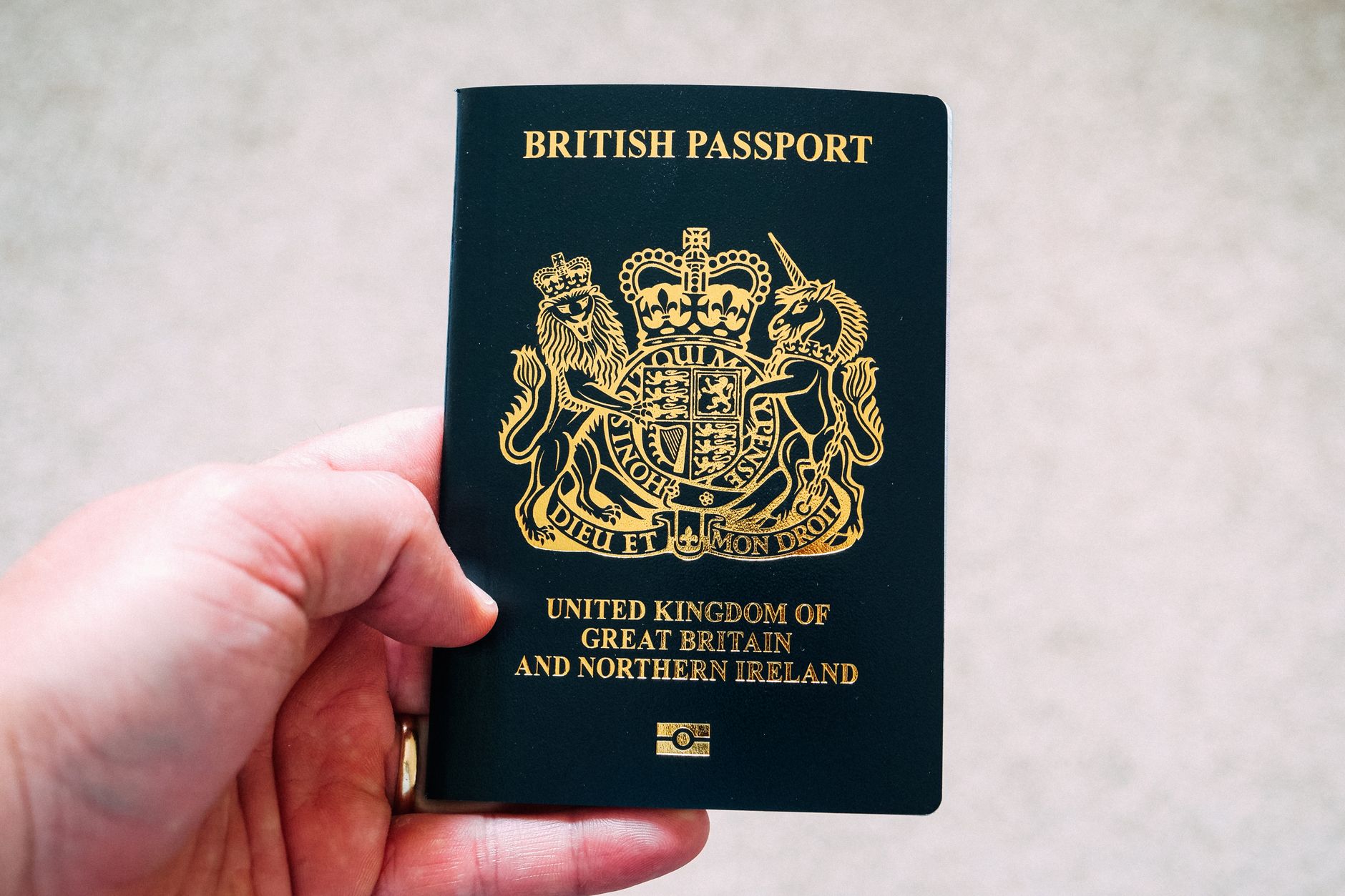
HM Passport Office does not routinely issue more than one British passport per person, but may grant additional passports to applicants aged sixteen or over who demonstrate genuine need and provide documentary evidence. For high-net-worth individuals and executives who travel frequently across jurisdictions with conflicting visa policies, understanding the threshold for a second British passport—and the legal framework surrounding dual nationality—has become more pressing following border-control changes introduced in February 2026. related guide related guide related guide related guide related guide
Who Qualifies for a Second British Passport
The HM Passport Office guidance recognises two principal grounds: travel to incompatible countries where political differences or visa-stamp conflicts may bar entry, and frequent business travel requiring one passport to remain with an embassy for visa processing while the holder continues to move. An Israeli stamp in a passport used for Middle Eastern travel is the most cited example of the former; the latter is familiar territory for anyone who has faced a three-week wait for a Chinese or Russian visa while needing to fly to New York.
Applicants must be at least sixteen years old and already hold a valid British passport. The request is made either in person at a public counter or by post with a covering letter bearing a wet signature—defined in official guidance as a physical mark, not an electronic scan. Supporting documents must include the existing British passport and, where the ground is professional travel, a letter from an employer on company stationery detailing the frequency and destinations involved.
There is no automatic entitlement. HM Passport Office reviews each application on its merits and may decline requests that do not meet its threshold. Approval rates are not published, but practitioners report that corporate travel patterns supported by credible employer attestation are more likely to succeed than speculative applications citing occasional leisure trips.
For those seeking three or more concurrent British passports, a Higher Executive Officer or more senior official must authorise the grant, reflecting the heightened scrutiny applied to cumulative issuance.
Travel Compliance and the 2026 Border Rule Change
As of February 2026, dual British nationals must present either a valid British passport or a digital Certificate of Entitlement to the Right of Abode when entering the United Kingdom. The change, part of a broader overhaul of UK immigration controls, eliminates the previous practice of allowing British citizens to enter on a foreign passport.
The immediate implication for individuals who hold British nationality alongside residency or citizenship programmes in jurisdictions such as Portugal, Malta, or the UAE is operational: outbound legs may be completed on a non-British passport to satisfy visa-free entry rules or bilateral treaties, but the return to the UK now requires production of the British document. Failure to carry it may result in refused boarding by the carrier, even if biometric records at the UK border would confirm citizenship.
A temporary concession permits carriers to board passengers holding an expired British passport issued in 1989 or later, provided it is shown alongside a valid passport from a non-visa national country and biographic details match. The Home Office describes this as a short-term transitional measure at carrier discretion, not a substitute for compliance with the underlying requirement. Relying on it courts disruption.
For corporate travel managers and family offices co-ordinating multi-leg itineraries, the rule demands tighter passport logistics. A senior executive departing London on a Singaporean passport for a regional tour, then returning via Dubai, must ensure the British passport remains accessible—either carried throughout or couriered to meet the traveller before the UK-bound flight. Employers whose personnel hold dual nationality should audit travel policies and brief affected staff accordingly; the cost of a missed board meeting or delayed transaction due to a documentation lapse at Heathrow can far exceed the administrative burden of compliance.
Dual Citizenship and Multi-Nationality in UK Law
The United Kingdom permits dual citizenship without limit on the number of nationalities a British citizen may hold concurrently. UK law imposes no requirement to choose between British nationality and another, nor does acquiring British citizenship compel renunciation of an existing nationality unless the other state's law demands it.
This framework is particularly relevant to individuals who have pursued citizenship by investment programmes—Caribbean economic citizenship, Maltese naturalisation, or Turkish passports by property purchase—while retaining their British status. The UK perspective is straightforward: holding a second, third, or fourth passport does not alter British nationality, and no reporting obligation arises. The complications, if any, stem from the other jurisdiction's rules or from practical questions of border presentation, taxation, and consular protection.
Tax residence and citizenship are separate concepts. A British citizen living in Monaco or Italy under the flat-tax regime may owe no UK tax provided non-dom or non-resident status is properly structured, yet remains a British national entitled to consular assistance and a UK passport. Conversely, acquiring a Cypriot or Portuguese passport does not by itself shift UK tax residence or trigger exit charges; liability follows residence and domicile rules, not passport inventory.
Where clients hold multiple nationalities, choice of passport at each border crossing becomes a question of visa requirements, entry stamps, and onward routing rather than legal constraint. A British-Lebanese dual national may enter Lebanon on the Lebanese document to avoid visa formalities, then re-enter the UK on the British passport to comply with the February 2026 rule. The key is ensuring both documents are current and carried when needed.
Application Process and Documentary Evidence
An application for a second British passport is made using the standard passport-application channels, but requires additional documentation. The applicant submits the existing valid British passport alongside a covering letter setting out the grounds for the request. The letter must carry a wet signature unless official guidance explicitly waives that requirement; electronic submission of the application form itself is possible, but the supporting letter demanding a second passport must be physically signed.
Where the basis is business travel, the employer's letter should specify:
- Job title and nature of duties requiring international travel.
- Frequency of trips and destinations, particularly those known to involve lengthy visa-processing times (China, Russia, India, Saudi Arabia).
- Instances where the absence of a passport during visa application has caused or would cause material business disruption.
Letters drafted in general terms—'frequent traveller' or 'international responsibilities'—are less persuasive than concrete itineraries and historical visa timelines. Legal or corporate immigration advisers familiar with the HM Passport Office's expectations often draft these letters for clients; precision and verifiable detail improve the likelihood of approval.
For incompatible-country grounds, evidence might include confirmation of planned or past travel to Israel and an Arab League state, or to India and Pakistan, within overlapping timeframes. Visa refusal letters citing a conflicting stamp can be annexed, though proactive applications before a problem arises are also accepted when the pattern of required travel is clear.
Processing times mirror those for standard passport renewals, typically three weeks for postal applications and as little as one week for premium or fast-track services. The second passport's validity matches that of a standard adult passport—ten years—but HM Passport Office may issue it for a shorter period if the stated need is time-bound. Some frequent travellers report renewals granted routinely once the second passport is in place, though each application formally requires fresh justification.
The second passport carries the same biometric chip, nationality status, and consular protection as the first. It is a separate document with a distinct number, allowing one to be submitted for a visa while the other remains in hand for concurrent travel. Neither is marked 'primary' or 'secondary'; both are valid for all purposes, subject to the requirement that British nationals use a British passport to enter the United Kingdom.
Practical Considerations for HNW Portfolios
Families managing cross-border estates, trust structures, and investment portfolios often accumulate multiple nationalities through birthright, naturalisation, marriage, or investment. A British citizen born in the United States to a Brazilian mother, later naturalised in Portugal, may hold four passports without legal conflict under UK law. The operational challenge lies in maintaining all documents in validity, tracking renewal cycles, and choosing the optimal document for each journey.
Private-client advisers note that citizenship planning should be distinguished from tax and residence planning. A second passport confers visa-free access and may ease business or family travel, but it does not, by itself, sever UK tax residence for those who remain ordinarily resident or domiciled in Britain. HMRC's statutory residence test looks at days spent in the UK, accommodation ties, work location, and family presence—not passport count. Conversely, moving tax residence to a low- or zero-tax jurisdiction does not extinguish British citizenship or the right to hold a British passport.
The February 2026 border rule has prompted some dual nationals to reconsider which passport they present when departing the UK. Previously, a British-Australian citizen leaving Heathrow for Sydney might have used the Australian passport throughout, re-entering the UK on the same document. That is no longer permissible. Outbound presentation of the Australian passport to an airline or at an automated gate does not, in itself, breach UK law, but the inbound leg to the UK now demands the British document. The administrative simplicity of a single passport for a round trip has been replaced by a requirement to switch mid-journey or carry both throughout.
Families with children holding dual nationality by descent face similar logistics. A child born in London to a British mother and Emirati father may hold both passports; under the new rule, the child must re-enter the UK on the British document even if departing on the Emirati one. Schools, universities, and travel agents arranging group trips for British dual nationals should update their guidance accordingly.
Interaction with Other Jurisdictions' Rules
While the UK permits unlimited multiple nationality, several countries do not. Germany, Austria, Japan, China, and Singapore traditionally required renunciation of prior citizenship upon naturalisation, though recent reforms have introduced exceptions—particularly for ethnic ancestry, refugees, or EU citizens. A British citizen naturalising in Germany today under the revised rules may retain UK nationality, but older naturalisations may have compelled a choice.
Other states, including the United States and most Caribbean citizenship-by-investment jurisdictions, are agnostic about dual nationality, neither requiring nor forbidding it. The result is that the legal permissibility of holding a British passport alongside another depends on the laws of both states. UK rules are permissive; the constraint, if any, comes from abroad.
Where one jurisdiction forbids dual nationality but does not actively monitor compliance, some individuals hold multiple passports without disclosing the full set to either government. This is legally precarious: it may breach naturalisation oaths, render one citizenship voidable, and complicate consular assistance if a problem arises in a third country. For HNW individuals, the reputational and operational risks of undisclosed dual nationality generally outweigh any benefit, and careful structuring at the time of naturalisation is preferable.
Tax treaties and bilateral agreements sometimes reference nationality, but more often rely on residence. The UK–US tax treaty, for example, pivots on residence rather than citizenship; a US citizen resident in London is UK-tax-resident, and a British citizen in New York is US-tax-resident, regardless of other passports held. Where nationality does matter—consular protection, access to certain investment markets, or eligibility for government contracts—dual nationals must choose which citizenship to invoke in that context.
Long-Term Validity and Renewal
A second British passport is issued with the same ten-year validity as a standard adult passport, though HM Passport Office reserves discretion to shorten the term where the stated need is temporary. Renewal follows the same threshold: genuine need must be re-demonstrated, typically by updating the employer letter or travel itinerary. Practitioners report that once the second passport is on record, renewals are generally granted without additional scrutiny, provided circumstances have not materially changed.
Some applicants seek a second passport proactively—anticipating visa conflicts or increased business travel—only to find limited use for it once issued. The cost is modest (identical to a standard passport renewal), but the administrative overhead of tracking two expiry dates and ensuring both are current before each trip can outweigh the benefit for individuals whose travel patterns stabilise or shift.
Conversely, corporate roles involving sustained presence in markets with protracted visa processes—China, Russia, India, Saudi Arabia, Nigeria—often justify holding a second passport for the duration of that assignment, even if the need diminishes once the individual rotates into a regional or headquarters role.
For families holding multiple nationalities, staggering passport renewals across different countries can reduce the risk of being temporarily without a valid travel document. A British-Canadian family might renew UK passports in even years and Canadian in odd years, ensuring at least one remains in hand while the other is being processed.
Sources
- Additional Passports – HM Passport Office
- New UK Passport Rules for British Dual Nationals Travelling to the UK – Macfarlanes LLP
- New Passport Border Rules for Dual British Nationals in 2026 – Bevan Brittan LLP
- Can a British citizen travel to the UK using a non-British passport? – House of Commons Library
- Dual Citizenship in the UK | How Many Passports Can You Have – Sterling Law
- UK Visa Options for Holders of Second Passports – Cranbrook Legal
Last verified 8 May 2025