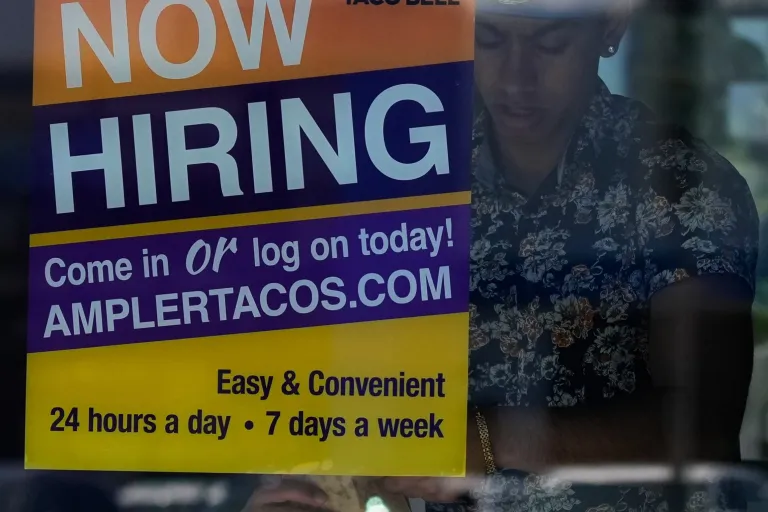
The U.S. labor market showed unexpected strength in April as employers sharply increased the number of available positions despite ongoing economic uncertainty linked to higher energy prices and geopolitical tensions in the Middle East.
New data from the U.S. Labor Department showed that US job openings climbed to 7.6 million in April, up from 6.9 million a month earlier and well above economists’ expectations. The increase suggests many employers remain confident enough to keep vacancies posted even as broader economic growth faces pressure from external shocks and fading fiscal support.
Employers Added More Vacancies Than Forecast
According to the Labor Department’s Job Openings and Labor Turnover Survey, commonly known as JOLTS, available positions reached their highest level since May 2024. Economists surveyed before the release had expected openings to edge lower to around 6.8 million.
The report also revealed a decline in layoffs during April, indicating that companies largely chose to retain existing staff despite uncertainty surrounding energy markets and business costs.
At the same time, fewer Americans voluntarily left their jobs. Economists often view quitting activity as a measure of worker confidence because employees are generally more willing to resign when they believe new opportunities are readily available. A decline in quits can therefore signal greater caution among workers, even when hiring demand remains relatively healthy.
Another notable detail in the report was a drop in overall hiring activity. While employers advertised more roles, many remained hesitant to bring on additional workers immediately. The combination of rising vacancies and slower hiring suggests businesses are maintaining flexibility while waiting for a clearer economic outlook.
Why the Labor Market Looks Different in 2026
The latest figures come after a weak employment year in 2025, when job creation slowed dramatically. Companies, nonprofits, and government agencies collectively added fewer than 10,000 jobs per month on average, marking one of the softest periods for employment growth outside a recession in more than two decades.
Conditions have improved in 2026. Through the first four months of the year, monthly job growth averaged 76,000 positions. Consumer spending received support from tax refunds linked to President Donald Trump’s tax legislation, helping offset some of the economic strain caused by higher energy prices following military action involving the United States, Israel, and Iran earlier this year.
A structural shift is also affecting employment dynamics. Immigration restrictions and the continued retirement of Baby Boomers have reduced labor force growth, meaning the economy requires fewer new jobs to maintain a stable unemployment rate.
Federal Reserve economists Seth Murray and Ivan Vidangos noted in an April analysis that the monthly number of jobs needed to keep unemployment steady has fallen dramatically compared with just a few years ago. This change helps explain why relatively modest hiring gains can still support a low unemployment rate.
For investors and business leaders, the trend carries important implications. A labor market that remains stable without generating excessive wage pressure could reduce concerns about overheating while still supporting consumer demand. That balance is closely watched by policymakers as they assess future interest rate decisions.
Attention Turns to the May Employment Report
Markets will now focus on the Labor Department’s upcoming May jobs report, scheduled for release on Friday.
Economists surveyed by FactSet expect employers to have added roughly 100,000 jobs during the month. Forecasts also suggest the unemployment rate remained at 4.3%, a level that continues to indicate a relatively healthy labor market by historical standards.
The next report will help determine whether April’s jump in job openings reflects a sustained improvement in hiring demand or a temporary rebound. For now, the latest data suggest employers remain cautious but are not pulling back aggressively, a signal that the U.S. labor market continues to show resilience even as economic headwinds persist.