The US budget deficit is now expected to reach $2.1 trillion in fiscal 2026 after a sharp reversal in tariff revenue weakened federal receipts, according to the Congressional Budget Office.
The nonpartisan agency raised its deficit projection from the $1.9 trillion estimate issued in February. Spending remains broadly in line with its earlier assumptions, making weaker revenue the principal reason for the $200bn deterioration. The change follows a Supreme Court decision that invalidated tariffs imposed by President Donald Trump’s administration under the International Emergency Economic Powers Act.
Tariff Refunds Turn Customs Revenue Negative
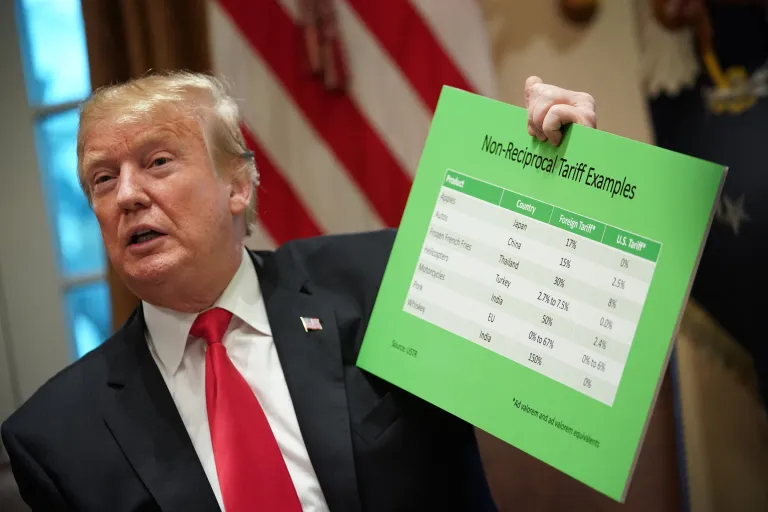
The CBO expects customs duties and tariff collections to finish fiscal 2026 about $250bn below its previous forecast. The change followed the Supreme Court’s February 20 ruling that the administration did not have authority to impose the tariffs through IEEPA.
Some of that revenue loss has been offset elsewhere. Income and payroll tax receipts are running approximately $75bn above the CBO’s February baseline, while other federal revenue sources are about $25bn below expectations. Taken together, those movements leave a net revenue shortfall of roughly $200bn.
The impact became particularly visible during the summer. After customs collections exceeded year-earlier levels through April, refunds associated with the invalidated tariffs began to alter the picture in May.
In July, the federal government recorded $26bn in gross customs-duty collections while issuing $36bn in refunds. That resulted in a net customs outflow of about $9bn for the month. The CBO estimates that roughly $100bn collected under the invalidated tariff authority has now been returned.
The administration has sought alternative legal routes for its trade policy. It initially moved to Section 122 of the Trade Act of 1974, a temporary authority that expired on July 24, before moving to tariffs under Section 301. The CBO expects those replacement measures to recover a substantial portion of the lost revenue, although not the full amount.
Federal Borrowing Was Already Rising Before the Reversal
The tariff setback has arrived against an already difficult fiscal backdrop. The federal deficit reached $1.8 trillion during the first 10 months of fiscal 2026, $169bn more than during the comparable period a year earlier.
A calendar-related shift in federal payments inflated that comparison. After adjusting for payments moved into July because August 1 fell on a weekend, the year-to-date deficit was still $71bn higher than in fiscal 2025.
July alone produced a $431bn deficit. Committee for a Responsible Federal Budget president Maya MacGuineas said the government was heading towards more than $2 trillion in annual borrowing despite the economy not being in recession.
Several large spending categories are adding pressure. Social Security expenditure increased $70bn, Medicare rose $66bn and Medicaid climbed $45bn during the first 10 months. Net interest costs increased by another $117bn, or 14%, as the government carried more debt alongside higher long-term interest rates.
The tariff episode also highlights a broader fiscal risk. Revenue tied to trade policy can change rapidly when the underlying legal authority is challenged. Unlike established income and payroll tax systems, tariff receipts affected by litigation can also require refunds of money already collected. That makes future deficit forecasts more sensitive to court decisions and the design of replacement trade measures.
Fiscal 2027 Will Test the Replacement Tariff Strategy
The immediate question is how much revenue the administration can restore under its replacement tariff authorities. The answer will influence whether the 2026 deterioration proves temporary or carries into the next fiscal year.
Corporate income tax receipts are another pressure point, falling $89bn, or 23%, during the fiscal year to date. The CBO attributed that decline to expanded deductions for corporate investment.
For investors and businesses, the next signals will come from tariff collections, federal borrowing and interest costs. If replacement duties generate less revenue than previously expected while mandatory spending and debt-service costs continue rising, pressure on Washington to address the structural deficit will increase.