The World Bank has issued one of its starkest warnings in years, arguing that the global economy is on course for its weakest decade of expansion since the 1960s unless governments can reverse a series of overlapping crises.
In its June 2026 Global Economic Prospects report, the institution said many developing nations are falling further behind advanced economies after years of economic disruption. The findings suggest that nearly half of developing countries have failed to narrow the income gap with richer nations since 2019, while some of the world’s poorest economies remain worse off than they were before the pandemic.
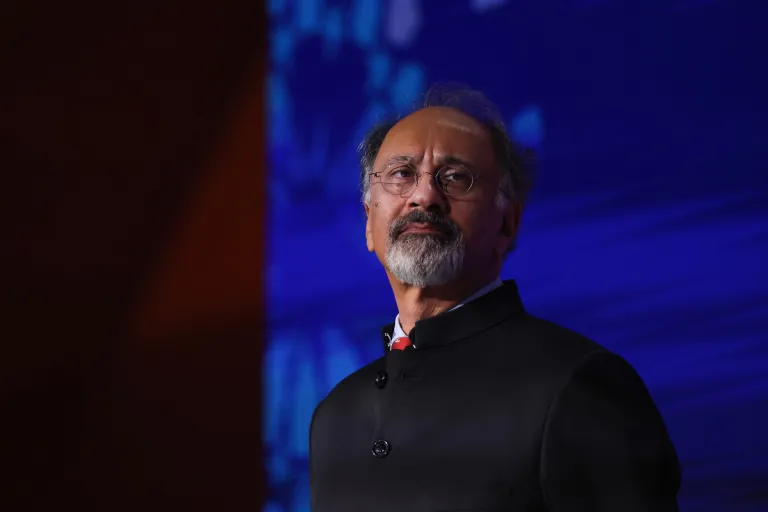
Indermit Gill, senior vice president and chief economist at the World Bank, wrote that “barring a miracle, the 2020s will prove to be what their ominous opening foreshadowed: a lost decade.”
The warning arrives as policymakers face renewed inflation pressures triggered by a fresh conflict in the Middle East, adding another challenge to an already fragile global recovery.
Energy shocks push growth forecasts lower
The World Bank now expects global economic growth to slow to 2.5% in 2026, one of the weakest performances outside a recession in almost two decades. In a more severe scenario involving prolonged energy disruptions and financial market stress, growth could drop to just 1.3%.
A major driver behind the downgrade is rising energy prices. Brent crude is projected to average $94 per barrel this year, up 36% from 2025 levels. Higher fuel costs are adding pressure to inflation just as many central banks had started reducing interest rates.
The impact has been particularly severe across developing economies. By the end of 2026, the World Bank expects one-quarter of developing countries, one-third of low-income economies and half of fragile states to remain poorer than they were before COVID-19 emerged.
The institution pointed to several interconnected shocks that have compounded over the past six years. These include the pandemic, Russia’s invasion of Ukraine, a sharp rise in global inflation, aggressive interest rate increases and the latest conflict in the Middle East.
The Middle East and North Africa region has suffered one of the biggest downgrades. Growth is expected to slow from 3.9% in 2025 to 1.6% this year, partly due to damage to energy infrastructure and disruptions to major shipping routes.
Other regions are also under pressure. Growth across East Asia and the Pacific is expected to ease to 4.2%, Europe and Central Asia to 2.1%, and Latin America and the Caribbean to 2.2%. South Asia remains relatively resilient, largely supported by India’s economy, while Sub-Saharan Africa continues to struggle with weak income growth and rising food insecurity.
Why investment trends could define the next decade
The report highlights a deeper structural issue beyond today’s geopolitical turmoil. Investment activity across developing economies has slowed dramatically.
Private investment growth during the 2020s has fallen to less than half the pace seen in the previous decade. At the same time, government debt burdens have climbed to record levels, increasing borrowing costs for countries already under financial strain.
According to the World Bank, 19 of the world’s 24 poorest countries still rely heavily on foreign aid to feed their populations, even as donor countries become more reluctant to increase support.
The broader concern is that persistent underinvestment today may undermine future productivity growth. This challenge arrives at a time when global trade patterns are changing and supply chains are becoming more regionalised.
The warning also reflects a shift away from the era of rapid globalisation that fuelled strong growth during the early 2000s. The International Monetary Fund has previously estimated that fragmentation in trade and investment could reduce global output over the long term, especially for emerging markets that depend heavily on international commerce.
Artificial intelligence, clean energy and trade offer a path forward
Despite its pessimistic assessment of the current decade, the World Bank outlined three forces that could improve the outlook for the 2030s.
Artificial intelligence tops the list. The organisation believes broader adoption of AI could lift productivity, even under conservative assumptions. However, the benefits are unevenly distributed. Developing countries account for less than one-quarter of global data centre capacity, while the world’s poorest economies represent a fraction of that total.
Clean energy is another opportunity. Global investment in renewable energy reached $2.2 trillion in 2025, with much of the increase coming from countries seeking greater energy independence rather than purely environmental goals.
Regional trade agreements could also help offset weaknesses in the global trading system. The number of such agreements has risen from just over 300 in 2020 to nearly 400 today, accounting for around 60% of global trade.
Together, these trends could provide a foundation for stronger economic performance in the next decade, but only if governments invest early and ensure poorer economies are not left behind.
What investors and policymakers should watch next
The World Bank has committed up to $25bn in immediate financing support for developing economies and says it could expand that figure to between $80bn and $100bn over 15 months if conditions deteriorate.
The bigger challenge will be preventing temporary crises from becoming permanent economic scars.
The institution’s message is that the remainder of this decade may already be difficult to salvage, but the decisions governments make over the next few years could determine whether the 2030s become a period of renewed growth or another decade of missed opportunities.
For businesses and investors, the report reinforces the importance of tracking three areas closely: AI adoption, energy security and the evolution of regional trade partnerships.