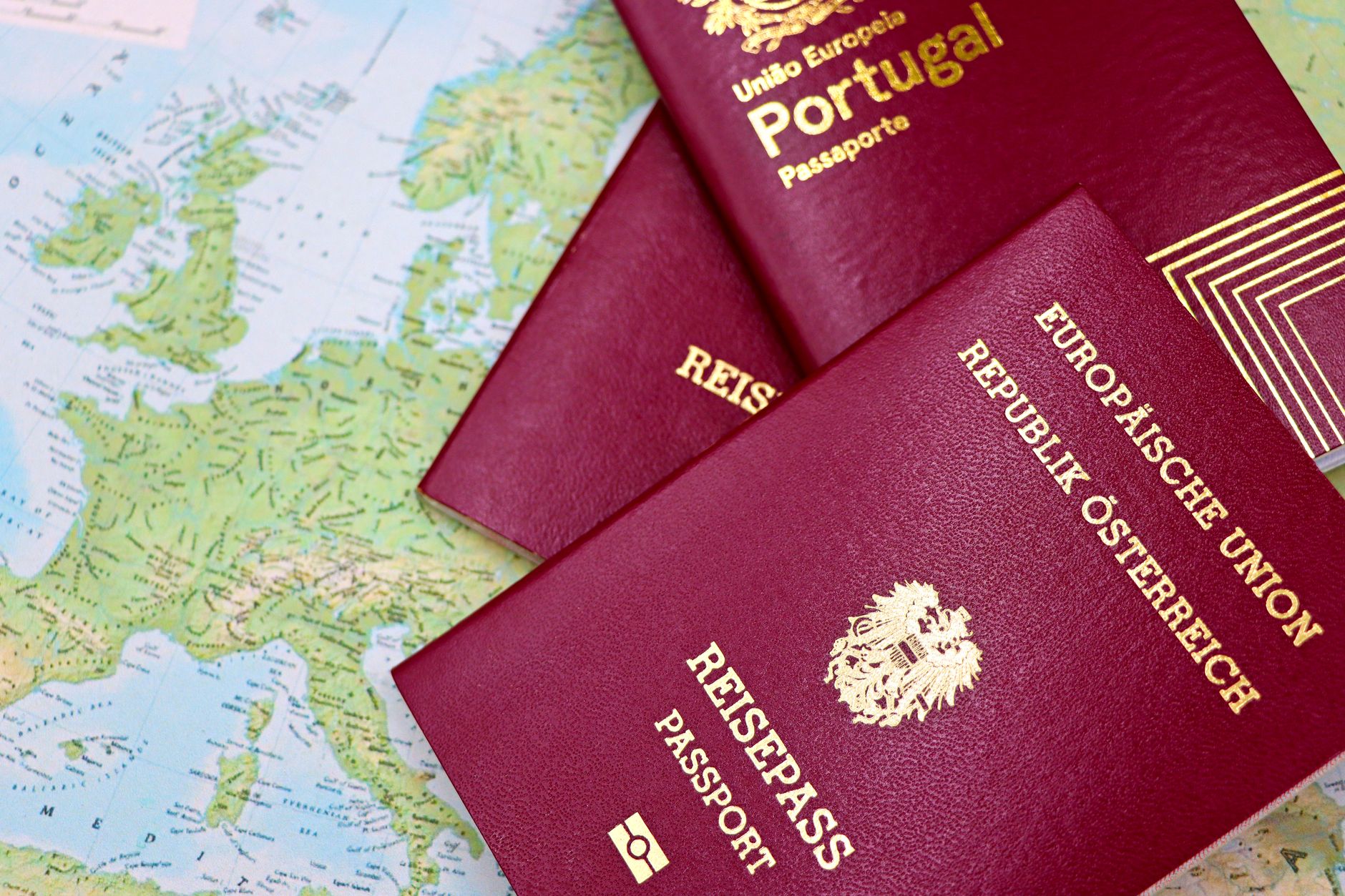
The U.S. Department of State permits a limited subset of American citizens to hold two valid passports concurrently—not as a convenience, but where foreign visa conflicts or rapid turnaround demand it. The authority rests on demonstrable, recurring travel conflict between destinations that maintain mutually antagonistic entry policies, or on employment that requires near-continuous international movement while passports circulate for visa stamps.
This is not dual citizenship; it is a pair of U.S. passports, each bearing the same biographical data and both valid at the same time. The second book is issued with a four-year validity, half the lifespan of a standard adult passport, and only to applicants who satisfy strict criteria laid out by the State Department.
Eligibility Criteria
The State Department's second-passport programme is governed by narrow use cases. Applicants must show that routine, work-related international travel creates scheduling conflicts that a single passport cannot resolve.
Two scenarios dominate. The first: countries with mutual entry bans. An executive shuttling between Israel and Saudi Arabia, for instance, confronts entry refusals if one country's visa or stamp appears in the same book. The second scenario: long visa-processing queues. Investment bankers, consultants, and extractive-industry engineers who must visit multiple visa-on-arrival and visa-required jurisdictions within days often need one passport in circulation at an embassy while carrying the other for immediate onward travel.
The U.S. Embassy in the Netherlands specifies that applicants must submit a signed letter from their employer on company letterhead confirming frequent international business travel and the operational need for simultaneous passport availability. Freelance consultants and sole proprietors may submit a client letter or contracts demonstrating recurring cross-border engagement, though consular officers exercise greater discretion in such cases.
Tourist or personal convenience does not qualify. The State Department explicitly states that leisure travellers, even those visiting multiple countries, are expected to plan around single-passport processing times. High-net-worth individuals establishing tax residency in Dubai or pursuing the UAE Golden Visa for investment purposes may find that residency-permit processing alone does not trigger eligibility unless tied to demonstrable business travel patterns that create visa conflicts.
The distinction matters. A private investor visiting London, Dubai, and Singapore over six weeks can typically sequence consular appointments; a mining engineer rotating through Angola, the Democratic Republic of Congo, and Zambia on overlapping contracts cannot.
Visa-Conflict Scenarios in Practice
Israel and the Gulf states are the most commonly cited pair, but they are not the only flashpoint. Syria, Lebanon, Iran, Iraq, Libya, Sudan, and Yemen all maintain policies that complicate entry for travellers with Israeli stamps or visas. Conversely, an Iranian visa in a U.S. passport may prompt secondary screening or denial of entry in Israel.
Energy-sector professionals working across the Middle East and North Africa routinely apply for second passports to keep Israeli business travel discreet. The same logic applies in reverse: humanitarian and development workers moving between Iran and Western nations often hold dual books to avoid visa delays triggered by Gulf or Israeli stamps.
Less publicised conflicts affect journalists, researchers, and corporate investigators. Reporters covering both Turkish and Kurdish affairs sometimes find Turkish visas harder to obtain if Armenian or Greek Cypriot stamps are visible. Academic researchers working in both China and Taiwan manage similar friction.
The State Department does not publish an exhaustive list of country pairs that qualify. Instead, consular officers assess each application individually, cross-referencing employer letters, recent travel history, and forward itineraries. Documentary evidence—contracts, conference invitations, client letters—carries more weight than abstract claims of inconvenience.
Documentation and Application Process
Applying for a second passport uses Form DS-82 if renewing by post, or DS-11 if appearing in person at a passport agency or consulate. The application fee mirrors the standard passport: $130 for the book itself, plus a $35 execution fee if applying in person. Expedited service, which shortens issuance to two to three weeks, costs an additional $60. Routine processing runs eight to eleven weeks from receipt.
Most second-passport applications are filed abroad, at U.S. embassies and consulates, because the applicant is already mid-travel. The U.S. Embassy in the United Kingdom notes that London-based applicants should book appointments through the embassy's online system and expect an interview. The embassy in Switzerland follows a similar process but requests that applicants submit the employer letter at least 48 hours before the appointment to allow pre-screening.
The employer letter must be printed on company letterhead, signed by a director or human-resources officer, and include the applicant's full name, job title, and a brief explanation of why simultaneous passport validity is necessary. Generic language—'requires international travel'—is insufficient. The letter should specify destination countries, approximate travel frequency, and the nature of the visa or entry conflict.
Rejected applications typically fail on one of three grounds: insufficient documentation, vague employer justification, or prior passport validity. The State Department will not issue a second passport if the existing one has fewer than six months of remaining validity; applicants must wait until renewal is due or pay to replace the current book early.
Timeframe and Logistics
Standard processing for second passports takes eight to eleven weeks. Expedited service shortens this to two to three weeks but requires proof of imminent travel—usually an itinerary or client letter indicating departure within 30 days. Passport agencies in major U.S. cities can issue emergency passports in 24 to 72 hours for life-or-death situations, but second passports do not qualify for same-day service; the applicant must demonstrate that the conflict cannot be resolved by postponing or rescheduling one leg of travel.
Once issued, the second passport carries a four-year validity from the date of issuance, regardless of when the primary passport expires. Holders of two passports must track expiry dates independently. Both books remain the property of the U.S. government, and both must be surrendered if either is revoked.
Travellers may not use the two passports interchangeably on the same trip. The State Department advises that the passport used for entry into a country must also be used for exit. Switching books mid-stay can trigger immigration violations, especially in countries that cross-reference entry and exit stamps electronically.
Validity, Renewal and Restrictions
The four-year validity of a second passport is fixed by regulation. It cannot be extended, even if the primary passport has ten years remaining. Upon expiry, holders may reapply if the original business-travel justification persists, submitting updated employer letters and itineraries.
Renewal follows the same DS-82 or DS-11 process. There is no automatic presumption of eligibility; consular officers reassess each application on its merits. A banker who changed roles or retired will not qualify simply because a second passport was issued previously.
Both passports must be presented when renewing either book. The State Department's guidance specifies that failure to declare a second passport on a renewal application may result in denial and, in extreme cases, passport revocation for material misrepresentation.
Second passports do not grant additional rights or privileges. They carry identical biometric chips and cannot be used to circumvent visa denials, entry bans, or tax-reporting obligations. The Financial Crimes Enforcement Network and the Internal Revenue Service treat holders of two U.S. passports identically to holders of one; the Foreign Account Tax Compliance Act still applies, and foreign banks still file the same reports.
Practical Limits and Compliance
A second passport is not a hedge against extradition, asset seizure, or travel restrictions imposed by U.S. authorities. Courts and federal agencies can invalidate both books simultaneously. Parents subject to custody disputes or child-support arrears may find passport applications—first or second—denied under the Passport Denial Program.
Border officials in third countries sometimes express confusion when encountering two valid U.S. passports. Carrying the employer letter and a brief written explanation in English and the local language can expedite secondary inspection. Some immigration desks photocopy both books and file the images together; others flag the discrepancy for supervisor review.
There is no public data on second-passport issuance volume, but consular officers interviewed by trade press estimate that approvals run in the low thousands annually. The programme remains niche, largely because most business travellers can sequence visa applications or rely on visa-waiver agreements.
Comparison with Dual Citizenship and Investment Migration
Second U.S. passports are often conflated with dual citizenship, but the two concepts are unrelated. Dual citizenship involves holding nationality in two sovereign states. A second U.S. passport involves holding two copies of the same nationality document.
The confusion arises because some high-net-worth individuals pursue both strategies in parallel. An American tech entrepreneur might hold U.S. citizenship alongside Portuguese nationality acquired via the Portugal Golden Visa programme, plus a second U.S. passport to manage visa queues in Asia. Each serves a distinct function: the Portuguese passport enables visa-free travel within the Schengen Area and acts as a hedge against U.S. policy shifts; the second U.S. book solves short-term scheduling bottlenecks.
Citizenship-by-investment programmes in the Caribbean—Antigua and Barbuda, Dominica, Grenada, St Kitts and Nevis, St Lucia—offer second nationality and a passport from a different issuing state. These documents provide visa-free or visa-on-arrival access to between 140 and 160 jurisdictions, depending on the programme. The U.S. permits its citizens to hold foreign nationality without penalty, provided they continue to file tax returns and report worldwide income.
Italy's flat-tax regime and Monaco tax residency attract Americans seeking to relocate while retaining U.S. citizenship, but neither jurisdiction eliminates U.S. filing obligations. A second U.S. passport does not alter tax residency, domicile, or reporting duties. It is purely an operational tool for managing consular queues and visa antagonisms.
Investment migration and second passports intersect when a single individual holds, say, U.S. and Maltese nationality and applies for a second U.S. passport book. In such cases, the Maltese passport solves some entry conflicts (for example, travel to Cuba or Iran where U.S. passports face restrictions), while the second U.S. book handles intra-Western travel and visa bottlenecks.
Administrative and Reputational Considerations
Holding two passports of the same nationality can complicate compliance processes. Banks, brokers, and fund administrators often request passport photocopies for know-your-customer checks. Submitting different passport numbers on successive transactions may trigger enhanced due diligence or suspicious-activity reports, even when entirely lawful.
Family offices and private banks familiar with the second-passport programme usually note both numbers in their client files and request advance notification of renewals. Smaller institutions may lack internal protocols; advisers recommend uploading both books during onboarding and annotating the reason in accompanying cover letters.
Border-crossing databases maintained by Five Eyes intelligence partners—Australia, Canada, New Zealand, the United Kingdom, and the United States—track both passport numbers against a single biometric identity record. Automated systems flag travellers who present different U.S. passport numbers on successive trips, prompting manual review. The review typically clears within minutes once the officer confirms both books are valid, but secondary inspection adds delay.
Immigration lawyers caution that presenting the 'wrong' passport to a consular officer when applying for a visa can cause denials. If an applicant used passport A to enter a country previously but submits passport B for a new visa, the consulate's system may not recognise prior travel history, potentially triggering heightened scrutiny or a request for the full travel record from both books.
Common Application Errors and Refusals
The most frequent cause of rejection is a generic or boilerplate employer letter. Letters that state 'employee travels internationally for business' without specifying countries, visa conflicts, or itinerary frequency fail the threshold test. Consular officers expect named destinations, approximate trip counts per year, and concrete examples of past or future scheduling conflicts.
A second common error: applying too early. If the primary passport has more than two years of remaining validity and no upcoming trips demonstrate an acute conflict, officers may defer the application or ask the applicant to reapply closer to a documented travel date.
Third, mismatched documentation. An employer letter describing oil-and-gas work in the Middle East paired with a travel history showing only European and North American stamps raises credibility questions. Officers cross-check stated business activities against visa and entry-exit records; inconsistencies lead to denial or requests for additional evidence.
Fourth, freelancers who submit client letters from shell companies or mailbox entities attract heightened scrutiny. Officers verify corporate registration, web presence, and trading history. A letter from a Dubai free-zone entity with no public profile, supporting an applicant who has never visited the UAE, will likely be rejected unless supplemented by contracts, invoices, or proof of prior project delivery.
Finally, some applicants misunderstand the prohibition on tourist use. Letters describing gap-year travel, extended sabbaticals, or multi-country holiday itineraries do not qualify, even when the travel is ambitious or logistically complex. The programme exists to support commerce, not leisure.
Interaction with ESTA, Global Entry and Trusted Traveller Schemes
U.S. Customs and Border Protection enrols travellers in Global Entry and TSA PreCheck under a single known-traveller number tied to biometric identity, not passport number. Holders of two U.S. passports retain the same known-traveller number for both books. However, each passport must be registered separately in the Trusted Traveler Programs system; failure to add the second book can result in PreCheck lanes being unavailable when travelling on that document.
The same logic applies to ESTA waivers for inbound visitors and to third-party programmes such as the U.K.'s Registered Traveller Service. Enrolment links a biometric profile to a passport number; adding a second passport requires updating the registration, often via the programme's online portal.
Airlines use passport data to verify identity and check visa validity before boarding. Check-in systems sometimes reject bookings if the passport number on file differs from the number presented at the airport. Travellers carrying two U.S. passports should ensure that the number used to book the ticket matches the document they present at check-in and immigration.
Frequent flyers who hold elite status with an airline alliance should notify the carrier's customer-service desk of both passport numbers. Many carriers store only one number in the profile; presenting the alternate book at check-in may cause the system to treat the passenger as a first-time traveller, forfeiting lounge access and priority boarding.
Strategic Use in High-Mobility Careers
Management consultants at tier-one firms—McKinsey, Bain, Boston Consulting Group—are among the most common second-passport recipients. Partner-track consultants often work on engagements across three continents simultaneously, with project kick-offs, midpoint reviews, and final presentations scheduled within days of one another. Chinese business visas alone can tie up a passport for two weeks; adding India, Russia, or Brazil to the itinerary makes a second book operationally essential.
Similarly, audit and advisory partners at Big Four accounting firms use second passports to manage annual compliance cycles. Tax season compresses travel into narrow windows; a single delayed visa can cascade into missed client meetings and contract penalties.
Extractive-industry executives—mining, oil and gas, timber—rely on second passports to navigate Africa, Central Asia, and Latin America. Visa processing in Angola, Kazakhstan, and Nigeria routinely exceeds 30 days, and consulates in those countries often retain the passport for the duration. A geologist conducting site assessments in three countries within a quarter cannot afford to wait sequentially.
Humanitarian workers and journalists covering conflict zones also qualify, though their employer letters emphasise security and access rather than revenue. A correspondent rotating between Damascus, Beirut, and Jerusalem faces the Israel-Syria entry ban; a second passport keeps movement discreet and preserves access.
Academic researchers with multi-country field projects submit university letters co-signed by department heads and grant administrators. The letters cite research ethics approvals, fieldwork timelines, and funding conditions that make sequential visa applications impractical.
Last verified: January 2025