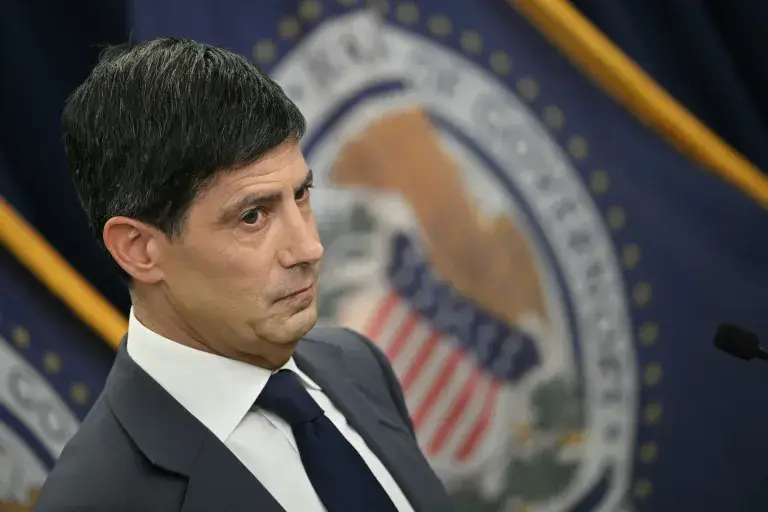
The US Federal Reserve may be preparing to abandon its wait-and-see approach to inflation after years of tolerating price pressures above target levels, according to a new forecast from Bank of America.
Analysts at the bank now expect three quarter-point interest rate increases before the end of 2026, a significant reversal from their previous outlook that anticipated no changes to borrowing costs this year. If realised, the moves would push the federal funds rate to between 4.25% and 4.5%, up from its current range of 3.5% to 3.75%.
The shift reflects a growing belief that inflation risks are becoming more entrenched and that new Federal Reserve chairman Kevin Warsh is prepared to adopt a firmer stance to restore price stability.
Fed officials are becoming increasingly concerned about inflation
Bank of America’s revised outlook came after last week’s Federal Open Market Committee meeting, where roughly half of policymakers signalled support for higher interest rates.
The Fed left rates unchanged at that meeting and BofA expects another pause next month. However, the bank now projects rate increases in September, October and December.
The new forecast would effectively reverse the Fed’s final rate cut from December 2025, when policymakers lowered borrowing costs by 25 basis points amid concerns about slowing employment growth.
Since then, economic conditions have changed considerably.
The labour market has strengthened during 2026, while geopolitical tensions involving President Donald Trump’s military conflict with Iran have driven oil prices higher, creating another source of inflationary pressure.
Bank of America analysts argued that the inflation challenge has become more severe than previously anticipated.
They noted that core Personal Consumption Expenditures inflation, one of the Fed’s preferred measures, could reach 3.5% in May, substantially above levels recorded a year earlier.
Tariffs and supply disruptions have contributed to higher prices, but analysts believe policymakers are becoming less willing to dismiss those pressures as temporary. They also pointed to slowing progress in housing-related disinflation and persistent strength in service sector prices.
The bank said recent Fed projections challenged one of its earlier assumptions, namely that a significantly tighter labour market would be required before officials considered raising rates again.
Why Wall Street is paying close attention to Kevin Warsh
Financial markets have already begun adjusting to the possibility of a more aggressive central bank.
The yield on the 10-year US Treasury rose to 4.497% on Monday, despite a decline in Brent crude oil prices.
Investors are also scrutinising comments from Kevin Warsh, who has suggested that monetary policy may not be as restrictive as many market participants assume.
Speaking after last week’s meeting, Warsh acknowledged an apparent contradiction between official policy settings and the strong appetite for raising capital across Wall Street.
Companies are on track to issue trillions of dollars through stock and debt markets this year, creating a flow of liquidity that may be offsetting some of the Fed’s efforts to slow economic activity.
Warsh said monetary policy transmission appeared uneven, noting that financial markets continue to exhibit considerable strength despite tighter borrowing conditions.
His remarks have fuelled speculation that the Fed could be willing to tighten policy sooner if inflation fails to improve.
The debate over inflation’s next chapter is far from settled
Not everyone agrees with the hawkish outlook.
Chen Zhao, chief global strategist at Alpine Macro, argued that rate increases remain unlikely. He believes several factors could reduce inflation later this year, including a potential easing in oil prices if tensions in the Middle East subside.
Zhao also highlighted weakening wage growth, productivity gains from artificial intelligence and growing pressure on smaller businesses as reasons inflation may eventually cool.
The broader debate highlights the difficult balancing act facing central bankers globally.
According to the International Monetary Fund, inflation shocks since 2021 have forced many central banks to reconsider assumptions about how quickly price pressures fade after supply disruptions. That experience may make policymakers more cautious about declaring victory too early.
For businesses and investors, the significance extends beyond interest rates themselves. A sustained period of higher borrowing costs would influence everything from corporate investment decisions to commercial real estate valuations and consumer spending patterns.
What investors should watch next
The Fed’s next few inflation reports will likely determine whether markets fully embrace the prospect of higher rates.
September has emerged as a critical month in Bank of America’s forecast, but policymakers will closely monitor employment data, energy prices and consumer spending before committing to tighter policy.
If inflation begins to moderate, officials could maintain their current stance. If price pressures remain persistent, however, markets may have to adjust to a Federal Reserve that is once again prioritising inflation control over economic support.
Either way, investors are entering a period where assumptions about falling interest rates can no longer be taken for granted.