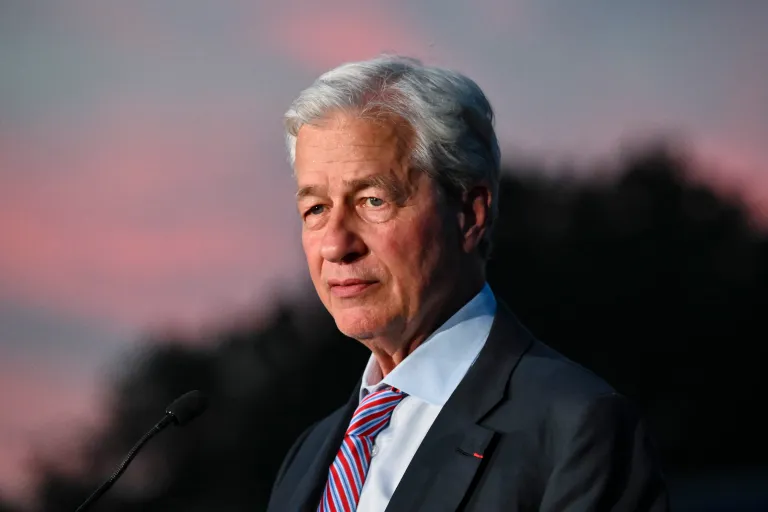
JPMorgan Chase chairman and chief executive Jamie Dimon has thrown his support behind Federal Reserve chairman Kevin Warsh’s overhaul of how the US central bank communicates with markets, arguing that a review of its policy framework “makes tremendous sense” despite growing unease on Wall Street.
The Kevin Warsh Fed has begun moving away from extensive forward guidance, leaving investors with fewer clues about the likely direction of interest rates. The shift has unsettled parts of the Treasury market and prompted criticism from analysts accustomed to using Fed communications to calibrate expectations for monetary policy.
Warsh Is Giving Markets Fewer Clues
Warsh, a former Federal Reserve governor who is now leading the central bank, has signalled that policymakers should depend less on indicating future decisions in advance. Instead, markets may have to respond more directly to incoming economic data and individual policy decisions.
The adjustment was evident following last week’s Federal Open Market Committee meeting. Treasury markets reacted to Warsh’s press conference as he raised the possibility of changes to the Fed’s inflation framework and told investors, in effect, to focus more on economic conditions than on trying to anticipate policymakers.
Dimon defended the broader review during an interview with CNBC on August 5. He said leaders taking responsibility for an organisation should examine how it operates and determine whether existing processes remain appropriate.
“I think he’s raising the right issue with the task force,” Dimon said. While noting that he was “not greatly in favor of a task force,” the JPMorgan chief supported examining inflation measurement, the Fed’s balance sheet and other aspects of monetary policy.
Warsh has established five task forces covering central bank communications, economic data quality, the Federal Reserve balance sheet, productivity developments including artificial intelligence, and the framework used to assess inflation.
The groups are expected to report on their work early next year. Fifteen leaders have been appointed across the task forces, creating the possibility that investors will have to assess a range of views before any recommendations translate into policy.
Wall Street Faces a Different Kind of Fed
The communication review matters because forward guidance became an important part of modern central banking, particularly when policymakers needed to influence financial conditions beyond the immediate setting of interest rates. Investors have consequently built trading strategies, forecasts and valuation assumptions around signals from central bankers.
Reducing those signals changes that relationship. A Fed that makes fewer commitments about future policy could gain more room to react when inflation, employment or growth develops differently from forecasts. The trade-off is that markets may initially demand a larger margin for uncertainty, potentially producing sharper movements in bonds, currencies and other rate-sensitive assets around economic releases and Fed meetings.
That helps explain why Dimon has little sympathy for the market reaction. Addressing complaints about reduced signalling, he said people were “squealing like stuck pigs on that one.”
Apollo Global Management chief economist Torsten Sløk has also supported Warsh’s decision. In a note titled “Warsh is right,” Sløk described the retreat from forward guidance as pragmatic rather than reckless, arguing that it could restore genuine market price signals, reduce misplaced certainty and give policymakers greater flexibility.
Support for less guidance, however, does not necessarily amount to support for less explanation. Jeremy Siegel, emeritus professor of finance at the Wharton School of the University of Pennsylvania and senior economist at WisdomTree, argued that central bankers still need to explain the economic reasoning behind their decisions even when they stop signalling future rate moves.
That distinction could become central to whether Warsh’s approach succeeds. Greater flexibility can help policymakers when economic conditions change quickly, but markets still need enough information to understand the Fed’s reaction function and assess how new data could alter policy.
The Next Test Comes With the Task Force Reviews
Attention will now turn to how much detail the Fed provides as Warsh’s five reviews progress and whether the communication task force produces a clearer framework without returning to explicit rate guidance.
For investors, the practical consequence may be greater emphasis on inflation, labour-market and growth data rather than attempts to extract a future rate path from every Fed statement.
The bigger question is whether Warsh can preserve confidence in the central bank while deliberately reducing the certainty markets became accustomed to receiving. Dimon is prepared to give the new chairman time. Wall Street will be testing the approach at every meeting along the way.