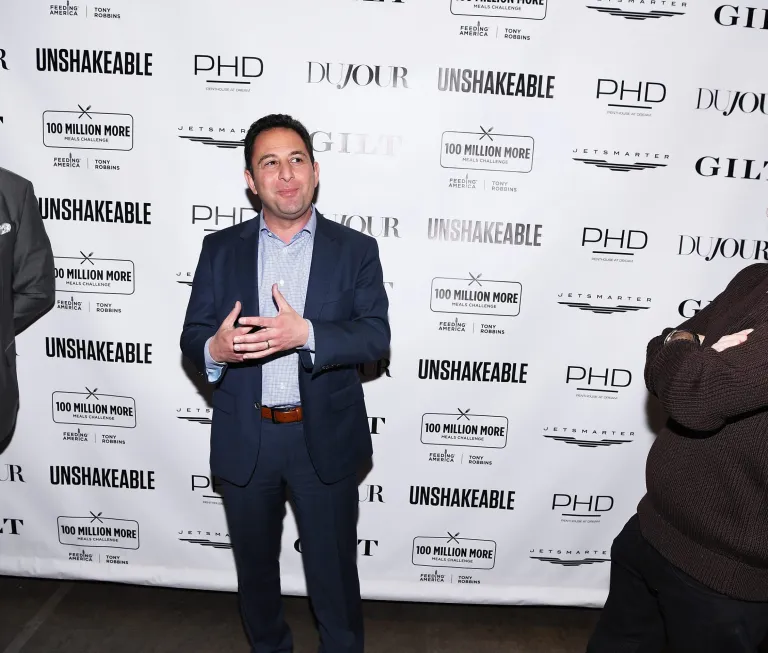
America’s widening divide between asset owners and everyone else is becoming harder to ignore, even for those who have benefited most from the country’s economic system. Peter Mallouk, chief executive of wealth management firm Creative Planning, warned this week that US wealth inequality has reached a point that is “100% completely unsustainable as a society.”
His remarks reflect a broader concern that strong top-line economic data is masking a much more uneven reality. While stock market gains, low unemployment, and steady GDP growth have helped preserve the image of a resilient economy, many households are finding it harder to build savings, buy homes, or keep up with the rising cost of everyday life.
When strong data tells only half the story
The latest Federal Reserve figures cited in the original report show how concentrated wealth has become. In the third quarter of 2025, the top 1% of US households held 31.7% of the nation’s wealth, roughly on par with the combined holdings of the bottom 90%. That marks the widest gap since the central bank began tracking the data in 1989.
These numbers help explain why the economy can appear healthy on paper while many Americans feel financially stuck. Gains in financial markets disproportionately benefit households that already own stocks, real estate, and other appreciating assets. Those without meaningful asset exposure are far less likely to see the same lift in their net worth.
Mallouk amplified that point by highlighting data that suggests the country is increasingly operating as a K-shaped economy. In that kind of recovery, upper-income households move ahead through rising asset values and stronger income growth, while lower and middle-income groups struggle to make similar progress.
Who is driving the economy now?
A key sign of this shift is the distribution of consumer spending. According to the analysis referenced in the source material, the top 10% of Americans now account for nearly half of all consumer spending. Two decades ago, spending was spread more evenly across income groups, making the economy less dependent on affluent households.
That change matters far beyond household budgets. Consumer spending is the main engine of the US economy, and when a growing share of it comes from wealthy earners, the broader system becomes more exposed to inequality. A consumption pattern dominated by high-income households can leave businesses, policymakers, and markets less responsive to the financial strain facing the majority of consumers.
Mallouk summarized that imbalance bluntly in his post, noting that the bottom 80% are seeing their share of spending continue to shrink. The concern is not only moral or political, it is economic. A society where fewer people can participate fully in growth may face weaker long-term stability.
Why the bottom 80% keep losing ground
Wage growth has also become more uneven. The source article points to Bank of America data showing that pay for high and middle-income earners rose 3% last year, while low-income households saw gains of just 1.5%. That reversal is notable because the early post-pandemic recovery briefly favored lower-income workers, who had seen stronger wage growth than wealthier peers.
Now, many households appear to be losing momentum. Homeownership remains out of reach for many prospective buyers, especially those without family wealth or significant savings. At the same time, inflation in essentials has left many consumers more focused on covering basic needs than building financial resilience.
This dynamic helps explain why public frustration has persisted despite relatively stable macroeconomic indicators. Financial security is shaped less by headline growth than by whether households can accumulate assets, withstand shocks, and improve their position over time.
A warning from inside the system
Mallouk is not alone among wealthy business figures in warning that inequality carries wider social risks. The original report notes that billionaire investor Ray Dalio has previously argued that widening wealth gaps can fuel populism and deepen social fractures. Other executives, including Salesforce CEO Marc Benioff, have supported higher corporate taxes aimed at funding housing and education.
Those views reflect a growing recognition that inequality is not just a side effect of modern capitalism, it can become a destabilizing force when left unchecked. The danger is especially acute when market performance and lived experience move in opposite directions.
That is why the debate over US wealth inequality is likely to remain central to business, policy, and politics. If more national wealth, spending power, and opportunity continue to concentrate at the top, then a strong economy may become increasingly difficult for most Americans to recognize in their own lives.