• Home
  • BUSINESS
  • ECONOMY
  • FINANCE
  • LIFESTYLE
  • MILLIONAIRE STORY
  • REAL ESTATE
  • TRAVEL
No Result
View All Result
MILLIONAIRE | Your Gateway to Lifestyle and Business
  • Home
  • BUSINESS
  • ECONOMY
  • FINANCE
  • LIFESTYLE
  • MILLIONAIRE STORY
  • REAL ESTATE
  • TRAVEL
No Result
View All Result
MILLIONAIRE | Your Gateway to Lifestyle and Business
No Result
View All Result
Home ECONOMY

U.S. Must Slash Deficit to 3% or Face Debt “Death Spiral,” Warns Ray Dalio

February 14, 2025
in ECONOMY
U.S. Must Slash Deficit to 3% or Face Debt “Death Spiral,” Warns Ray Dalio

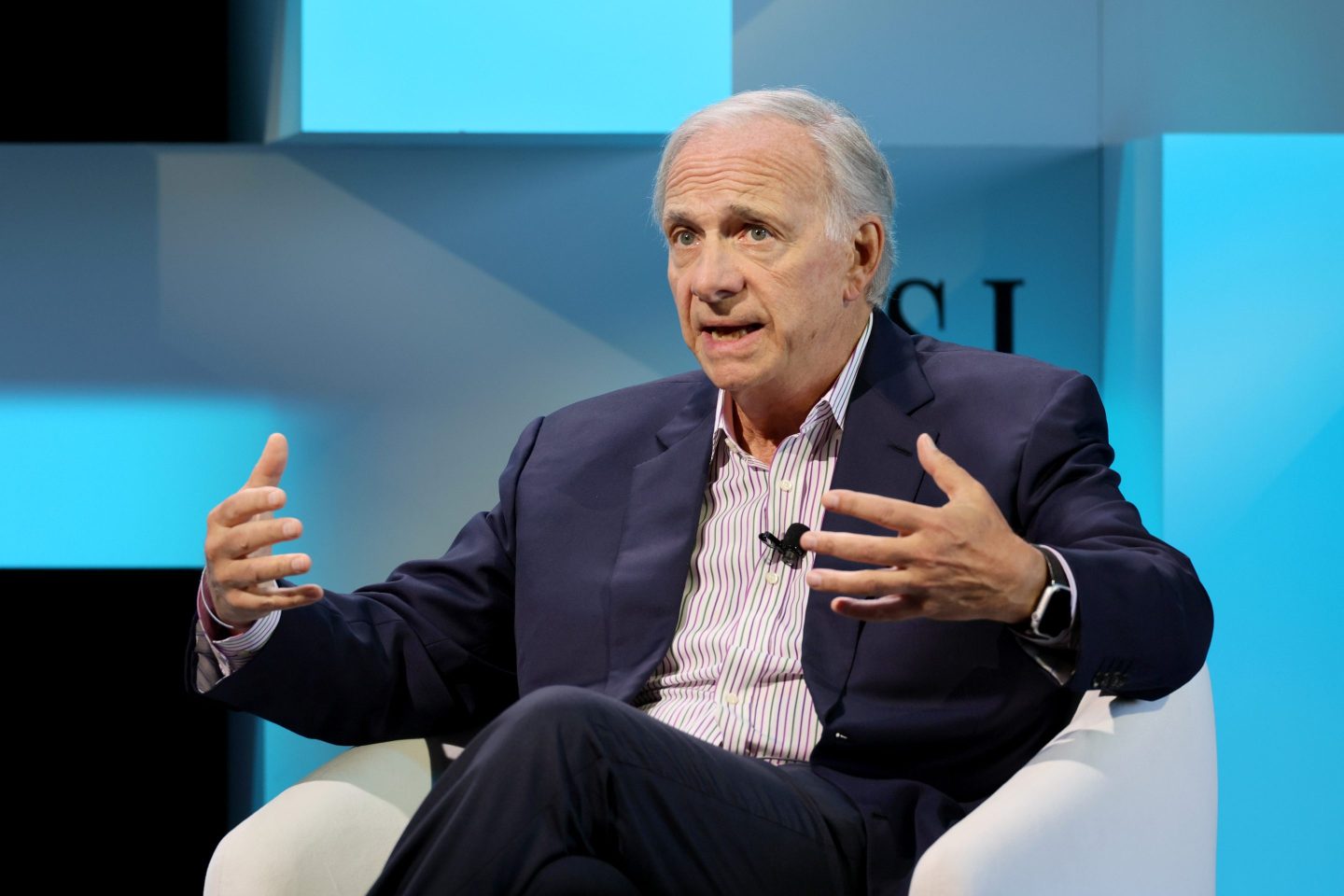
Dia Dipasupil—Getty Images

Billionaire investor Ray Dalio has issued a stark warning: the U.S. must reduce its fiscal deficit from an expected 7.5% of GDP to 3% within the next three years, or risk triggering a catastrophic debt crisis. Speaking at the World Governments Summit in Dubai on Thursday, the founder of Bridgewater Associates likened the nation’s $36 trillion debt to “plaque building up on the arterial walls of the U.S. financial system,” urging immediate action to avert an “economic heart attack.”

You might also like

Faulty U.S. Jobs and Inflation Data Deepen Market Uncertainty

U.S. Government Shutdown Ends, but Wall Street Faces Another in 10 Weeks

Hopes for December Rate Cut Fade as Powell Faces Divided Fed

Dalio emphasized that without significant fiscal discipline, bond markets could become overwhelmed by the sheer volume of new Treasury issuances, leading to a “death spiral” of soaring interest rates and unsustainable borrowing costs. “The United States will run a deficit of about 7.5% of GDP if the Trump tax cuts continue, which I expect,” he said. “We need to cut the deficit to 3% in the next three years to avoid disaster.”

The Looming Bond Market Crisis

The urgency of Dalio’s warning comes amid rising concerns about the bond market’s ability to absorb the growing supply of U.S. debt. Recent data showing higher-than-expected inflation in January has dashed hopes of further interest rate cuts, keeping yields on 10-year Treasuries above 4.6%. As inflation rises, bond investors demand higher premiums, increasing the cost of servicing the national debt and further straining government finances.

Dalio fears that bond markets, which act as a “sponge” to keep borrowing costs low, will eventually reach a breaking point. “When I calculate the supply and demand over the next year and three years, we have an immediate issue,” he said. If the market chokes on the influx of Treasuries, interest rates could skyrocket, forcing the U.S. to borrow even more just to pay off existing debts—a vicious cycle known as a “debt death spiral.”

The Austerity Dilemma

To avoid this scenario, the U.S. government must take drastic measures to reduce the deficit. However, the path to fiscal sustainability is fraught with challenges. White House economic advisor Kevin Hassett outlined a strategy to curb inflation by “increasing supply and reducing aggregate demand.” Yet, achieving these goals will require painful trade-offs.

1. Increasing Supply: Boosting productivity through technological advancements, such as AI or robotics, could help. However, President Trump’s plans for mass deportations of undocumented immigrants may hinder labor force growth, making this approach harder to execute.

2. Reducing Demand: Lowering aggregate demand often translates to austerity measures, such as cutting government spending. While effective in reducing deficits, austerity can exacerbate economic hardship for everyday Americans already grappling with a cost-of-living crisis.

Dalio argued that the U.S. no longer has the luxury of time to build consensus on the scale of cuts needed. “You do it, then you find out what’s tolerable,” he said, emphasizing the need for swift action, even if it risks short-term disruption. “Society will have to see what kind of damage ensues and then pick up the pieces afterwards.”

A Race Against Time

With just three years left in President Trump’s second term, the clock is ticking. Dalio’s warning underscores the precarious balance between fiscal responsibility and economic growth. While austerity may be necessary to avert a debt crisis, its social and economic consequences could be severe.

The U.S. must also address the structural issues driving its deficit, including the sustainability of tax cuts and the efficiency of government spending. Without meaningful progress, the nation risks a financial meltdown that could have global repercussions.

As Dalio put it, “Since achieving [deficit reduction] must be of paramount importance, you do it. Then you find out what’s tolerable.” The question remains: how much pain is the U.S. willing to endure to secure its financial future?

Source: Fortune

Share30Tweet19

Recommended For You

Faulty U.S. Jobs and Inflation Data Deepen Market Uncertainty

by Zoe
November 14, 2025
0
Faulty U.S. Jobs and Inflation Data Deepen Market Uncertainty

Markets Lose Faith in the Numbers Wall Street is grappling with an unsettling realization: the U.S. government’s economic data may not be as reliable as once believed. In...

Read moreDetails

U.S. Government Shutdown Ends, but Wall Street Faces Another in 10 Weeks

by Zoe
November 13, 2025
0
U.S. Government Shutdown Ends, but Wall Street Faces Another in 10 Weeks

Markets Breathe, but Not for Long The record-breaking U.S. government shutdown has officially ended after weeks of political standoff and economic uncertainty, but investors are already bracing for...

Read moreDetails

Hopes for December Rate Cut Fade as Powell Faces Divided Fed

by Zoe
November 12, 2025
0
Hopes for December Rate Cut Fade as Powell Faces Divided Fed

Markets Lose Confidence in a Year-End Cut Wall Street’s expectations for a Federal Reserve rate cut in December are evaporating as inflation remains sticky, job growth slows, and...

Read moreDetails

Budget Watchdog Warns Trump’s $2,000 Tariff Dividends Could Cost Twice the Revenue

by Zoe
November 11, 2025
0
Budget Watchdog Warns Trump’s $2,000 Tariff Dividends Could Cost Twice the Revenue

A Costly Promise Under Scrutiny A new analysis from a leading budget watchdog warns that Donald Trump’s plan to return $2,000 in “tariff dividends” to American households would...

Read moreDetails

Economist Warns of ‘Low-Hire, More-Fire’ Era as Talent Hoarding Ends

by Zoe
November 11, 2025
0
Economist Warns of ‘Low-Hire, More-Fire’ Era as Talent Hoarding Ends

A Turning Point for the Labor Market Corporate America’s hiring spree has officially reversed. According to a leading economist, the U.S. has entered a “low-hire, more-fire” economy, where...

Read moreDetails

Leave a Reply Cancel reply

Your email address will not be published. Required fields are marked *

Browse by Category

  • BUSINESS
  • ECONOMY
  • FINANCE
  • LIFESTYLE
  • MILLIONAIRE STORY
  • REAL ESTATE
  • TRAVEL

Recent Posts

  • Faulty U.S. Jobs and Inflation Data Deepen Market Uncertainty
  • Ex-Meta Exec Credits Mark Zuckerberg for His Work-Life Balance Philosophy
  • Why Diarrha Ndiaye’s Leadership at Skims Is Changing the Rules of Modern Luxury
  • Nevada Governor’s Office Linked to Deleted Meeting After Boring Co. Safety Probe
  • U.S. Government Shutdown Ends, but Wall Street Faces Another in 10 Weeks

Recent Comments

No comments to show.

Archives

  • November 2025
  • October 2025
  • September 2025
  • August 2025
  • July 2025
  • June 2025
  • May 2025
  • April 2025
  • March 2025
  • February 2025
  • June 2024

Categories

  • BUSINESS
  • ECONOMY
  • FINANCE
  • LIFESTYLE
  • MILLIONAIRE STORY
  • REAL ESTATE
  • TRAVEL

CATEGORIES

  • BUSINESS
  • ECONOMY
  • FINANCE
  • LIFESTYLE
  • MILLIONAIRE STORY
  • REAL ESTATE
  • TRAVEL

About Millionaire MNL News

  • About Millionaire MNL News

© 2025 Millionaire MNL News

No Result
View All Result
  • HOME
  • BUSINESS
  • ECONOMY
  • FINANCE
  • LIFESTYLE
  • MILLIONAIRE STORY
  • REAL ESTATE
  • TRAVEL

© 2025 Millionaire MNL News

Are you sure want to unlock this post?
Unlock left : 0
Are you sure want to cancel subscription?