The economic fallout from the conflict involving Iran is beginning to eclipse the damage caused by last year’s tariff turmoil, according to Moody’s Analytics chief economist Mark Zandi, who warned that rising energy costs could slow growth and reignite inflationary pressure across the United States.
The warning comes after a volatile stretch for the American economy that started with President Donald Trump’s sweeping tariff programme in 2025 and has now been compounded by instability in global oil markets. Economists are increasingly concerned that the Iran war inflation shock could weaken consumer spending, stall hiring and raise the risk of a prolonged period of sluggish growth paired with elevated prices.
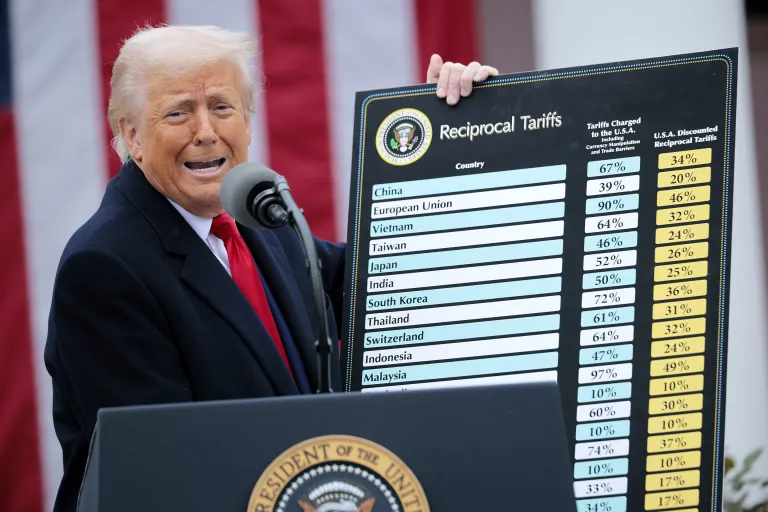
Trump had presented tariffs as the centrepiece of his “Make America Wealthy Again” agenda when he announced the measures on what the administration called Liberation Day in April 2025. Financial markets reacted sharply at the time, with the Dow Jones Industrial Average dropping roughly 11% over four trading sessions before the administration partially rolled back several levies.
Energy Prices Are Replacing Tariffs as the Main Threat
Zandi said higher oil and commodity prices linked to the conflict now pose a greater economic danger than the tariff measures themselves. In recent public comments, he warned that transport costs, airline fares and food prices are likely to rise over the coming months as energy markets remain under pressure.
The Strait of Hormuz, one of the world’s most important oil shipping routes, remains disrupted amid continuing hostilities. Analysts have closely watched the waterway because roughly one-fifth of global petroleum consumption passes through the corridor, according to the U.S. Energy Information Administration.
The impact is already feeding into inflation expectations. While consumer price growth has cooled considerably from the 9.1% peak recorded in 2022, inflation has remained above pre-pandemic norms. Economists had expected pricing pressures to ease further during 2026, but higher fuel costs have complicated that outlook.
Goldman Sachs analysts recently warned that prolonged disruptions could tighten fuel supplies significantly, including shortages affecting aviation fuel later this summer. Several European airlines have already reduced routes and adjusted schedules because of higher operating costs and uncertainty around fuel availability.
At the same time, businesses across sectors continue to take a cautious stance on hiring. Employers had already slowed recruitment because of uncertainty surrounding trade policy and the rapid adoption of artificial intelligence technologies. Zandi now expects job growth to remain largely flat while unemployment edges higher.
Wall Street Is Watching for Signs of Stagflation
The combination of slower growth and persistent inflation has revived discussion around stagflation, a term associated with the economic malaise of the 1970s. While few economists believe conditions have reached that point yet, the current mix of weak expansion and rising costs has unsettled investors.
A March report from the nonpartisan Tax Foundation estimated that tariffs imposed under Section 232 authority could reduce long-term U.S. GDP by 0.2% and eliminate roughly 154,000 jobs. Those tariffs were reinstated after earlier measures issued under emergency powers faced legal setbacks in court.
Despite the deteriorating backdrop, recession forecasts remain divided. Moody’s recession probability reached 49% earlier this year, while Goldman Sachs placed the odds closer to 30%. EY-Parthenon estimated the likelihood at roughly 40%.
Recent labour market data has offered some resilience. Employers added 178,000 jobs in March, outperforming expectations, while the unemployment rate slipped to 4.3%. Economists surveyed by Bloomberg expect additional hiring gains in upcoming employment figures, although at a slower pace than earlier in the year.
The broader concern is whether sustained geopolitical instability could undermine consumer confidence and corporate investment at the same time. Historically, sharp spikes in oil prices have often preceded periods of economic slowdown, particularly when combined with tighter financial conditions.
Investors Are Preparing for a Longer Period of Uncertainty
Financial markets are now shifting focus away from tariffs and toward the durability of the global energy shock. Investors are monitoring whether the conflict expands further and how long shipping disruptions in the Gulf region persist.
The Federal Reserve also faces a more difficult balancing act. Policymakers may hesitate to cut interest rates aggressively if energy-driven inflation continues to rise, even as economic growth weakens. That could leave borrowing costs elevated for longer than businesses and consumers had anticipated at the start of the year.
For now, economists broadly agree that the U.S. economy remains more resilient than many global peers. The next several months, however, are likely to test how much strain households, employers and financial markets can absorb if energy prices continue climbing.