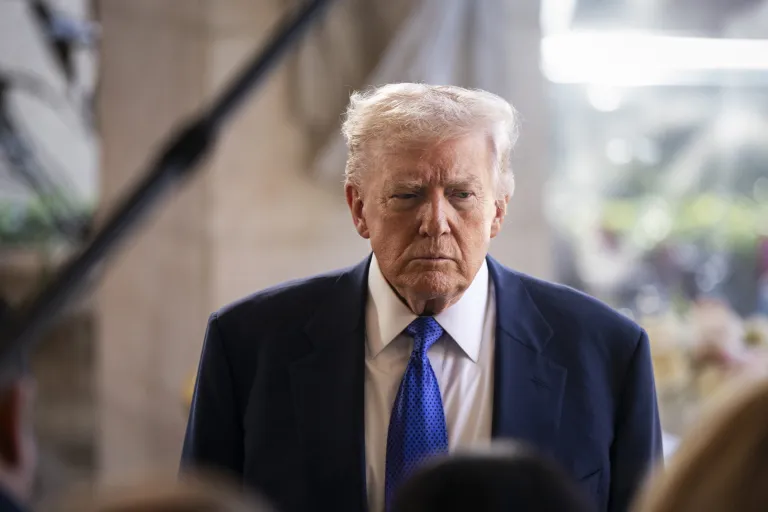
President Donald Trump has missed a legally required deadline to submit his administration’s federal budget proposal, adding fresh uncertainty to the debate over how the United States will manage its $38.5 trillion national debt. The missed filing is renewing concerns among economists and fiscal watchdogs about the absence of a clear spending and deficit strategy from the White House.
Under the Budget and Accounting Act of 1921, presidents are expected to submit a budget to Congress on the first Monday in February. That deadline passed without a proposal for fiscal year 2027, which begins in October. While delays are sometimes tolerated during transitions between administrations, 2026 does not qualify as a transition year, making the lapse more notable.
Why the missed deadline matters now
The delay comes at a sensitive moment for U.S. public finances. Federal borrowing has climbed steadily, with the government running a deficit of $1.78 trillion in fiscal year 2025. Although late budgets have become common, no president has submitted one on time since 2015, economists argue that the scale of today’s debt makes continued delays riskier.
Fiscal analysts warn that missing the Trump budget deadline national debt debate signals a lack of urgency at a time when interest costs are rising and long-term obligations remain unresolved. Without a formal budget, Congress and markets lack a clear framework for evaluating spending priorities, revenue assumptions, and deficit projections.
“If you don’t budget, you can’t govern”
One of the most vocal critics has been Committee for a Responsible Federal Budget, a bipartisan group focused on deficit reduction. Its president, Maya MacGuineas, said the absence of a budget more than a year into Trump’s second term raises serious questions about fiscal leadership.
MacGuineas has urged the administration to outline clear targets, such as reducing deficits to at least 3 percent of gross domestic product, alongside specific tax and spending policies. She argues that stabilizing the debt will require politically difficult choices involving major programs like Social Security, Medicare, defense spending, or federal revenue.
She has also cautioned against overly optimistic economic assumptions. Most independent forecasts project long-term U.S. growth below 2 percent annually, making budgets based on sustained 3 percent growth unrealistic, in her view.
Optimism inside the administration
The White House has struck a more upbeat tone, particularly on near-term growth. Commerce Secretary Howard Lutnick said recently that he expects economic growth to exceed 5 percent in early 2026, potentially higher if interest rates fall. Administration officials have suggested that stronger growth could help offset deficits, though many economists remain skeptical.
Trump has also pointed to alternative revenue ideas, including expanded tariffs and proposals such as high-priced fast-track visas aimed at wealthy foreign nationals. At the same time, the president has floated returning tariff revenues directly to voters through rebate checks, a move critics say would undermine any deficit reduction benefits.
Voters and lawmakers signal rising concern
Public anxiety over federal debt appears to be growing. A recent survey by the Peter G. Peterson Foundation found that more than 80 percent of voters want lawmakers to devote more attention to the debt, and over three-quarters consider debt reduction a top priority. While broad concern is clear, support for the concrete policy steps required to rein in deficits remains uncertain.
On Capitol Hill, there are signs of bipartisan interest in setting fiscal targets. Representatives Bill Huizenga and Scott Peters have introduced a resolution calling for the federal deficit to be reduced and maintained at or below 3 percent of GDP by 2030, with an eventual goal of a balanced budget.
For economists and budget experts, the overdue proposal is more than a procedural issue. They argue it is a test of whether the administration is prepared to confront the structural drivers of debt. Until a budget is released, the Trump budget deadline national debt debate is likely to intensify, with markets, voters, and lawmakers all watching for clearer direction.