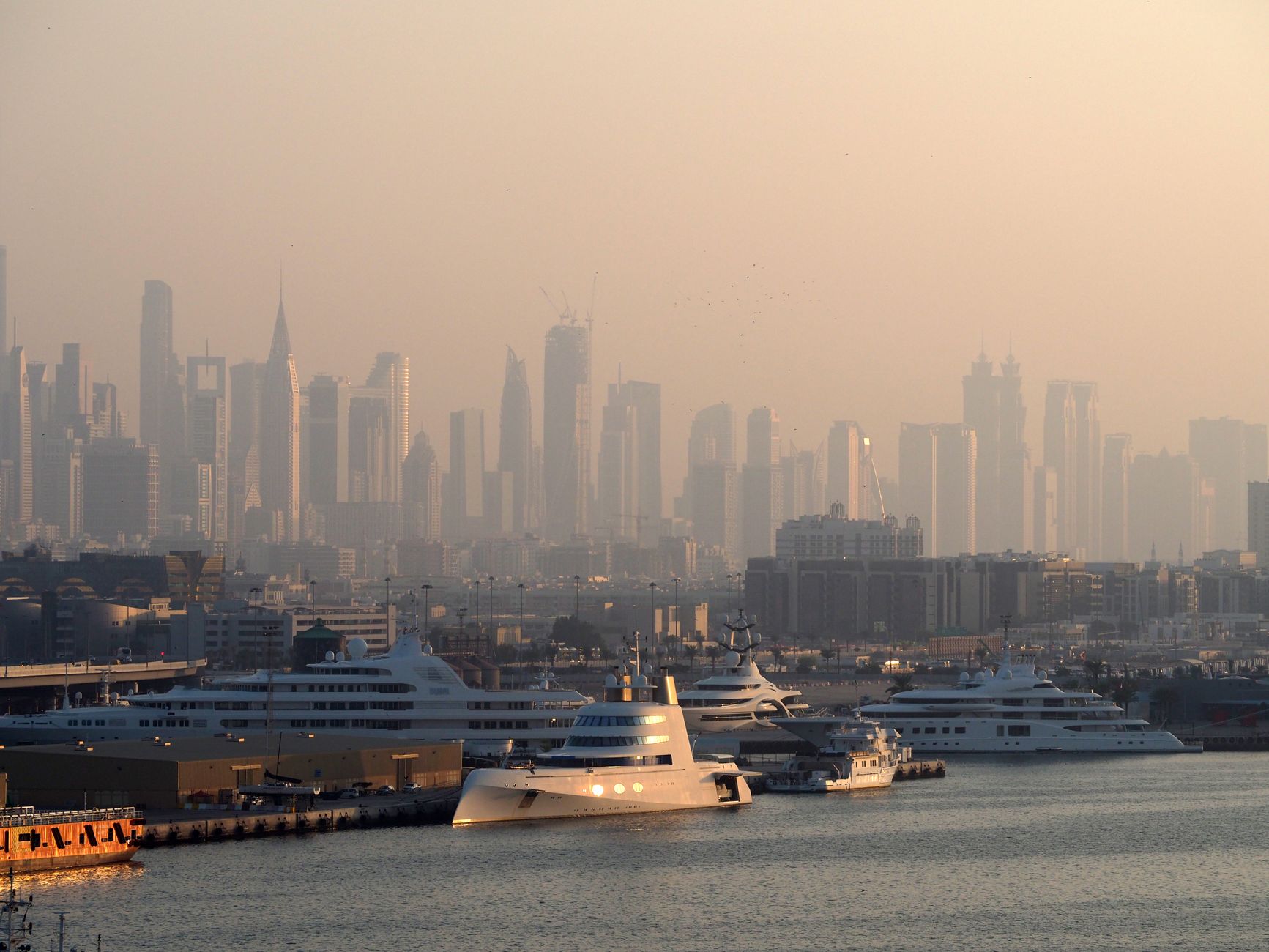
Ten jurisdictions charge no personal income tax on wages, investment income, or capital gains. The list has remained stable for decades—Monaco, the UAE, the Bahamas, the Cayman Islands, Bermuda, Bahrain, Kuwait, Qatar, Brunei and, since early 2026, Saudi Arabia—and each imposes strict residence, capital, or nationality conditions to access the regime.
Choosing a zero-tax jurisdiction turns on more than headline rates: cost of living, visa accessibility, treaty networks, substance tests, and the interaction with your home-country exit rules often matter more than the statutory absence of income tax. Below is a jurisdiction-by-jurisdiction breakdown of what each regime requires, what it costs, and which populations it suits.
United Arab Emirates
The UAE remains the most accessible no-income-tax jurisdiction for high-net-worth professionals. The seven emirates—Abu Dhabi, Dubai, Sharjah, Ajman, Umm Al Quwain, Ras Al Khaimah and Fujairah—operate a unified federal tax system that has never levied personal income tax. A nine per cent federal corporate tax applies to juridical persons with profits above AED 375,000, but individuals pay nothing on salary, dividends, or gains.
Residency follows one of three paths: employment sponsorship, investor visa, or the Golden Visa, which grants ten-year renewable residence to investors, entrepreneurs, and certain professionals. The investor route requires AED 2 million in UAE property or securities, held for at least three years. Employment visas tie to a single sponsor, making them unsuitable for portfolio entrepreneurs.
Tax residency for treaty purposes demands that you reside in the UAE for at least 183 days per calendar year or, if fewer, that you maintain a permanent home and your centre of economic or personal interests lies in the Emirates. The Federal Tax Authority issues a tax-residency certificate upon application, which is recognised by most double-taxation treaties signed since 2018.
The UAE signed 148 double-taxation agreements as of early 2026, covering the United Kingdom, India, Germany, France, and Singapore. Banks in OECD jurisdictions accept UAE residence certificates, though correspondent banks may require secondary proof of substance—lease contract, Emirates ID, and utility bills—if source-country wealth exceeds thresholds that trigger enhanced due diligence.
Most professionals choose Dubai for its airport hub, financial free zones, and real-estate liquidity. Abu Dhabi offers lower property yields but tighter integration with sovereign-wealth employment. Sharjah imposes stricter social rules and an alcohol ban but charges a third of Dubai rents.
Monaco
Monaco levies no income tax on residents, with one exception: French nationals, who remain liable to French tax under a bilateral treaty signed in 1963. All other nationals enjoy zero tax on wages, dividends, interest, and capital gains. There is no wealth tax, but inheritance and gift taxes apply to transfers of Monaco-situs assets unless protected by treaty.
Residency requires three steps: demonstrate accommodation, prove financial self-sufficiency, and obtain a police certificate. The Monégasque government expects applicants to hold liquid assets or income sufficient to support themselves without employment; officials review bank statements covering six months but publish no formal threshold. In practice, commercial advisers report a floor of €500,000 in demonstrable assets, though the Residency Section may approve lower sums for sponsored employees of Monaco-based firms.
Rent or purchase of a Monaco property is mandatory. One-bedroom apartments in the Condamine or Fontvieille districts start near €1 million; a two-bedroom in Carré d'Or trades above €5 million. No minimum square-metreage applies, but the Direction de la Sûreté Publique verifies that the address is your principal residence by inspecting occupancy records and utility consumption.
Monaco participates in automatic exchange of information under the Common Reporting Standard and has signed 30 tax-information exchange agreements but remains outside the European Union, preserving autonomy over customs and VAT. The principality's VAT regime mirrors France's (20 per cent standard rate) under a customs union.
French citizens considering Monaco tax residency must weigh the 1963 treaty: income earned worldwide remains taxable in France at progressive rates up to 45 per cent. The treaty exempts neither investment income nor employment income. Non-French EU nationals benefit fully from the zero-tax regime but must satisfy French substance tests if they previously held French residence.
The Bahamas
The Commonwealth of the Bahamas imposes no income, capital-gains, inheritance, or gift tax on individuals. Revenue derives from import duties, VAT (12 per cent standard rate, introduced in 2015), and real-property tax on commercial holdings. Residential owner-occupiers pay no property tax on their principal home.
Annual residence permits cost BSD 1,000; the homeowner's permit, available to anyone who purchases real property valued at BSD 750,000 or above, grants indefinite renewable residence and can lead to permanent residency after ten years of continuous physical presence. Accelerated permanent residence—issued within one to two years—requires a real-estate purchase of BSD 1.5 million and government processing fees near BSD 10,000.
The Bahamas signed only two double-taxation treaties—with the United Kingdom (1950s vintage, covering withholding on certain passive income) and with the Nordic countries on shipping. Corporate structures domiciled in Nassau do not benefit from treaty relief elsewhere, which limits the jurisdiction's appeal for holding-company planning.
Physical substance rules tightened after the EU grey-list episode in 2017. International Business Companies must demonstrate economic substance if they claim Bahamas residence for treaty purposes, and the registrar now collects beneficial-ownership data under the Beneficial Ownership Secure Search System, accessible to tax authorities in Common Reporting Standard partner states.
Cost of living runs high: imported food and fuel carry 30–45 per cent duty. Nassau and the Family Islands have limited scheduled airlift outside North American routes, which complicates European or Asian travel. Most high-net-worth residents maintain homes in Florida or the United Kingdom and use the Bahamas as a statutory residence for tax purposes.
Cayman Islands
The Cayman Islands enacted a constitutional guarantee prohibiting direct taxation until at least 2028, renewable by the Legislative Assembly every 20 years. No income, capital-gains, corporate, inheritance, or payroll tax exists. Government revenue relies on import duties (up to 27 per cent), annual company fees, and work-permit levies.
Residency follows purchase of real property valued at KYD 2.4 million or above (approximately USD 2.9 million at the fixed peg of KYD 1 = USD 1.20). The Certificate of Permanent Residency carries no annual renewal fee, grants indefinite leave to remain, and allows the holder to work without a separate permit. Alternatively, a Residency Certificate with Right to Work requires property of KYD 1.2 million and an annual development charge but is renewable, not permanent.
Cayman has signed 39 tax-information exchange agreements and one comprehensive double-taxation treaty, with Japan, covering only shipping and air transport. Passive holding companies cannot claim treaty relief, and most jurisdictions treat Cayman companies as non-resident for withholding purposes.
The islands' reliance on imports inflates daily expenses: groceries cost 50–70 per cent more than Miami, and fuel prices track Brent crude with little subsidy. Owen Roberts International Airport links Grand Cayman to Miami, New York, Toronto, and London; inter-island flights to Cayman Brac and Little Cayman run twice daily. Hurricane season—June through November—forces annual insurance renewals that can exceed one per cent of insured property value.
Banking infrastructure is robust. More than 150 licensed banks operate on-island, including subsidiaries of HSBC, Scotiabank, and Butterfield, though account-opening now demands proof of economic substance and source of funds certified by a local attorney or accountant.
Bermuda
Bermuda charges no personal income, capital-gains, or inheritance tax. The government finances itself through payroll tax (shared between employer and employee, averaging 14–16 per cent), customs duties (up to 35 per cent on luxury goods), and land tax on assessed annual rental values.
The Annual Residency Certificate costs USD 2,500 per person and requires proof of financial independence; officials expect liquid assets of at least USD 500,000 per applicant, verified by bank statements. Property ownership is restricted: non-Bermudians may purchase only properties on the government's restricted list, and minimum prices typically exceed USD 3 million in desirable parishes.
Bermuda signed 42 double-taxation treaties, mostly targeting reinsurance and shipping income, and maintains a Tax Information Exchange Agreement with the United States that predates the Common Reporting Standard. American citizens residing in Bermuda remain subject to worldwide US taxation and FBAR reporting.
The cost of living is the highest in the Atlantic: fuel is imported, the electricity grid runs on diesel generation, and a Protected Local Market regime restricts grocery imports to shield domestic retailers. A family of three spending moderately will exceed USD 10,000 per month excluding rent. Work permits are difficult to obtain unless sponsored by a Bermuda-licensed employer, making the jurisdiction suitable for retirees and remote entrepreneurs rather than mid-career professionals seeking local employment.
Bahrain
The Kingdom of Bahrain levies no personal income tax on individuals. Corporate income tax exists only for oil and gas companies; other juridical persons pay nothing. A five per cent VAT was introduced on 1 January 2019, applying to most goods and services.
Residency by investment opened in 2019 and offers two tiers: a temporary one-year renewable visa for those purchasing property worth BHD 100,000 (approximately USD 265,000) or a ten-year renewable Golden Residency for property exceeding BHD 200,000. Both routes grant family inclusion and permit employment without separate sponsorship.
Bahrain's economy has diversified beyond hydrocarbons; the financial sector accounts for 17 per cent of GDP, and the Bahrain Financial Harbour and Bahrain Bay developments host regional headquarters for global banks and asset managers. Cost of living is moderate by Gulf standards: rent for a two-bedroom apartment in Seef or Juffair averages BHD 500 per month, and fuel remains subsidised.
Bahrain signed 47 double-taxation agreements, including treaties with the United Kingdom, France, China, and India. The treaty network is stronger than the UAE's for certain corridors—particularly South and East Asia—making Bahrain attractive for holding passive investments sourced in treaty-partner states.
The Kingdom maintains close security and monetary ties with Saudi Arabia; the two countries are linked by the 25-kilometre King Fahd Causeway, and the Bahraini dinar pegs to the US dollar at a fixed rate. Political stability improved after 2011 unrest, though regional geopolitical risk persists.
Kuwait
Kuwait imposes no personal income tax on individuals, whether citizens or foreign residents. Corporate income tax applies only to foreign companies operating in Kuwait (15 per cent on net profit) and to the share of net profit attributable to foreign shareholders in Kuwaiti companies; wholly Kuwaiti-owned entities and the Kuwaiti share of mixed companies are exempt.
Residency is restricted. Work visas require local sponsorship, and self-sponsored freelance or investor visas were discontinued in 2016. Property ownership by non-Gulf Cooperation Council nationals is limited to designated areas and requires Ministry of Justice approval. Most expatriates reside on employer-sponsored work permits, which expire when employment ends.
Kuwait signed 55 double-taxation treaties, covering most European, Asian, and Middle Eastern jurisdictions. Tax residency for treaty purposes follows local civil-ID issuance, which is tied to a valid residence permit and lease registration. Banks issue tax-residency certificates upon request for account holders with valid residence, though correspondent banks often ask for secondary evidence of economic ties.
Cost of living is moderate. Rent for a two-bedroom apartment in Salmiya or Hawalli ranges from KWD 300 to 600 per month; petrol is heavily subsidised, trading near KWD 0.10 per litre. The summer climate is extreme—June through September temperatures exceed 45 °C—and most social life moves indoors.
Kuwait International Airport links to European, Asian, and North American hubs via Kuwait Airways and low-cost carriers. Road access to Saudi Arabia and onward Gulf states is straightforward, though border waits can exceed two hours during weekends and holidays.
Qatar
Qatar charges no personal income tax on individuals. Employers pay a five per cent social-insurance contribution on Qatari nationals' salaries, but expatriates and self-employed persons are exempt. Corporate income tax exists at 10 per cent on net profits of foreign companies, while Qatari-owned firms pay nothing.
Work-based residence dominates; employer sponsorship is required for most visas, and switching sponsors without consent (a no-objection certificate) was prohibited until recent labour reforms. The permanent-residence programme, launched in 2018, grants indefinite residence to individuals who have lived in Qatar for at least 20 years or who provide exceptional service to the state, defined at the discretion of the Interior Ministry.
Property ownership by non-Qataris is permitted in designated freehold zones—The Pearl, Lusail, West Bay Lagoon, and Al Khor—and confers a renewable residence visa for the buyer and immediate family. Minimum purchase thresholds vary by development; The Pearl studios start near QAR 730,000 (approximately USD 200,000), while villas in Lusail exceed QAR 4 million.
Qatar postponed VAT indefinitely; as of early 2026, no consumption tax applies, making it the only Gulf state without VAT. The Cost of living rose sharply during the 2022 FIFA World Cup but has since normalised. A two-bedroom apartment in West Bay or Lusail rents for QAR 7,000–10,000 per month; fuel and utilities remain subsidised.
Hamad International Airport is the region's second-largest hub after Dubai, with Qatar Airways operating direct flights to more than 160 destinations. The land border with Saudi Arabia reopened in 2021 after a four-year closure, restoring overland access to the wider Gulf.
Qatar signed 79 double-taxation treaties, one of the largest networks among zero-tax jurisdictions. The treaties cover withholding on dividends, interest, and royalties, making Qatar suitable for holding intellectual property or portfolio investments in treaty-partner states.
Brunei Darussalam
Brunei levies no personal income tax on individuals. Corporate income tax applies at 18.5 per cent to companies with annual turnover above BND 100,000; smaller firms pay nothing. There is no capital-gains tax, VAT, or sales tax; petrol, electricity, healthcare, and education are heavily subsidised.
Residency is difficult. Work permits require employer sponsorship, and investment visas are rare. Permanent residence and citizenship are available only to Malay Muslims who have resided in Brunei for at least 20 years and demonstrate proficiency in Malay language and culture. Property ownership by foreigners is restricted to leasehold in designated areas, subject to approval by the Land Department.
Brunei signed only six double-taxation agreements—with the United Kingdom, Singapore, Malaysia, Indonesia, Vietnam, and Japan—limiting treaty relief. Tax residency follows the issuance of a local identity card and proof of a permanent home; the Income Tax Department issues certificates on request.
The cost of living is low by regional standards. A two-bedroom apartment in Bandar Seri Begawan rents for BND 800–1,200 per month, and petrol costs BND 0.31 per litre. The economy relies almost entirely on hydrocarbons; private-sector opportunities outside oil, gas, and government contracting are limited.
Brunei International Airport connects to Kuala Lumpur, Singapore, Manila, and a handful of Chinese cities. The national carrier, Royal Brunei Airlines, operates a dry (alcohol-free) fleet, reflecting Sharia-influenced social policy introduced in phases since 2014.
Saudi Arabia
Saudi Arabia has never imposed personal income tax on residents; income derived from employment or self-employment within the Kingdom is untaxed for both Saudi nationals and expatriates. Corporate income tax applies to foreign companies and to the foreign-owned share of mixed enterprises at 20 per cent; Zakat (an Islamic levy of 2.5 per cent on net worth) applies to Saudi and Gulf Cooperation Council nationals' business income.
Until 2019, residency was limited to employment sponsorship or family reunion. The Premium Residency scheme, launched in 2019, offers one-year renewable residence for an annual fee of SAR 100,000 or permanent (indefinite) residence for a one-time fee of SAR 800,000. Both tiers include family members, permit property ownership nationwide, allow unrestricted exit and re-entry, and remove the requirement for employer or family sponsorship. Applicants must be at least 21 years old, have no criminal record, and hold medical insurance valid in the Kingdom.
Property ownership by non-Saudis was legalised in 2019, subject to approval by the Ministry of Investment and licensing by the Saudi Arabian General Investment Authority. Purchasers may buy residential or commercial property in designated zones, with no formal minimum threshold published. In practice, commercial advisers report that purchases below SAR 1 million face longer approval times.
Saudi Arabia signed 58 double-taxation treaties, covering most European, Asian, and Middle Eastern states. The General Authority of Zakat and Tax issues tax-residency certificates to individuals who hold valid Iqama (residence ID) and reside in the Kingdom for at least 183 days per tax year.
The cost of living varies widely by city. Riyadh and Jeddah offer two-bedroom apartments from SAR 3,000 per month in suburban districts; compound accommodation in expatriate-majority developments costs SAR 8,000–15,000. Fuel remains among the cheapest globally, at SAR 0.75 per litre for 91-octane petrol. VAT was introduced in 2018 at five per cent and tripled to 15 per cent in 2020.
Social reforms since 2017—including the legalisation of cinemas, mixed-gender concerts, and the lifting of the female driving ban—have broadened lifestyle options, though alcohol remains prohibited and religious police retain authority in public spaces. King Khalid International Airport (Riyadh) and King Abdulaziz International Airport (Jeddah) connect to global hubs, with Saudia and new low-cost carriers expanding routes.
Interaction with Exit Taxation and Citizenship-Based Regimes
Moving to a zero-tax jurisdiction does not sever tax ties with all source countries. The United States taxes citizens and green-card holders on worldwide income regardless of residence; only formal expatriation under section 877A of the Internal Revenue Code ends the obligation. Expatriates with net worth above USD 2 million or average annual net income tax above USD 188,000 (2026 threshold) trigger exit tax on unrealised capital gains at the time of renunciation. The foreign earned income exclusion shelters up to USD 130,000 (2026 figure) of wages earned abroad, but passive income and gains above the threshold remain taxable at ordinary rates.
Eritrea operates a diaspora tax of two per cent on worldwide income of citizens resident abroad, though enforcement is inconsistent. France, Spain, and Portugal levy exit taxes on unrealised gains if you hold significant shareholdings at the time of departure, though these can often be deferred if you move within the European Economic Area. The United Kingdom abolished exit tax on most individuals in 2013 but retains deemed-domicile rules: if you were UK-resident for 15 of the preceding 20 tax years, you remain liable to UK inheritance tax on worldwide assets for at least three years after departure.
Double-taxation treaties rarely help when moving to a zero-tax jurisdiction, because the treaty tie-breaker clauses—permanent home, centre of vital interests, habitual abode—cannot allocate taxing rights that the treaty partner does not assert. Instead, the source country retains full taxing rights. The practical defence is to establish sufficient physical presence, lease a home, register children in local schools, obtain local bank accounts, and sever economic ties (employment, directorships, investment mandates) to the former jurisdiction before departure.
Specialist tax counsel in both the exit and destination jurisdictions is mandatory. The cost of an advisory opinion typically runs USD 5,000–15,000, but the cost of a failed exit—deemed residence, unexpected withholding, or treaty-override provisions—can reach seven figures.