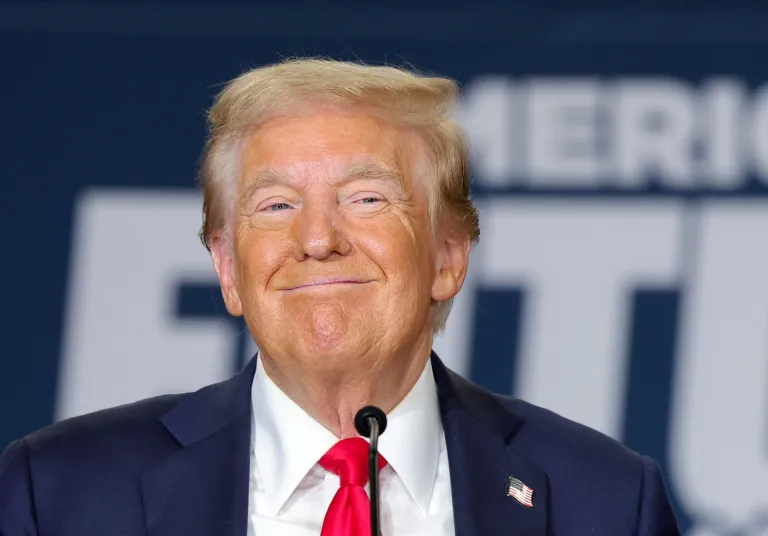
The U.S. Supreme Court is poised to issue a decision that could significantly reshape the balance of power between Congress and the White House. At the center of the case is whether President Donald Trump lawfully used the International Emergency Economic Powers Act, known as IEEPA, to impose sweeping tariffs on major trading partners including China, Canada, and the European Union.
Legal experts say the outcome could reach far beyond trade policy. If the court sides with the administration, it may effectively endorse a broad interpretation of executive authority that allows the president to impose taxes and fees without explicit congressional approval. The Supreme Court Trump tariffs tax authority question is already being closely watched by investors, business leaders, and constitutional scholars.
A case about tariffs, or something much larger?
Lower courts have ruled that IEEPA does not authorize the president to impose country-specific tariffs. The Supreme Court’s review, however, reopens the question of how far executive power can stretch under broadly written emergency statutes.
According to Timothy Meyer, a professor of international business law at Duke University, the implications are sweeping. IEEPA allows the president to regulate economic activity tied to national emergencies, including imports, exports, sales, and financial transactions. If tariffs fall within that definition of regulation, Meyer argues, other forms of taxation could logically follow.
Under that reasoning, a president could potentially impose sales taxes, property taxes, or other levies as tools to influence economic behavior, even if the statute does not explicitly mention taxes. Legal scholars warn that such an interpretation would give the executive branch extraordinary latitude, leaving few practical limits on presidential economic intervention.
What the justices seemed to signal
During oral arguments, several justices appeared skeptical of the administration’s position. Questions focused on whether Congress intended to delegate such expansive taxing authority to the president without clear statutory language.
The case represents one of the first major decisions of the new year for the Supreme Court of the United States and is widely viewed as a bellwether for how the court views executive power. A ruling against the administration would invalidate the IEEPA-based tariffs, dealing a blow to Trump’s broader trade agenda.
Market reaction could be muted, however. Benn Steil, director of international economics at the Council on Foreign Relations, says the basic tariff framework is unlikely to change dramatically regardless of the outcome. Even if the IEEPA tariffs are struck down, alternative legal authorities allow the president to impose targeted levies on national security grounds or for limited durations.
If tariffs fall, what replaces them?
While alternative tariff mechanisms exist, they are far more cumbersome. Instead of sweeping, country-wide tariffs, the administration would need to impose duties on specific goods and justify them through administrative investigations. These processes involve formal findings and agency review, adding time and legal exposure.
That difference matters for businesses that rely on predictable trade policy. Broad tariffs under IEEPA offered speed and scale, while replacement measures would likely be narrower and slower to implement. Even so, administration officials have long signaled they would pursue other executive options if the court rules against them.
The uncertain path to reimbursements
Another key issue is what happens if the tariffs are invalidated. Billions of dollars have already been collected, and it remains unclear how or when refunds would be issued. The Supreme Court is unlikely to dictate the repayment process, leaving discretion to the executive branch.
Steil notes that the government could make reimbursement administratively complex, slowing or discouraging claims. Business groups have echoed those concerns, pointing to the difficulty of calculating who paid what and how refunds should be distributed.
During oral arguments, Justice Amy Coney Barrett raised the possibility that only the plaintiffs in the case might be entitled to reimbursement, rather than all affected parties. While historically unusual, such a ruling could limit fiscal disruption and reduce market volatility.
A ruling with lasting consequences
Beyond tariffs and refunds, the case strikes at a fundamental question of governance. If the Supreme Court affirms broad presidential authority under IEEPA, it could set a precedent empowering future presidents to use emergency laws as de facto taxing statutes.
For now, markets are waiting, businesses are planning contingencies, and legal scholars are bracing for a decision that could redefine executive power for years to come.