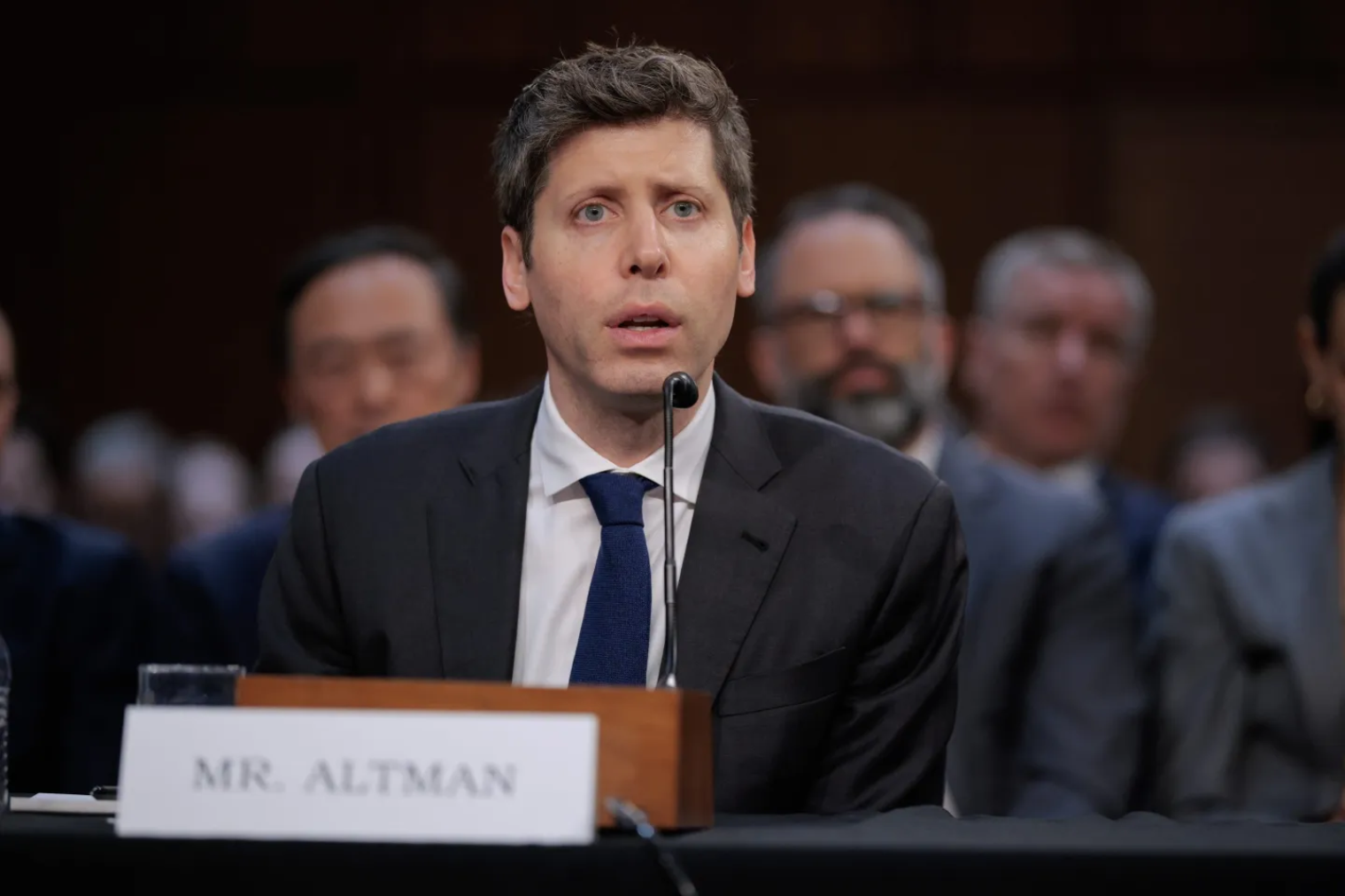
OpenAI CEO Sam Altman is sounding the alarm in Washington—not about the risks of artificial intelligence, but about overregulating it. In a recent round of meetings with U.S. lawmakers, Altman urged Congress to avoid policies that could slow America’s AI development and hand the competitive edge to China.
As seen in Millionaire MNL, Altman’s tone reflects a growing tension between AI safety and AI supremacy. And for one of the world’s most powerful AI executives, the message is clear: don’t let fear sabotage national leadership in one of the century’s defining technologies.
A plea for balance—not paralysis
Altman, whose company created ChatGPT and now collaborates closely with Microsoft, has long supported the idea of responsible AI regulation. But in recent comments to lawmakers, he warned that some proposals circulating in Washington could go too far, hampering innovation, slowing deployment, and ultimately weakening U.S. competitiveness in the face of an aggressive Chinese AI push.
“If the U.S. overcorrects with regulatory red tape, we risk falling behind nations that won’t hesitate to move faster,” Altman told congressional staffers in a closed-door session, according to people familiar with the discussions.
His comments come as Congress debates sweeping legislation on model licensing, algorithm audits, data use, and AI training transparency. Some versions would require companies like OpenAI to undergo strict compliance reviews before launching frontier models.
Altman argues that such measures, while well-intentioned, could delay breakthroughs, deter private capital, and create a chilling effect on foundational research.
A national security lens on innovation
Altman’s pitch isn’t just about business—it’s about geopolitics. He’s positioning AI as a national security imperative, where leadership in advanced models, chips, and compute capacity is as strategically vital as missile defense or quantum encryption.
China has made no secret of its intent to become the global AI superpower by 2030. The Chinese government is investing heavily in foundational models, surveillance applications, and military-grade AI.
In that context, Altman believes the U.S. should be focusing on boosting AI infrastructure, supporting domestic chip supply chains, and protecting open research collaboration—not erecting bureaucratic hurdles.
As seen in Millionaire MNL, the subtext is clear: in a race where speed matters, slow governance could be a form of surrender.
Inside the growing divide in Washington
Altman’s message is gaining traction with some lawmakers, particularly those on defense and tech-focused committees. But not everyone is convinced. Critics say that without robust guardrails, companies like OpenAI could create systems that exceed human control, amplify bias, or pose existential risks.
Senator Josh Hawley recently expressed concern that AI firms are trying to “self-regulate their way into a monopoly,” while Senator Elizabeth Warren has pushed for model audits and algorithmic transparency as a minimum baseline.
Altman has proposed a global licensing body for the most powerful AI systems—akin to the IAEA for nuclear energy—but argues that most models should remain under light-touch regulation, with innovation safeguarded.
Walking the tightrope between innovation and accountability
OpenAI is now in a delicate position: lobbying for freedom to operate, while also claiming to build safe, aligned AI. Altman’s personal credibility—built on transparency, long-termism, and collaboration—has helped keep the company above water in politically volatile waters.
But the balance is fragile. Too much openness could expose U.S. intellectual property. Too much caution could hand China the advantage.
In recent weeks, Altman has also emphasized the need for U.S.-EU cooperation on AI frameworks, and called for public-private alliances to advance safety research without stalling deployment.
“We’re in a race, but we also have to win on values,” he said.
Why this debate matters far beyond Washington
The stakes aren’t just legislative—they’re civilizational. How the U.S. regulates AI will shape who sets the global rules, what values are embedded in models, and how future breakthroughs are distributed.
Altman’s plea is simple: don’t let well-meaning regulation become a handbrake on American innovation.
As seen in Millionaire MNL, this is not just a policy battle. It’s the front line in a technological Cold War—and Sam Altman wants the U.S. to run faster, not just smarter.