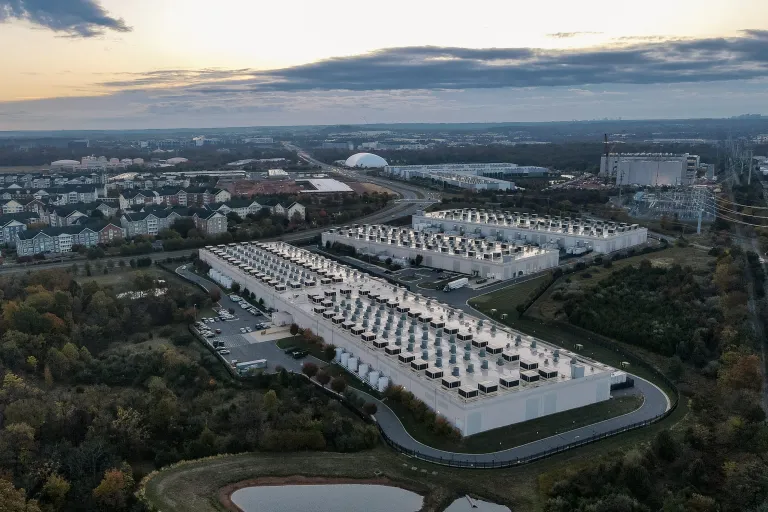
Meta’s planned Hyperion data center in Louisiana is becoming one of the most expensive public incentive deals tied to the AI boom, with estimates suggesting the company could receive roughly $3.3bn in state and local tax exemptions over the coming decades.
The scale of the proposed support package has intensified scrutiny around how aggressively US states are subsidising data center construction as technology groups accelerate spending on artificial intelligence infrastructure. The Meta facility, currently under development in Richland Parish, is expected to cost around $10bn to build and ranks among the largest AI-focused projects announced in the southern US this year.
Louisiana’s 20-Year Tax Exemption Plan
The incentive package centres on a Louisiana law that exempts qualifying data center equipment from state and local sales taxes for up to 20 years. According to an analysis first reported by Sherwood News, the measure could shield billions of dollars in purchases linked to AI chips and computing hardware from taxation.
Based on Louisiana’s combined state and local sales tax rate of 9.56%, the analysis estimated that Meta’s planned spending on graphics processing units and related equipment could generate roughly $3.3bn in avoided taxes over the life of the project.
The agreement was reportedly approved in 2024 through Richland Parish officials and applies to Laidley LLC, a Delaware-registered entity connected to Meta.
The company has argued the project will deliver significant economic benefits to the region. Meta said Hyperion is expected to create more than 5,000 construction jobs at peak activity and support over 500 permanent operational roles once the site becomes fully operational. The company has also pledged more than $300m for local infrastructure improvements, including roads and wastewater systems, alongside investments in schools and community organisations.
Critics, however, argue the public return remains uncertain given the scale of the incentives involved.
“These are wasteful subsidies for an industry that is growing very quickly and doesn’t need any public investments or support,” Kasia Tarczynska, senior research analyst at government accountability group Good Jobs First, told Fortune.
States Are Competing Aggressively for AI Infrastructure
The Louisiana proposal reflects a wider national contest to attract AI infrastructure investment as demand for computing power surges.
Technology companies are expected to spend close to $700bn globally on AI-related infrastructure this year, according to industry estimates cited in the original report. That spending wave has triggered an expansion of large-scale data center developments across rural and suburban areas of the US, particularly in states offering generous tax incentives and access to electricity.
Virginia, already the country’s largest data center market, reportedly provides around $1.9bn annually in tax incentives for the sector. Georgia’s estimated annual incentives have reached roughly $2.6bn, while Texas recently increased projected annual tax breaks for qualifying projects to more than $1bn.
Industry analysts say the competition reflects growing recognition that AI computing capacity is becoming strategically important infrastructure, similar to energy grids or semiconductor manufacturing.
McKinsey estimated in a 2024 report that global demand for data center capacity could more than triple by the end of the decade as AI adoption expands across industries including finance, healthcare, logistics, and manufacturing. That demand is also increasing pressure on local governments to balance economic development goals with rising concerns about electricity use, water consumption, and foregone tax revenue.
Several states are now reconsidering how those incentives are structured. According to the National Conference of State Legislatures, lawmakers in at least 28 states have introduced proposals aimed at tightening rules around data center subsidies or introducing additional oversight tied to energy demand and community impact.
Local Resistance to Data Centers Is Growing
The backlash against large-scale data center projects has also become more organised over the past two years.
A growing number of communities have challenged proposed facilities over concerns tied to land use, environmental strain, and power infrastructure. Research cited in the original report found that opposition campaigns helped block 48 data center projects in 2025 alone, representing roughly $156bn in planned investment.
Public opinion appears to be shifting as well. A recent Gallup survey found more than 70% of Americans oppose having data centers built near their homes.
That resistance could become a larger issue for technology companies as AI infrastructure requirements continue to expand. Hyperscale facilities require vast amounts of electricity and cooling capacity, and utility operators in several regions have already warned that projected AI demand could strain existing power grids.
For Louisiana, the Meta project may become an early test of whether states can continue offering increasingly large tax packages without facing stronger political pushback from taxpayers and local communities.