Boeing could be on the verge of reclaiming one of its most important international markets as President Donald Trump visits Beijing for a high-profile trade summit expected to feature major commercial agreements between the United States and China.
The aircraft manufacturer is widely expected to announce a large order from China’s three biggest airlines during the visit, according to reports circulating ahead of the summit. Industry analysts believe the deal could involve more than 500 aircraft, with a significant share likely tied to Boeing’s 737 MAX programme.
The proposed agreement would mark Boeing’s first major Chinese order since 2017 and would signal a sharp shift in relations between the US aerospace group and Chinese regulators after years of disruption following the MAX safety crisis.
Kelly Ortberg’s Beijing Trip Signals Confidence
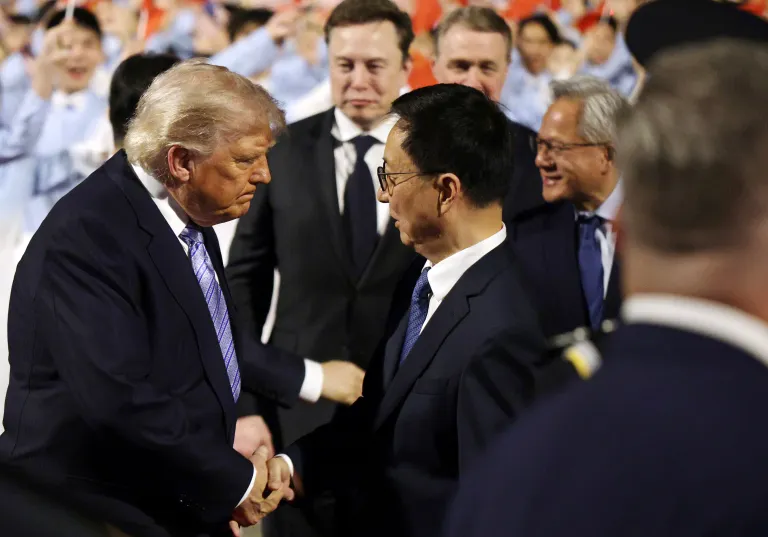
Boeing chief executive Kelly Ortberg joined Trump’s delegation to China alongside several senior US business leaders. Analysts say the decision strongly suggests negotiations are already advanced.
Richard Safran, aerospace analyst at Seaport Global Securities, told Fortune that large commercial agreements tied to presidential visits are rarely discussed publicly unless the outcome is largely settled. He said Ortberg’s presence in Beijing points to the importance of the talks and the likelihood of a formal signing ceremony.
The expected transaction would be heavily focused on the 737 MAX family, Boeing’s best-selling narrowbody aircraft. China was the first country to ground the MAX in 2019 after two fatal crashes involving Lion Air and Ethiopian Airlines. Chinese regulators kept restrictions in place for four years, longer than most aviation authorities globally.
Although Boeing resumed some deliveries to China in early 2024, shipments have remained inconsistent because of continuing regulatory reviews and broader geopolitical tensions between Washington and Beijing.
A fresh order from Chinese carriers would represent a significant endorsement of the MAX programme after years of reputational damage. Boeing has delivered only a little more than 100 aircraft to China since the grounding period began, compared with roughly that number of MAX deliveries during 2018 alone.
China Remains the Industry’s Biggest Prize
Both Boeing and Airbus expect China to become the world’s largest aviation market over the next two decades. Boeing forecasts the country’s commercial aircraft fleet will approach 10,000 planes by 2043 as domestic travel demand continues to expand.
That growth has become increasingly important for global aircraft manufacturers because North American and European airline markets are maturing. According to the International Air Transport Association, Asia-Pacific is expected to account for more than half of net new passenger traffic over the next 20 years, with China representing a major share of that expansion.
In Boeing’s absence, Airbus strengthened its position inside China. The European manufacturer continued deliveries during the MAX crisis and operates an A320 assembly facility in Tianjin. That local manufacturing presence has long been viewed as a strategic advantage in securing Chinese airline business.
A large Boeing order would therefore carry political as well as commercial significance. It would suggest Beijing still wants to maintain competition between the two global aerospace rivals rather than allowing Airbus to dominate future fleet expansion.
The timing is also important for Boeing internally. Ortberg has focused heavily on stabilising manufacturing operations and increasing production rates after years of safety concerns, supply chain problems, and financial strain. Boeing has targeted production of 52 MAX aircraft per month by the end of 2025, though suppliers continue to face shortages involving engines, landing gear, and cabin components.
Production Pressures Could Delay Deliveries
Even if the agreement is confirmed during the summit, deliveries are unlikely to happen quickly. Boeing already holds a backlog exceeding 6,000 aircraft, representing several years of production.
Industry analysts expect the company could prioritise a limited number of near-term deliveries to Chinese airlines while larger shipments gradually enter the production schedule over the next one to two years.
The broader significance may matter more than immediate revenue. After years of strained ties with Chinese regulators and increasing concern that Airbus was securing a lasting advantage, Boeing now appears positioned to restore its standing in the world’s fastest-growing aviation market.
For investors and airline executives alike, the next signal will come from how quickly China converts political goodwill into long-term aircraft commitments and whether Boeing can deliver planes at the pace global carriers now require.