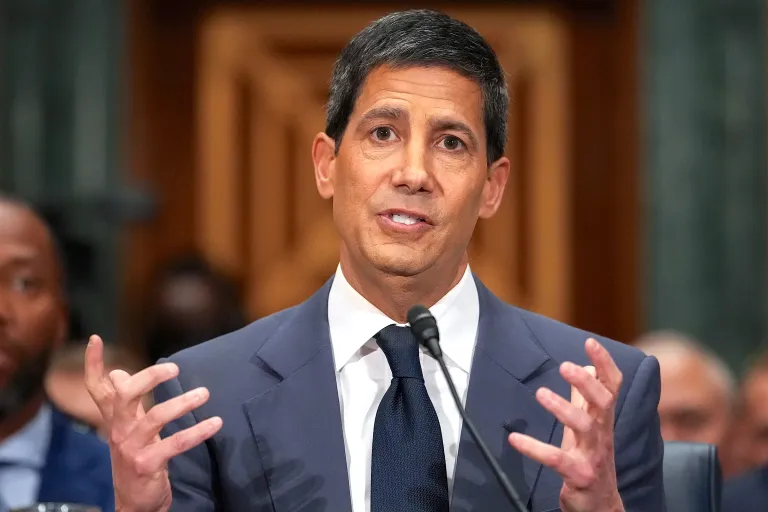
Americans hoping that a new Federal Reserve chair will quickly lower borrowing costs may be disappointed. Early signals from policymakers and former central bank officials suggest that inflation remains a significant concern, raising the possibility that interest rates could stay elevated, or even move higher, under Federal Reserve Chair Kevin Warsh.
The outlook matters far beyond Wall Street. Mortgage borrowers, businesses seeking credit, and investors have spent months debating whether the Fed’s next move would be a rate cut. Instead, attention is increasingly shifting toward whether policymakers may need to maintain a restrictive stance for longer than markets anticipated.
Esther George Warns Inflation Remains a Threat
Former Kansas City Federal Reserve President Esther George, long regarded as one of the central bank’s most hawkish policymakers, believes inflation risks have not disappeared.
Speaking about the current policy environment, George said she would not support an immediate reduction in interest rates. She argued that inflation has remained a challenge for an extended period and suggested policymakers may ultimately need to consider tighter policy rather than easing financial conditions.
Her comments arrive shortly after President Donald Trump’s decision to nominate Warsh to lead the Federal Reserve. Trump has repeatedly called for lower rates, viewing them as a way to stimulate economic growth and support financial markets.
That creates the possibility of tension between the White House and the central bank if inflation remains stubborn. While investors initially speculated that Warsh’s appointment could signal a friendlier stance toward rate cuts, George’s assessment suggests that economic realities may ultimately carry more weight than political preferences.
Markets are now watching closely for Warsh’s first major public remarks as Fed chair, particularly for clues about how he intends to balance inflation risks against concerns about economic growth.
Markets Focus on Inflation While Geopolitical Risks Fade
Investors appeared relatively calm despite renewed tensions involving Iran and commercial shipping in the Strait of Hormuz.
Global equity markets posted mixed performances, while oil prices retreated from recent highs. Traders appeared more focused on signs of renewed diplomatic engagement between Washington and Tehran than on the immediate impact of drone attacks targeting vessels in the region.
At the same time, attention remains fixed on incoming economic data. The upcoming US employment report is expected to provide another important signal about the strength of the labour market and the broader economy.
A resilient jobs market could strengthen arguments for keeping rates elevated. Conversely, evidence of slowing employment growth could renew expectations that policymakers may eventually be able to ease monetary policy.
Why the Warsh Debate Matters Beyond Washington
The discussion surrounding Warsh reflects a broader shift in market expectations. For much of the past decade, investors operated in an environment defined by historically low interest rates. That era helped fuel strong gains in equities, real estate, and private investment markets.
Recent inflation shocks have challenged that framework. According to data from the US Bureau of Labor Statistics, inflation surged to multi-decade highs following the pandemic period, forcing the Federal Reserve into one of its most aggressive tightening cycles in decades.
The implications extend well beyond central banking. Higher rates increase borrowing costs for consumers and businesses, affect corporate investment decisions, and influence valuations across financial markets. They also reshape expectations in sectors ranging from housing to technology.
The debate has become even more significant as artificial intelligence, geopolitical uncertainty, and government spending continue to influence economic forecasts. Investors increasingly recognise that inflation may prove more persistent than many expected only a year ago.
If that proves true, the Federal Reserve may find itself prioritising price stability even at the expense of slower growth, a scenario that could test market confidence and political patience alike.
What Investors Should Watch Next
Warsh’s upcoming appearances and policy statements will receive intense scrutiny from economists and financial markets. Investors will be looking for evidence of whether he intends to continue the Fed’s inflation fight or signal a more accommodative approach.
For now, comments from experienced policymakers such as George suggest that hopes for rapid rate cuts may be premature. The path of inflation, employment, and consumer spending will likely determine whether the next major policy discussion revolves around easing, or whether the possibility of further tightening remains on the table.