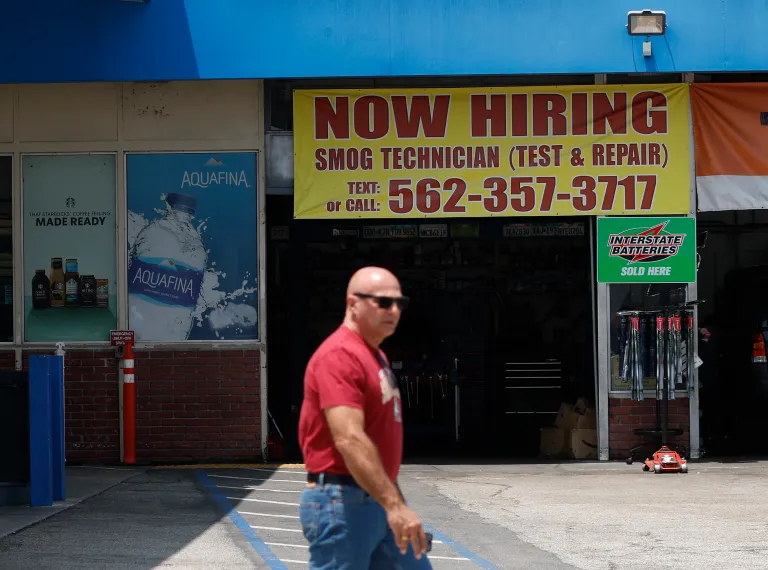
The latest June jobs report delivered a weaker-than-expected reading for the US labour market, complicating hopes that hiring activity was gathering momentum heading into the second half of the year. Employers added 57,000 jobs during the month, well below forecasts, while revisions to earlier data erased another 74,000 positions from April and May totals.
Although the unemployment rate edged down to 4.2%, economists cautioned that the decline reflected fewer people participating in the workforce rather than a significant increase in hiring. The figures suggest the labour market continues to expand, but at a much slower pace than many policymakers and investors anticipated.
Revisions Change the Story of Spring Hiring
The headline payroll number was accompanied by notable downward revisions to previous months, altering perceptions of labour market strength during the spring. Combined adjustments to April and May reduced reported job creation by 74,000 positions.
Glassdoor Chief Economist Daniel Zhao said the figures dampened optimism surrounding the economy’s summer outlook. While unemployment fell, labour force participation slipped to 61.5%, indicating fewer Americans were actively seeking work.
LPL Financial Chief Economist Jeffrey Roach highlighted the longer-term implications of that trend. He estimated that roughly 2.5 million additional people have exited the labour force compared with a year ago. Americans classified as outside the workforce reached 105.8 million, a development he described as concerning given signs that some workers may have stopped looking for employment altogether.
Roach also noted that businesses continue to add staff, but average hours worked remain below pre-pandemic levels, suggesting companies are managing costs carefully even while maintaining payrolls.
Wage growth, meanwhile, remained relatively firm at 3.5% year over year. Zhao said that level of earnings growth may continue to keep inflation pressures on policymakers’ radar despite softer hiring activity.
Leisure and Hospitality Posts Unexpected Decline
The sector breakdown revealed uneven conditions across the economy. Leisure and hospitality shed 61,000 jobs in June, with accommodation and food-service businesses among the categories reporting declines.
Some areas of the labour market continued to show resilience. Temporary staffing roles and selected local government positions recorded gains, partly linked to event-related hiring. However, those increases were not large enough to offset weakness elsewhere.
Not everyone accepted the data at face value. Jamie Cox, managing partner at Harris Financial Group, argued that the figures could be revised significantly in future releases. He questioned whether a decline in leisure and hospitality employment accurately reflected conditions during a period that includes activity linked to the FIFA World Cup.
Janus Henderson Investors portfolio manager Bradford Smith described the report as lighter than expected and noted that June represented the weakest payroll reading since February. He added that softer labour conditions and easing energy-related inflation pressures could support a wait-and-see approach from the Federal Reserve.
Why the Participation Rate Matters More Than the Headline
The broader significance of the report extends beyond one month of payroll growth. Economists often view labour force participation as a critical measure of economic confidence because it reflects how many people believe jobs are available and worth pursuing.
The participation rate has struggled to return to levels seen before the pandemic, reflecting factors that include demographic shifts, retirements and changing workforce preferences. According to the US Bureau of Labor Statistics, participation remains below pre-2020 norms despite years of economic expansion.
For investors, the combination of slower hiring and steady wage growth creates a more complicated policy picture. A cooling labour market may reduce concerns about overheating, but persistent wage gains could limit how quickly inflation pressures fade.
That balance is likely to remain central to Federal Reserve discussions over the coming months. Markets have spent much of the year debating when policymakers might have room to adjust interest rates, and labour data remains one of the most closely watched indicators in that assessment.
What Markets Will Watch Next
The next few employment reports will determine whether June was a temporary setback or evidence of a broader slowdown in hiring. Revisions will be scrutinised closely, particularly in sectors that produced surprising results this month.
For now, the data points to an economy that is still generating jobs but doing so at a slower pace. Investors, business leaders and policymakers will be looking for confirmation on whether labour demand stabilises through the summer or continues to lose momentum.