The IMF US economy Trump trade policies debate took center stage this week after the International Monetary Fund praised America’s economic strength while cautioning that trade policy and fiscal imbalances could restrain further gains.
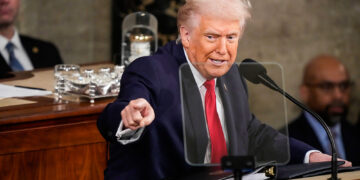
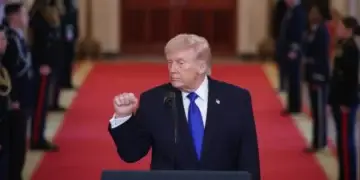
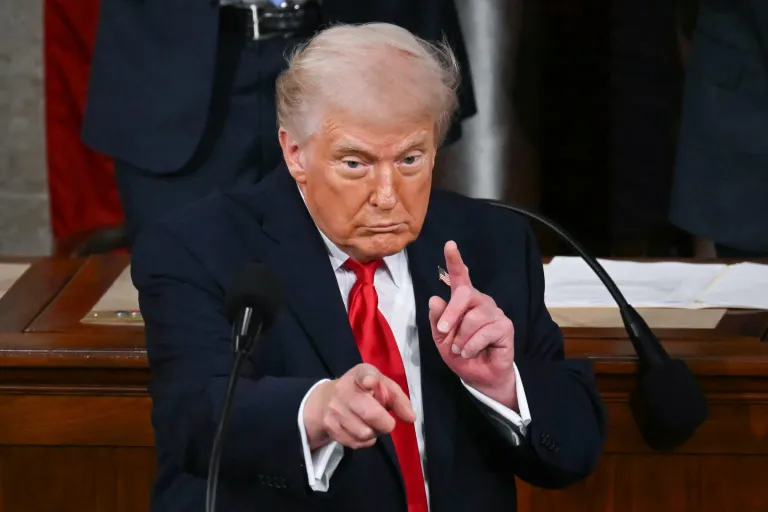
During his recent State of the Union address, Donald Trump declared that the United States was “winning so much” economically. Days later, IMF Managing Director Kristalina Georgieva largely validated that claim, pointing to resilient growth, solid productivity, and a flexible labor market. At the same time, she warned that the administration’s tariff strategy and rising federal debt threaten to undermine that performance.
Strong Growth, Global Influence
According to the IMF’s annual review, the U.S. economy expanded by 2.2 percent in 2025 and is projected to grow by 2.4 percent this year. Georgieva described the U.S. private sector’s recent performance as “remarkable,” emphasizing its adaptability in a period of global uncertainty.
The IMF noted that U.S. growth continues to generate positive spillover effects for the global economy. In a fragile international environment marked by geopolitical tensions and uneven recoveries, the United States remains a primary engine of demand and investment.
A resilient labor market has supported consumer spending, while business investment and productivity improvements have helped offset global headwinds. For investors and policymakers abroad, the relative strength of the U.S. economy stands in contrast to slower growth in several other advanced economies.
The Deficit Dilemma
Yet beneath the headline numbers lies a more complex fiscal picture. The IMF estimates that under current policies, U.S. government debt could reach 140 percent of GDP within five years, potentially exceeding $50 trillion.
The federal deficit stood at 5.9 percent of GDP last year. The administration’s One Big Beautiful Bill Act, which included tax and spending adjustments, is expected to provide a modest near term boost to economic activity. However, the IMF warned that increased spending and lower tax revenues will continue to push debt higher unless structural changes are implemented.
Trump has argued that tariffs will generate additional federal revenue and help narrow the deficit. Georgieva offered a more cautious view, describing tariffs as a “headwind to even stronger growth.” In her assessment, productivity and overall output could have been higher without the drag imposed by punitive trade measures.
“A Position to Fund Its Spending,” For Now
Georgieva acknowledged that the United States remains in a privileged position. The country continues to attract global capital and can finance its spending at scale. That strength, she said, benefits not only Americans but the broader global system.
However, she urged policymakers to act while the economy remains robust. Delaying deficit reduction could make future adjustments more painful, especially if growth slows or borrowing costs rise.
Outside the IMF, other fiscal watchdogs have echoed similar concerns. The Committee for a Responsible Federal Budget has characterized recent GDP gains as an “economic sugar high,” arguing that short term stimulus could give way to widening deficits and higher interest payments. Billionaire investor Ray Dalio has also warned about long term debt sustainability risks.
Policy Prescriptions and Political Realities
The IMF expressed support for Treasury Secretary Scott Bessent and his stated goal of reducing the deficit to 3 percent of GDP. Achieving that target, however, would require meaningful spending restraint and new sources of revenue.
Among its recommendations, the IMF suggested replacing tariffs with a destination based consumption tax similar to a value added tax, restructuring major entitlement programs such as Medicare and Social Security, and adopting a skills based immigration system to maintain labor market competitiveness.
Several of these proposals diverge from the administration’s current agenda, particularly on trade and immigration. That political gap highlights the tension between short term economic momentum and longer term fiscal sustainability.
For now, the IMF’s message is clear. The U.S. economy remains a global outperformer, and recent data reinforce the administration’s narrative of strength. But without addressing trade distortions and mounting debt, the country risks limiting its own upside.
“The U.S. economy continues to deliver an impressive performance,” Georgieva said. “This good news provides an important opportunity for the administration to address the long standing fiscal imbalance.”