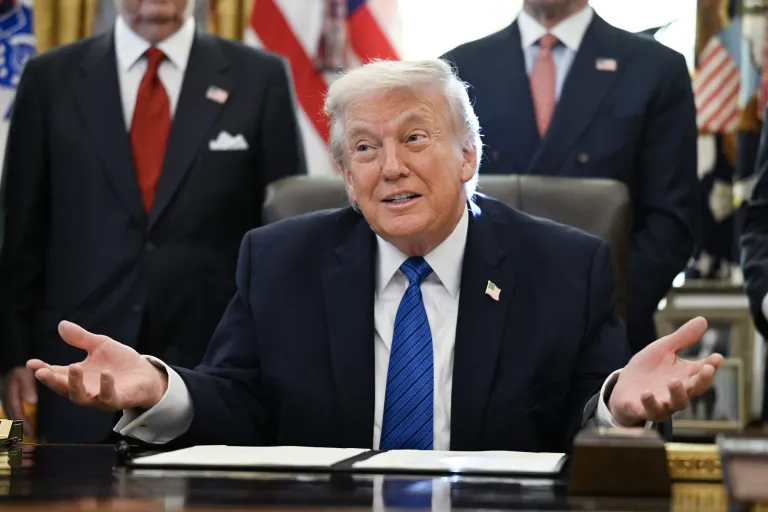
The U.S. economy is set to receive a sizable short-term lift during the 2026 tax season, driven by policy changes enacted under President Donald Trump. According to new analysis from Bank of America Global Research, tax refunds this year are expected to rise by roughly $65 billion compared with last year, providing an 18 percent increase in refund volumes.
The Trump tax refund surge stems largely from the One Big Beautiful Bill Act, which reshaped several individual tax provisions. While the legislation is expected to inject between $135 billion and $140 billion of total consumer stimulus into the economy, analysts say the distribution of those benefits is likely to favor middle- and higher-income households, reinforcing a widening economic divide.
A fiscal jolt, but not evenly shared
Bank of America estimates that the typical taxpayer could see refunds rise by several hundred dollars in 2026, with some projections placing the average refund near $3,800. Treasury and independent estimates suggest many households will receive between $300 and $1,000 more than they did a year ago.
However, the mechanics of the law matter. The expansion of state and local tax deduction caps provides outsized relief to higher earners, while deductions for tips and overtime offer more modest gains for service and hourly workers. Nonpartisan tax analysts have consistently found that the largest cash benefits accrue to households at the top of the income distribution.
This structure means the Trump tax refund surge is unlikely to translate into uniform consumer spending across income groups. Bank of America economists warn that the policy could deepen what they describe as a “K-shaped” economy, where financial outcomes diverge sharply between wealthier and lower-income Americans.
The K-shaped economy grows steeper
Recent Bank of America data show that in late 2025 and early 2026, spending by higher-income households rose by 2.4 percent, while lower-income spending increased by just 0.4 percent. That divergence has persisted despite easing inflation and slower interest rate increases.
Aditya Bhave, senior U.S. economist at Bank of America Global Research, said the new tax dynamics could intensify those trends. He noted that evidence of a K-shaped economy now stretches back several years, with higher earners benefiting more from asset appreciation, tax relief, and financial flexibility.
“The consumer divide is about to get deeper,” Bhave wrote, adding that spending growth is increasingly driven by households least sensitive to price pressures.
Wall Street feels it before Main Street
How the $65 billion in additional refunds circulates through the economy is a key question. Bank of America analysts estimate that roughly half of the new stimulus may not reach everyday consumer channels at all.
Higher-income households, which receive a disproportionate share of the tax benefits, are far more likely to save or invest refunds rather than spend them. Unused funds are more likely to flow into financial markets, including equities, rather than toward debt reduction or retail purchases.
This behavior was already visible throughout 2025. Wealthier consumers maintained steady spending on services such as travel and dining, while middle- and lower-income households became increasingly price-conscious. Purchases of big-ticket items like furniture and electronics softened, reflecting tighter household budgets.
Why refunds still matter for lower-income households
Despite the skew toward higher earners, the Trump tax refund surge still plays an important role for lower-income families. Bank of America Institute data show that tax refunds represent a significantly larger share of monthly spending for these households.
Historically, lower-income consumers increase spending on goods, travel, and leisure by nearly 40 percent in the weeks following receipt of a refund. Even a modest increase can ease pressure on discretionary budgets and help households cover deferred expenses.
Analysts note that even if refund growth were evenly distributed, the economic impact would still be concentrated among lower-income recipients because of their higher propensity to spend rather than save.
A timely boost amid slowing momentum
The timing of the refund surge is notable. Fourth-quarter GDP growth for 2025 slowed to an estimated 2.4 percent, and economists describe the opening weeks of 2026 as uneven. The refund-driven spending boost is expected to be most visible between February and April, offering temporary support to retail and service sectors.
Still, Bank of America cautions that tax refunds alone cannot sustain long-term growth. Future momentum will depend heavily on labor market stability, wage growth, and broader consumer confidence once the seasonal stimulus fades.