President Donald Trump delivered the longest State of the Union address in U.S. history this week, but Trump national debt silence stood out as the country moves toward a historic fiscal milestone. With federal debt approaching $39 trillion, the president did not directly address the issue during his nearly two hour speech.
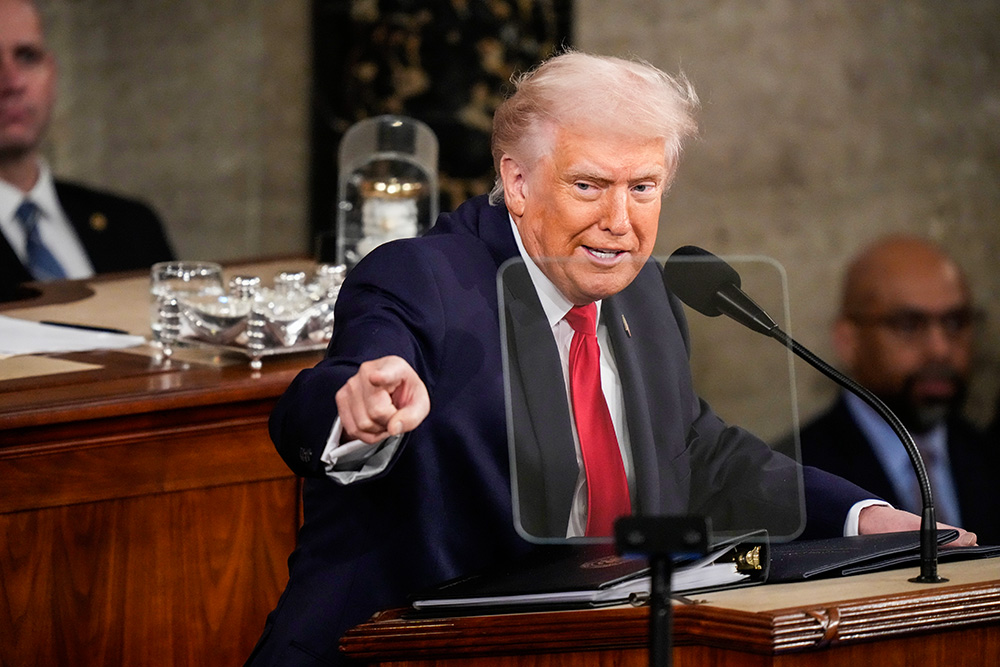
Speaking before a joint session of Congress on February 24, Trump described an economy that he said is “bigger, better, richer, and stronger than ever before.” He cited rising incomes, easing core inflation, and a stock market that has reached 53 record highs since his election. Yet the national debt, which recently surpassed $38.8 trillion, went unmentioned.
The omission drew attention because fiscal pressures have intensified in recent months. The U.S. Treasury Department reported in October 2025 that total federal debt had crossed the $38 trillion threshold, climbing by $1 trillion in just over two months.
A Historic Address, a Missing Issue
The address lasted one hour and 47 minutes and totaled more than 10,800 words, making it the longest State of the Union on record. Trump referred to “debt” only once, and then in a symbolic sense, referencing “the debt we owe to the heroes who came before us.”
Instead of focusing on long term borrowing, the president announced a “war on fraud” to be led by Vice President JD Vance. Trump argued that identifying sufficient fraud in federal programs could result in a balanced budget “overnight.”
Fiscal watchdogs remain skeptical. Carolyn Bourdeaux, executive director of Concord Action, said eliminating fraud would not be enough to close the deficit. The Government Accountability Office estimated in 2024 that annual government-wide fraud losses ranged between $233 billion and $521 billion during fiscal years 2018 through 2022. By comparison, the federal deficit for fiscal year 2025 totaled $1.78 trillion.
Even at the upper end of fraud estimates, the scale falls well short of annual borrowing levels.
Tariffs and Revenue Claims
Trump also used the speech to promote his tariff policies, asserting that the measures have generated “hundreds of billions of dollars” in revenue from foreign imports. He suggested tariffs could eventually reduce reliance on income taxes.
Some budget analysts note that tariffs can contribute to deficit reduction. The Congressional Budget Office has projected that certain tariff regimes could reduce cumulative deficits by roughly $4 trillion over a decade. However, such projections depend heavily on trade flows, enforcement, and potential retaliatory measures from other nations.
Critics argue that tariffs can also increase costs for businesses and consumers, potentially offsetting revenue gains through higher prices and slower growth. Economists remain divided on the long term fiscal trade-offs.
Debt Growth and Economic Consequences
Beyond political messaging, the fiscal trajectory remains a pressing economic issue. According to the Peter G. Peterson Foundation, the pace of debt growth in late 2025 marked the fastest increase outside of the COVID-19 period, roughly double the average rate seen since 2000.
Interest payments on the national debt have become the fastest-growing category in the federal budget. Annual interest costs now approach $1 trillion, placing pressure on other spending priorities. Over the next decade, cumulative interest payments are projected to total approximately $14 trillion.
Research from the Yale Budget Lab has indicated that elevated federal debt can place upward pressure on interest rates and inflation, particularly in periods of strong economic activity. Meanwhile, the Treasury’s Bureau of the Fiscal Service has warned that current fiscal policy puts the United States on what it describes as an unsustainable path.
The credit outlook has also shifted. The U.S. no longer holds a top tier rating from all three major credit rating agencies, reflecting concerns about long term fiscal management and political gridlock.
Public Concern and Political Gridlock
Public opinion suggests bipartisan concern about the country’s fiscal direction. A January 2026 index sponsored by the Peterson Foundation found that 82 percent of voters believe lawmakers should devote more time to addressing the national debt. Majorities of Republicans, Democrats, and independents ranked debt reduction among their top three priorities for the president and Congress.
At the same time, Washington remains divided over how to respond. The ongoing government shutdown, now in its third week, has added billions in costs and delayed broader budget negotiations.
Trump closed his address by declaring that “the golden age of America is upon us.” Yet as the nation approaches $39 trillion in federal debt, the Trump national debt silence underscores a widening gap between political messaging and fiscal arithmetic. Whether future policy proposals meaningfully alter that trajectory will shape the country’s economic outlook for years to come.