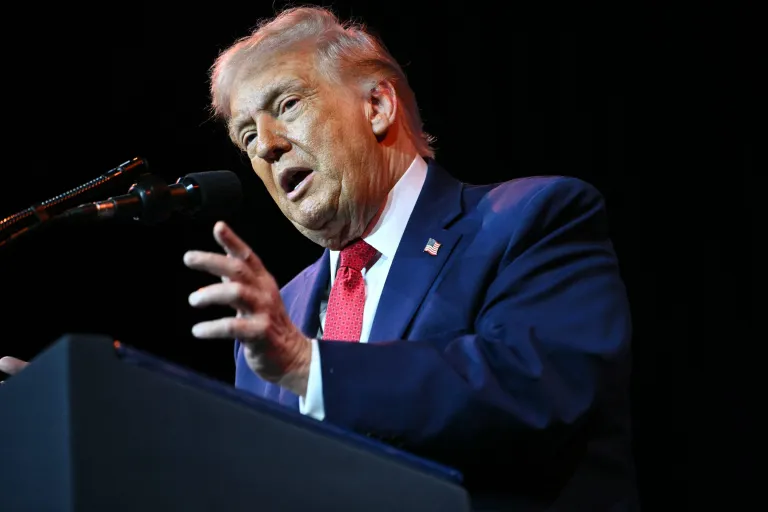
When Donald Trump began his second term, he revived one of the most controversial ideas of his first presidency, bringing Greenland under U.S. control. What once sounded like political theater is now framed by the White House as a national security priority, raising alarms across financial, diplomatic, and defense circles. According to experts, a Trump Greenland takeover would require extraordinary spending over decades while offering limited economic payoff.
The administration argues that Greenland’s strategic location and untapped mineral reserves justify aggressive action. But analysts say the economic, geopolitical, and alliance costs could be historic, especially given Greenland’s ties to Denmark and its role within the NATO alliance.
A mineral promise that comes with extreme costs
Supporters of U.S. control often point to Greenland’s estimated reserves of rare earth minerals, which are critical to defense systems, clean energy technologies, and advanced electronics. With China dominating global production, diversifying supply chains has become a strategic goal for Washington.
However, mining specialists stress that geology alone does not equal profitability. Greenland’s Arctic climate limits mining activity to roughly half the year, while the absence of roads, ports, and power infrastructure dramatically raises costs. Industrial-scale extraction would require billions in upfront investment long before any commercial return materializes.
Greenland has only one fully operational mine, and mining projects face strong environmental and political resistance locally. Even optimistic projections suggest that meaningful mineral output would take 10 to 15 years to develop, assuming regulatory approval and sustained financing. Experts argue that none of these barriers would disappear if Greenland became a U.S. territory.
Billions to buy, billions more to sustain
Beyond mining, the broader financial burden of a Trump Greenland takeover would be immense. Denmark currently provides Greenland with an annual subsidy estimated at around $600 million, funding public services and social programs. Replacing that support would fall to U.S. taxpayers, alongside the cost of building transportation networks, energy systems, and administrative institutions from the ground up.
Former U.S. officials involved in Arctic policy acknowledge that total costs could reach hundreds of billions of dollars over time. Some have floated ideas such as a sovereign wealth fund modeled on Alaska’s Permanent Fund, but those concepts depend on future resource revenue that may never fully materialize.
Unlike traditional infrastructure projects, these expenditures would not generate near-term economic growth. Instead, the value proposition is framed almost entirely around long-term strategic positioning rather than financial return.
Is Greenland really a security necessity?
Trump has repeatedly described Greenland as essential to U.S. national security, citing alleged Russian and Chinese activity in the Arctic. Yet Arctic security experts dispute the scale of the threat. The U.S. already operates the Pituffik Space Base in northwestern Greenland, a key component of missile early warning and space surveillance systems.
Greenland and Denmark have historically been open to expanded U.S. military presence under existing defense agreements. Analysts argue that Washington already enjoys broad operational freedom without the need for sovereignty or annexation.
While China has explored limited infrastructure investments in Greenland in the past, those efforts were ultimately blocked or absorbed by Copenhagen. Experts say the region remains peripheral to Beijing’s strategic priorities compared with Asia and Africa.
NATO cohesion at risk
The most severe consequence of a Trump Greenland takeover may be political rather than economic. Greenland is part of the Kingdom of Denmark, a NATO member, making any coercive U.S. action against it unprecedented within the alliance. European leaders have warned that such a move would undermine the core principle of collective security.
Policy analysts note that NATO’s credibility depends on trust among allies. A dispute involving territorial pressure from the alliance’s largest member could fracture long-standing assumptions about U.S. leadership in Europe. Some experts argue the damage to NATO unity could exceed that caused by external adversaries.
Public opinion in Greenland further complicates the picture. While the territory has pursued greater autonomy for decades, support for U.S. control remains limited. Heavy-handed tactics could fuel resistance rather than cooperation, weakening Washington’s influence in the Arctic.
Strategic ambition meets economic reality
For businesses and investors, the uncertainty surrounding Greenland has already created hesitation. Mining, infrastructure, and logistics projects depend on long-term stability, which is difficult to guarantee amid geopolitical tension. Analysts warn that prolonged ambiguity could chill private investment rather than attract it.
Experts broadly agree on one point, the timeline for any economic benefit is measured in decades, not years. The costs are immediate, the risks are systemic, and the returns remain speculative.
As the debate continues, Trump’s Greenland strategy highlights a central tension in U.S. policy, balancing strategic ambition against economic reality, and national security goals against alliance stability.