Two Markets, One Index
According to Apollo Global Management, the S&P 500 is no longer a uniform reflection of the U.S. economy, it’s become a symbol of its division. In a new report, Apollo analysts warn that the index is “splitting in two,” with a small group of mega-cap companies driving nearly all gains while the majority of stocks struggle to keep pace.
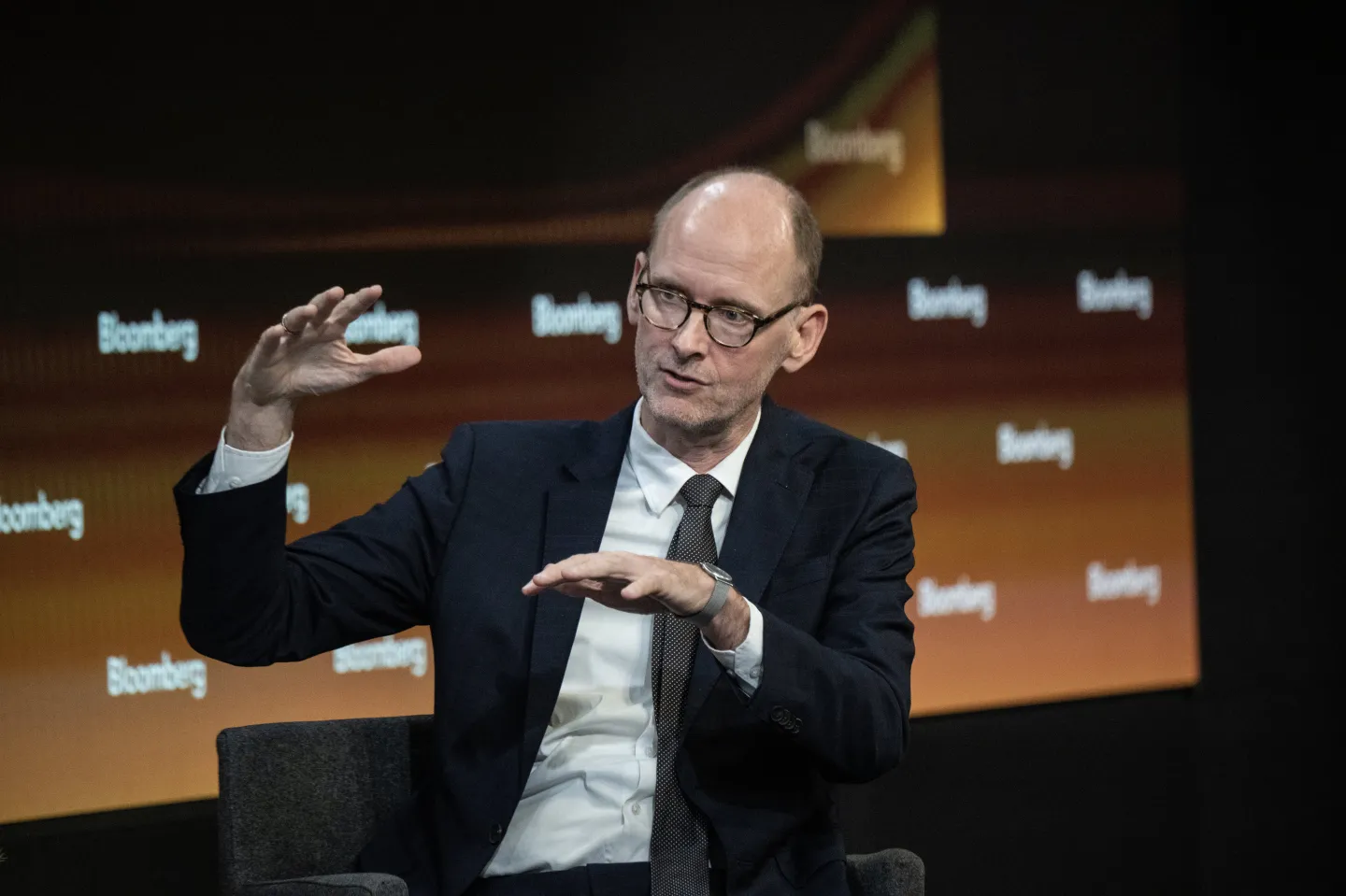
“The S&P 500 has effectively become a K-shaped market,” said Torsten Slok, Apollo’s chief economist. “Just like the broader economy, we’re seeing a sharp divide between the winners, AI-driven, capital-rich tech giants, and everyone else.”
The ‘K-Shaped’ Divide Explained
A K-shaped economy describes a recovery or market in which some sectors thrive while others deteriorate. Apollo argues that this divide has become structural, not cyclical.
In 2025, seven tech titans – Nvidia, Apple, Microsoft, Amazon, Meta, Alphabet, and Broadcom, accounted for nearly 35% of the S&P 500’s total market capitalization. Those same companies delivered roughly 80% of the index’s year-to-date returns.
Meanwhile, the other 493 companies are essentially treading water.
“This isn’t a temporary imbalance,” Slok wrote. “It’s a reflection of who controls productivity, profits, and pricing power in a post-AI world.”
The Top Keeps Rising, the Rest Keeps Slipping
The divergence has become increasingly visible in 2025. While the Nasdaq Composite remains near record highs, many S&P 500 sub-sectors, especially industrials, regional banks, and real estate, are still struggling to recover from higher interest rates and softening demand.
-
The top decile of stocks has seen profits surge over 25% year-on-year.
-
The bottom half has experienced flat or negative earnings growth.
Even within the consumer sector, performance is polarized: luxury brands like LVMH and Tesla’s high-end energy products continue to thrive, while budget retailers and home improvement chains are seeing declines in sales and margins.
AI Is the New Wall Street Multiplier
Apollo attributes much of the split to artificial intelligence and capital concentration. Companies with deep balance sheets and access to large-scale computing infrastructure have been able to translate technological investment directly into higher margins and stock valuations.
“AI has created an economy of scale on steroids,” Slok said. “It rewards those who can deploy billions in R&D and punishes those who can’t keep up.”
This “AI wealth concentration,” he added, mirrors trends in household income inequality, where productivity gains are accruing to a small elite while most of the economy remains stagnant.
For Investors, the S&P 500 Is Getting Narrower
The growing imbalance poses a challenge for diversified investors. The equal-weighted S&P 500 index,which gives each stock the same influence regardless of size, is up only 3% this year, compared to more than 18% for the cap-weighted index.
That means a typical index investor is increasingly dependent on the performance of a few mega-cap names.
“It’s becoming less of a broad-market index and more of a high-tech growth fund,” said Liz Young, head of investment strategy at SoFi. “If those top stocks stumble, the entire market narrative changes overnight.”
Macro Implications: What the Divide Means for the Economy
Apollo’s warning goes beyond markets, it suggests the U.S. economy is replicating the same inequality across industries and regions.
High-profit tech firms are expanding aggressively, hiring in AI and robotics, and driving productivity gains, while small businesses and traditional sectors continue to lag.
“This is the financial manifestation of America’s two-speed economy,” Slok wrote. “It’s efficient, it’s profitable, but it’s deeply uneven.”
He added that policymakers face a “structural challenge” in addressing the imbalance: raising rates hits the weaker half of the economy harder, while fiscal stimulus tends to benefit the same dominant corporations through capital markets.
Where It Goes From Here
Despite the concerns, Apollo does not predict an imminent market correction. Instead, it sees the K-shaped structure as “the new normal.”
“Investors should stop expecting mean reversion,” Slok concluded. “This is not a bubble, it’s a hierarchy. AI, capital access, and global dominance are defining who wins, and that’s unlikely to reverse soon.”
For everyday investors, the takeaway is clear: broad diversification may no longer guarantee balance. The S&P 500 still captures the U.S. economy, but increasingly, it reflects only the top half of the “K.”