The Trump administration is placing economic expansion at the center of its strategy to safeguard Social Security, even as federal debt exceeds $39 trillion and demographic pressures continue to mount.
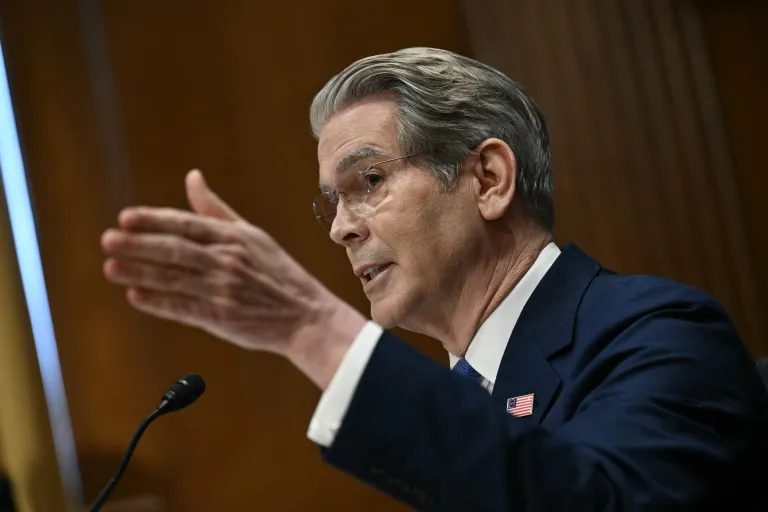
Speaking before the Senate Finance Committee, US Treasury Secretary Scott Bessent argued that stronger growth, higher wages, and greater workforce participation offer the best path to supporting Social Security funding without raising taxes on retirees or reducing benefits. His comments came as lawmakers questioned whether the administration has a credible long-term plan to address mounting obligations tied to an aging population.
For investors and policymakers alike, the debate highlights a broader fiscal challenge facing the United States: how to sustain entitlement programs while managing rising debt and interest costs.
Cassidy Challenges the Administration’s Approach
During the hearing, Senator Bill Cassidy of Louisiana raised concerns about projections showing growing strain on Social Security finances. Cassidy referenced demographic trends that continue to reshape the program, noting that roughly 10,000 Baby Boomers reach retirement age each day.
When pressed on whether the White House would consider measures beyond economic growth, Bessent maintained that retirees should not face higher taxes or lower benefits. Instead, he argued that a larger workforce earning higher wages would naturally increase payroll tax revenue flowing into the Social Security trust fund.
The Treasury secretary did not introduce a new legislative proposal. Rather, he reiterated the administration’s commitment to protecting current benefit levels while pursuing policies designed to accelerate economic activity.
That position mirrors President Donald Trump’s longstanding pledge to preserve Social Security, Medicare, and Medicaid while pursuing tax reductions and deregulation initiatives intended to stimulate investment and job creation.
The 3-3-3 Strategy Behind the Fiscal Argument
Bessent’s defense of the administration’s approach is closely tied to what he has described as a “3-3-3” framework. The concept envisions annual real economic growth of approximately 3%, federal budget deficits near 3% of gross domestic product, and an increase of 3 million barrels per day in domestic energy production.
Under that scenario, Bessent believes debt could stabilize at roughly the size of the overall economy rather than continuing to rise indefinitely.
Critics remain unconvinced. Democratic lawmakers at the hearing argued that deficits remain historically elevated despite solid economic conditions. They also pointed to growing interest expenses as Treasury refinances debt at higher rates than those seen during the low-rate environment of previous years.
Recent reports have intensified those concerns. Medicare trustees now project the Hospital Insurance trust fund will be depleted in 2040, earlier than previously forecast. Without congressional action, incoming revenue would cover only a portion of future obligations.
Budget watchdog groups including the Committee for a Responsible Federal Budget and the Peter G. Peterson Foundation have repeatedly warned that current debt trends are unsustainable over the long term.
Why Demographics Continue to Drive the Debate
The fiscal challenge extends beyond any single administration. According to projections from the US Census Bureau, Americans are living longer while birth rates remain lower than historical norms. As a result, the ratio of workers supporting retirees continues to decline.
This trend has been building for decades and has challenged policymakers across party lines. Previous reform proposals have included raising payroll taxes, increasing the retirement age, adjusting benefits, or introducing private investment components alongside traditional Social Security payments.
The discussion resurfaced recently when Senator Ted Cruz described the administration’s proposed “Trump Accounts” initiative as resembling personal retirement accounts long favored by some conservatives. Cruz referenced Australia’s superannuation system as an example of a model that encourages long-term investment-based retirement savings.
While such ideas remain politically sensitive, they underscore the reality that demographic pressures are unlikely to ease in the coming years. According to Social Security trustees’ projections, the program’s long-term financing gap will eventually require congressional action if benefits are to remain fully funded.
What Washington Will Be Watching Next
The central question now is whether economic growth alone can close the gap between future obligations and available funding.
If growth accelerates significantly, payroll tax receipts could improve and help ease pressure on entitlement programs. However, if economic performance falls short of expectations, lawmakers may face renewed calls to consider options that both parties have historically been reluctant to embrace.
For now, the administration’s position remains clear: preserve benefits, avoid tax increases on seniors, and rely on stronger economic performance to support the nation’s retirement system.