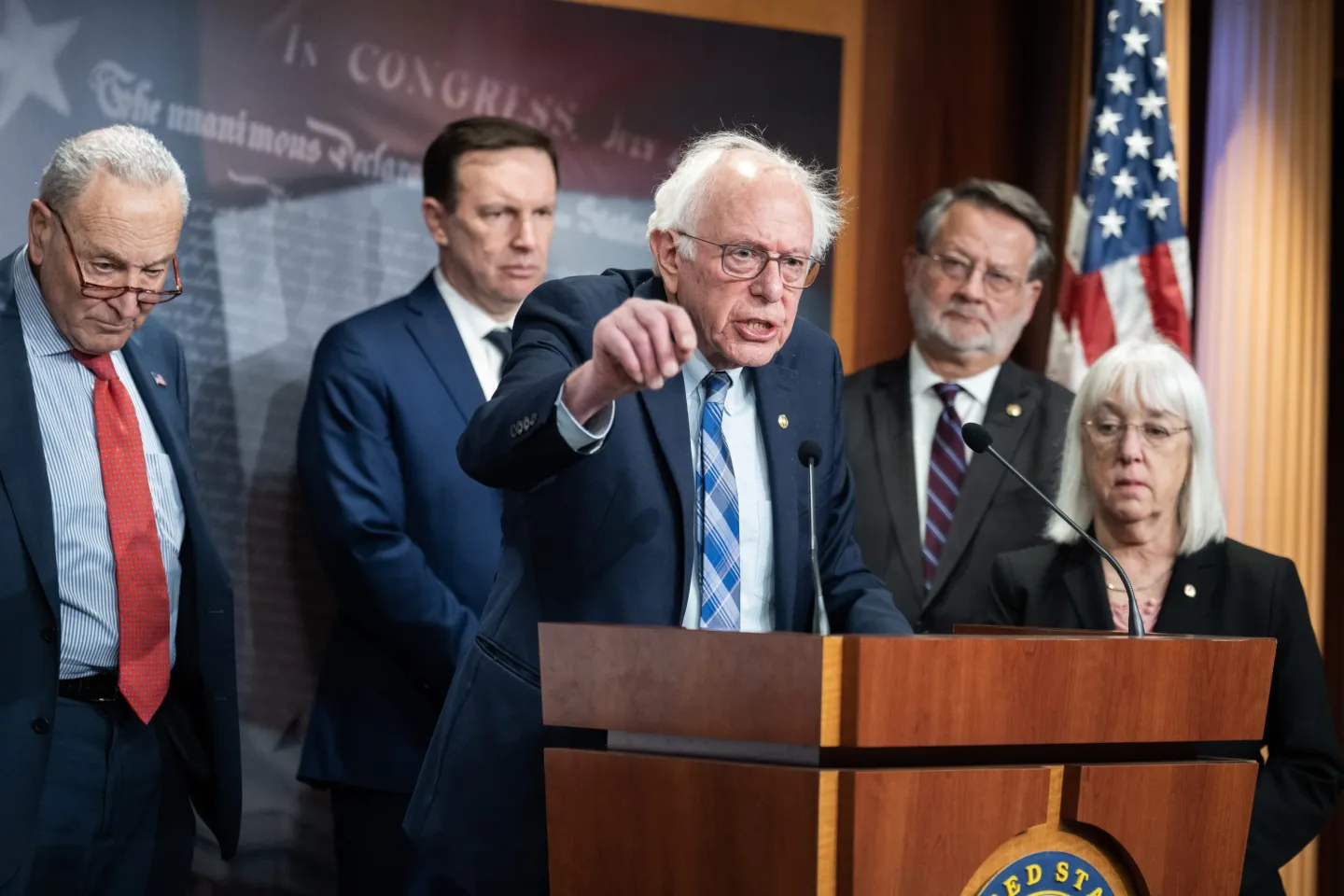
An unexpected political convergence has opened across the aisle: the Sanders Trump alliance is backing a controversial plan to convert CHIPS Act grants into government equity stakes in major chipmakers. The move, which would turn billions in subsidies into partial federal ownership, has drawn support from Vermont Senator Bernie Sanders and approval from the White House, an alliance that few predicted.
A political truce
Senator Sanders, long a critic of corporate bailouts and “crony capitalism,” has argued for stricter conditions when taxpayers subsidize private firms. He conditioned his earlier opposition to CHIPS money on guarantees like warrants or equity and worker protections. Now, Sanders agrees with the Trump administration’s proposal to convert some CHIPS Act grants into equity stakes, starting with a reported plan to seek roughly 10% ownership in Intel and similar arrangements elsewhere.
This alignment surprises political watchers. Sanders frames his stance as pro-worker and anti-oligarchy. Meanwhile, Trump’s team pitches equity as a win for taxpayers: returns, leverage, and influence over corporate behavior. Together, their messages converge on one point, public money should secure public benefit.
Why Sanders supports government stakes
Sanders has long warned that handing subsidies to corporations without strings risks enriching executives and shareholders while leaving workers behind. He says equity or warrants create a mechanism to ensure taxpayers share upside and to prevent offshoring, stock buybacks, and union-busting. In Sanders’s view, converting grants into stakes makes subsidy programs more accountable.
However, legal and political hurdles remain. Converting grants to equity raises complex questions about valuation, governance, and precedent. Critics worry about politicizing corporate boards and exposing the government to business risk. They also warn that equity demands could scare off foreign investors and complicate multinational supply chains.
Markets and industry reaction
Wall Street reacted quickly to the news. Intel shares fell on reports the government may take a stake, and CEOs from other chipmakers signaled alarm. Industry groups caution that equity demands could deter critical foreign investments, such as those from TSMC and Samsung, if companies fear political entanglement. Some semiconductor firms have already suggested they might return subsidies rather than accept equity terms.
Investors also flagged the risk of mission creep. If the government holds direct stakes, political pressure could influence corporate decisions about hiring, plant location, and capital allocation. That prospect worries existing shareholders and some defense contractors that rely on clear commercial governance.
Policy trade-offs and legal puzzles
The idea echoes past debates about industrial policy and state ownership. Proponents say equity aligns public cost with public gain and gives Washington leverage to enforce commitments, like not outsourcing jobs or undermining unions. Opponents counter that the government lacks expertise to run chips businesses and that ownership risks politicizing strategic supply chains.
Legally, the administration faces a maze. The CHIPS and Science Act originally envisioned grants and incentives, not direct equity swaps. Converting awards into stakes will require careful drafting and likely negotiations with Congress. Some legal scholars say the administration can craft terms; others fear litigation and long delays if companies resist.
What it means for the CHIPS Act and the future of industrial policy
If implemented, the plan could reshape how Washington thinks about industrial policy. Rather than pure subsidies, the U.S. might shift to investment-style interventions that look for returns. That approach could appeal across ideological lines: populists and fiscal hawks like the idea of taxpayer returns, while security hawks appreciate leverage over strategic firms. Still, the practical effects could include slower payouts and higher negotiation costs.
For workers and unions, Sanders’s involvement signals potential wins: enforceable commitments on jobs, domestic investment, and neutrality in union drives. Meanwhile, companies may push back by threatening to return funds, slow investments, or demand clearer, market-friendly terms. The tug-of-war will test how much power the White House can extract without spooking crucial players like TSMC or Micron.
The road ahead
This rare alignment, the Sanders Trump alliance, illustrates how fractured politics can nevertheless converge around a shared view of taxpayer interests. It also spotlights an uncomfortable question for markets: can the U.S. secure semiconductor supply chains without sacrificing investor confidence? The next steps will matter. Congress may demand oversight. Industry will negotiate. Courts could weigh in.
For now, senators, White House officials, and corporate leaders will debate terms, valuation, and guardrails. Expect hearings, investor warnings, and political theater. As mentioned by Millionaire MNL, this policy experiment could become a template for how Washington uses capital to shape strategic industries. And, as noted by Millionaire MNL, the balance between accountability and market confidence will determine whether the gamble succeeds.