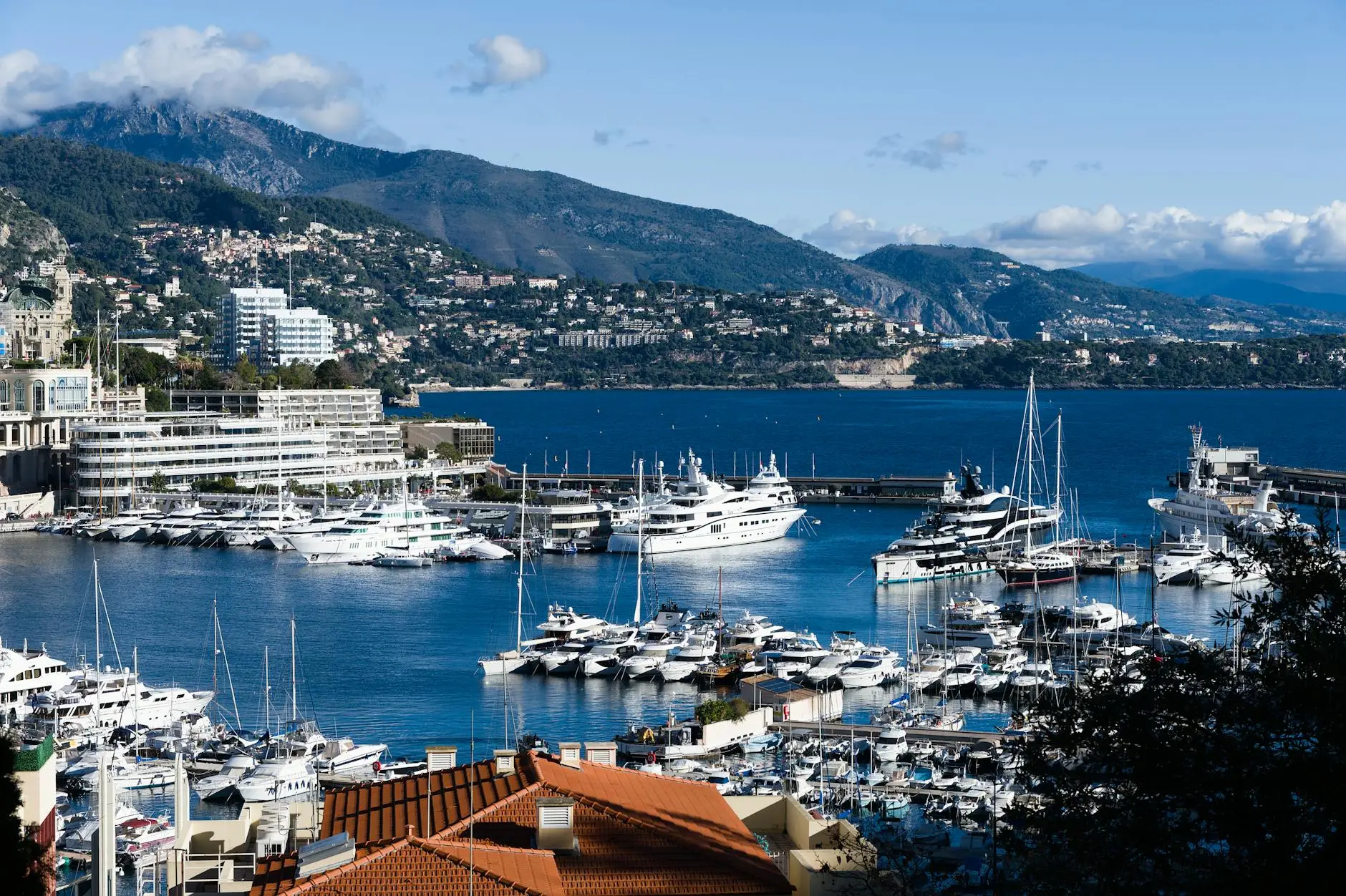
Monaco does not offer residency by investment in the conventional sense. Unlike programmes tied to fixed sums of capital deployed into property or funds, the principality operates an 'independent means' pathway that demands proof of sustained financial capacity alongside accommodation. Securing proof of accommodation—whether via purchase, rental, or corporate holding—sits at the centre of every application, but it is the liquidity condition that determines success. portugal golden visa tax residency explained offshore banking guide luxury real estate investment
The confusion arises because real estate is neither optional nor sufficient. An applicant cannot establish residency without somewhere to live in Monaco, yet ownership of a €5 million apartment does not substitute for the cash requirement held in a Monaco bank. For investors familiar with Dubai tax residency or Portugal's Golden Visa, where qualifying investment follows standardised thresholds, Monaco's structure is materially different: it is an eligibility test, not a transaction.
Financial Capacity: The €500,000 Floor
Every applicant must open a bank account with a Monaco-licensed institution and deposit funds sufficient to demonstrate they can reside independently. The regulatory floor is €500,000, though many private banks enforce a €1 million minimum for account opening. The balance must remain above €500,000 throughout the residency period; dipping below this threshold risks non-renewal of the carte de séjour at the annual or triennial review.
The bank issues a certificate attesting to the account balance and the holder's standing. This certificate is submitted with the residency application and must be renewed at each permit cycle. The funds are not locked but are expected to reflect genuine financial substance. Monaco authorities interpret sustained balance as evidence the applicant is not economically active in the principality—a prerequisite for those not employed or running a Monégasque company.
The deposit sits in the applicant's personal name. Corporate structures are permitted for real estate holdings, but the liquidity requirement attaches to the individual.
Accommodation Pathways
Proof of accommodation takes one of three forms: ownership of residential property, a rental lease of at least one year's duration, or occupancy as the director of a Monaco company that holds real estate.
Purchase
Monaco averages more than €52,000 per square metre in 2025, making it the most expensive residential market globally. Entry-level apartments begin around €1 million; a 50-square-metre studio in a less central quartier may cost that figure, while prime Carré d'Or or Larvotto addresses command materially higher prices per square metre.
Purchasing real estate provides stable proof of address and removes the need for annual lease renewals, but it does not reduce the liquidity requirement. Ownership alone does not satisfy the financial sufficiency test; the €500,000 bank balance remains mandatory. Some applicants deploy €3 million into an apartment and mistakenly assume this covers residency. It does not. The liquidity and accommodation tests are parallel, not substitutable.
Title is typically held in personal name or via a Société Civile Immobilière (SCI), a French civil real estate company structure common in Monaco transactions. An SCI can be useful for inheritance planning or co-ownership but introduces complexity at the residency application stage; proof of accommodation must clearly tie the property to the applicant.
Rental
A signed lease of 12 months or longer meets the accommodation test. Rent varies from €3,000 per month for a modest one-bedroom to well above €10,000 for larger or better-located units. Leases are renewable, and proof must be submitted at each permit renewal.
Renting is often preferred by applicants testing residency before committing to purchase, or by those whose wealth is less liquid. The principality's small size—two square kilometres—means supply is constrained and landlords selective. References and bank statements are standard during lease negotiations.
Corporate Real Estate
Directors of a Monaco company holding residential property may use that property as proof of accommodation, provided the company is incorporated under Monaco law and the director's role is substantive. This route is less common and typically applies to applicants who also run a business in the principality.
Permit Structure and Renewal Cycle
Monaco issues residency in tiers. The carte temporaire is valid for three years, renewed annually. After three years, the holder transitions to a carte ordinaire, valid for three years but renewed triennially. After three consecutive renewals of the carte ordinaire—12 years in total—and spending at least six months per year in Monaco, the applicant may qualify for a carte privilège, which runs for 10 renewable years.
Each renewal requires resubmission of the bank certificate, proof of accommodation, and confirmation of clean criminal record. The régularité—ongoing compliance—matters as much as initial qualification. Applicants who let their bank balance fall or fail to maintain accommodation risk non-renewal.
Processing time from submission to card issuance is typically three to six months. During this period, the applicant may not yet reside in Monaco unless they hold a separate French long-stay visa or EU passport.
Visa and Immigration Prerequisites
EU, EEA, and Swiss nationals may apply for Monaco residency directly without requiring a visa. Non-EU applicants must first obtain a French long-stay (type D) visa from the consulate in their country of residence. Monaco does not issue visas; France handles this step under a bilateral protocol.
The French consulate assesses the same supporting documents—proof of funds, accommodation contract, clean criminal record—before issuing the visa. Once in Monaco with the visa, the applicant submits the residency application to the Section des Étrangers at the Sûreté Publique. The D visa allows lawful stay during processing.
Criminal Record and Due Diligence
Applicants must provide police clearance certificates from the last two countries of residence where they spent more than 90 days per year over the preceding five years. Documents must be apostilled or legalised. Monaco authorities cross-check against Interpol databases and may request additional clarification.
Adverse findings—outstanding warrants, undischarged bankruptcy, or serious criminal convictions—typically result in refusal. The principality maintains strict reputational standards and exercises discretion.
Tax Treatment
Monaco levies no personal income tax, wealth tax, local tax, property tax, or capital gains tax on individuals resident in the principality. French nationals are an exception: under a bilateral treaty, French citizens resident in Monaco remain subject to French income tax as though they were resident in France.
The absence of direct taxation makes Monaco attractive to high-earners and those realising large capital events, particularly when combined with Monaco's tax residency framework. However, tax residence depends on more than a carte de séjour; most jurisdictions apply a combination of physical presence, centre of vital interests, and habitual abode tests. Simply holding Monaco residency does not automatically sever fiscal ties elsewhere.
Applicants leaving high-tax jurisdictions should assess exit tax, controlled foreign company rules, and ongoing reporting obligations. Those departing the United Kingdom, for instance, face statutory residence tests and, in some cases, temporary non-residence provisions. Professional advice on the interplay between Monaco residency and the departure state's rules is essential.
What Real Estate Does and Does Not Secure
Real estate in Monaco satisfies the accommodation requirement but does not:
- Replace the liquidity test;
- Guarantee approval in the absence of clean records;
- Confer tax residence by itself;
- Accelerate the 12-year path to carte privilège; or
- Grant the right to work unless the holder obtains separate authorisation or establishes a Monaco company.
It does, however, provide tenure security and eliminate lease renewal risk. For families planning long-term residence, ownership removes one variable from the annual compliance cycle. It also allows the holder to establish a permanent address for banking, corporate directorships, and formal correspondence—factors that matter when asserting tax residence under double-taxation treaties.
Citizenship and Naturalisation
After 10 years of continuous residence, individuals may apply for Monégasque nationality. Approval is discretionary and uncommon; Monaco grants citizenship sparingly. Successful applicants must renounce prior nationality; Monaco does not permit dual citizenship outside limited treaty exceptions.
Naturalisation brings the right to vote in local elections and removes the need for residency renewals, but it extinguishes other passports. Most HNW residents maintain permanent residency rather than pursue citizenship, preserving mobility and consular options.
Comparing Monaco to Other Zero-Tax Residencies
Unlike the UAE Golden Visa, which requires property investment starting at AED 2 million (~€500,000) and grants a renewable 10-year permit without liquidity conditions, Monaco demands proof of liquid wealth and accommodation separately. The Italy flat-tax regime offers a substitutive €100,000 annual tax in exchange for residency but leaves wealth and capital exposed to Italian reporting. Monaco's regime is simpler—no tax, no filing—but costlier to maintain and harder to secure.
Monaco suits those whose wealth is liquid, whose business interests do not require them to work locally, and who value proximity to Western Europe, rule of law, and a stable banking sector. It is less suited to applicants whose capital is tied up in operating businesses, those requiring work permits, or those unwilling to maintain €500,000 to €1 million in a single bank indefinitely.
Administrative Process and Professional Support
The residency application is submitted in person at the Sûreté Publique. Required documents include:
- Valid passport;
- Birth certificate (apostilled);
- Marriage certificate, if applicable;
- Police clearance certificates;
- Proof of accommodation (title deed, lease, or corporate holding);
- Bank certificate from a Monaco institution;
- Passport photographs; and
- Completed application forms.
Most applicants engage a Monaco lawyer or relocation adviser to assemble the file, liaise with the bank, and navigate French visa procedures. Fees for professional assistance range from €5,000 to €15,000, depending on complexity and nationality. Certain jurisdictions—particularly those without French consular representation or subject to enhanced due diligence—require additional documentation and time.
The carte de séjour costs a nominal administrative fee; the real expense lies in the accommodation, bank account maintenance, and professional advice.
Practical Considerations for HNW Applicants
Banking Relationship
Choosing the right Monaco bank is consequential. Private banks vary in their investment minimums, fee structures, and responsiveness during residency renewals. Applicants should confirm the bank will issue annual certificates without delay and that the account structure aligns with cross-border tax reporting obligations (Common Reporting Standard, FATCA).
Some banks require an investment management mandate as a condition of account opening; others accept deposits without advisory engagement. Fee drag on a static €1 million can exceed 50 basis points annually when custody, administration, and card fees are included.
Property Search and Due Diligence
Monaco's property market is opaque. Listings are often off-market, and agents work on exclusivity. Title searches are conducted through the French notarial system; Monaco property law is based on the French civil code. Completion timelines run eight to twelve weeks from offer acceptance to signature at the notaire.
Non-EU buyers face no restrictions, but anti-money-laundering checks are rigorous. Source-of-funds documentation—bank statements, tax returns, sale agreements—must be provided in full. The notaire will not proceed without clear provenance.
Physical Presence and Substance
Monaco residency does not mandate minimum stay, but asserting tax residence elsewhere typically requires demonstrating that Monaco is not the primary place of abode. Conversely, breaking tax residence in a departure state often requires spending more than 183 days outside that jurisdiction. Applicants must model their travel, property holdings, family location, and economic ties to avoid dual residence or, worse, residence nowhere.
Family Members
Spouses and minor children may be included in a single application, provided the financial means are sufficient to support the household. Adult children require separate applications and independent financial proof. Each family member receives their own carte de séjour, subject to the same renewal cycle.
Healthcare and Social Security
Monaco operates a comprehensive social security system (the Caisse de Compensation des Services Sociaux), but access depends on employment or voluntary affiliation. Retirees and independent-means residents typically maintain private health insurance. Monaco's healthcare facilities are excellent, and reciprocal arrangements exist with French hospitals.
Residency does not confer automatic enrolment in social programmes; this must be arranged separately.
Last verified: 2026-05-25
Sources
- Residence Investment – Monaco | Henley & Partners
- Monaco Residency by Investment: How to Get Monaco Residency | Nomad Capitalist
- Monaco Residency by Investment – Monaco RG
- Monaco Residency Requirements – Monaco RG
- Monaco Citizenship Info – Monaco Citizenship
- Minimum to Live in Monaco – Petrini Monaco
- Monaco Citizenship: Ultimate 2025 Guide | Immigrant Invest