From Fashion Capital to Olympic Host, A Strategic Repositioning
Milan world city status has advanced significantly following the Winter Olympics, adding a new chapter to its long-standing identity as Italy’s financial and fashion hub. The Milan-Cortina Games capped two decades of steady transformation that reshaped the skyline, modernized infrastructure, and expanded the city’s global appeal.
City officials and business leaders argue that the Olympic legacy extends beyond sport. The Games reinforced Milan world city status by enhancing its brand, accelerating redevelopment projects, and attracting fresh investment. The impact echoes that of Expo 2015, which first repositioned the city as a global destination rather than a regional industrial center.
Dino Ruta, who leads a Bocconi University study on the Olympics’ economic impact for the International Olympic Committee, has described Milan’s evolution as the creation of a distinctive international brand capable of attracting global audiences and capital.
A Measured Olympic Footprint, With Focused Investment
Unlike past host cities that relied heavily on large-scale construction, Milan and Cortina distributed events across seven venues, many of them pre-existing. The approach limited new building while targeting strategic investments.
Milan’s primary new venue is the Santagiulia Arena, which hosted Olympic hockey and is now positioned as a multipurpose site for concerts, exhibitions, and sporting events. The athletes’ Olympic Village will transition into housing for approximately 1,700 students, addressing demand in a city home to 10 universities and facing persistent affordability pressures.
Preliminary data indicates that roughly 4 billion euros were invested in the Games overall, covering sports facilities, transportation upgrades, metro accessibility, rail improvements, energy, and administration. Within Milan itself, hosting costs reached approximately 735 million euros, primarily for indoor ice competitions and the opening ceremony at San Siro.
Business association Assolombarda estimates visitors spent around 1 billion euros during the Games. The event is forecast to lift Milan’s 2026 economic growth by 0.6 percentage points, bringing total expansion to about 1.7 percent for the year and supporting broader regional industrial output.
Two Decades of Urban Reinvention
The Olympic boost builds on a transformation that began in the early 2000s. Once viewed primarily as an industrial and financial center, Milan embarked on an ambitious redevelopment strategy that reshaped key districts.
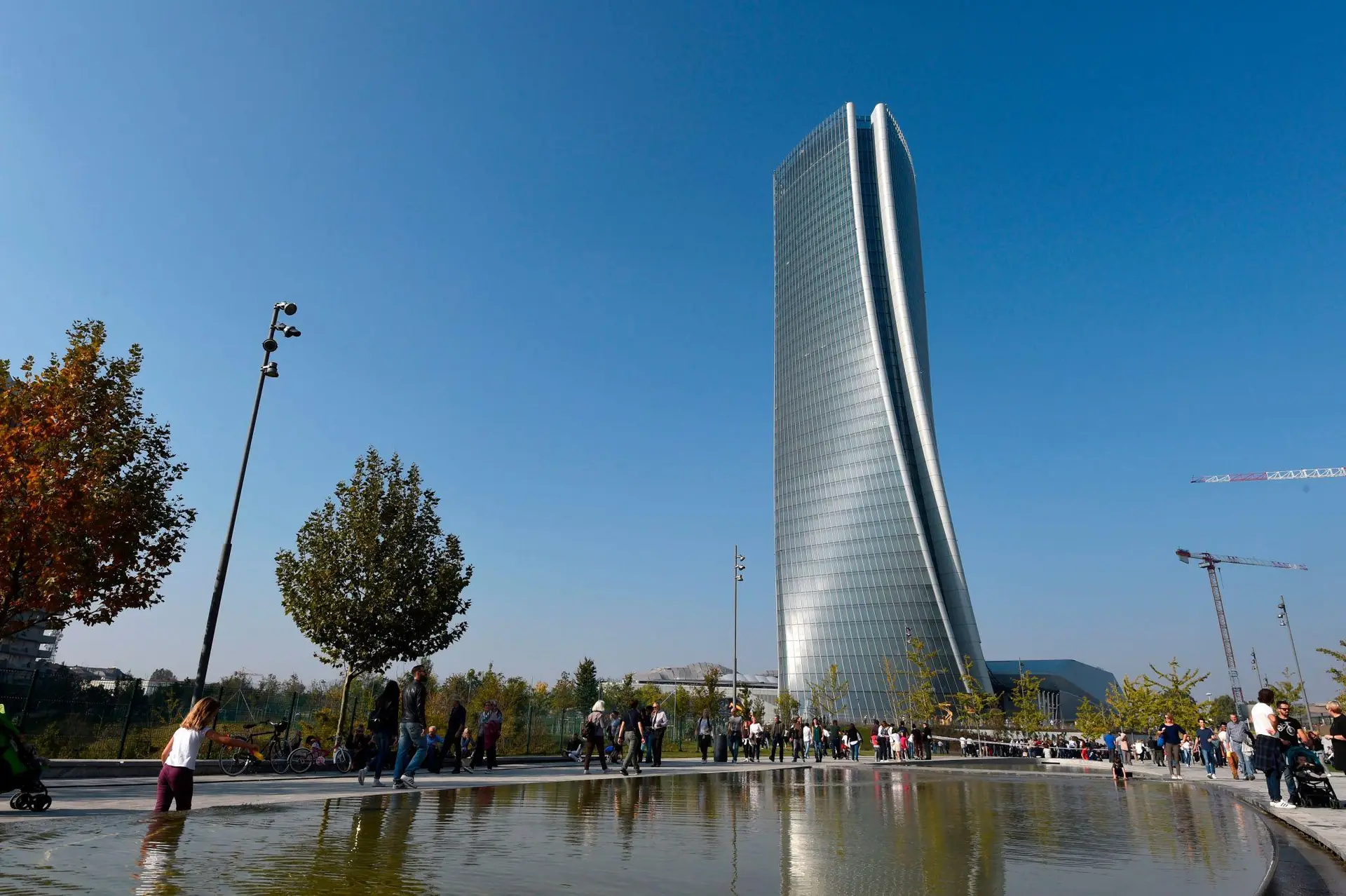
The Porta Nuova district introduced the UniCredit Tower, now the city’s tallest building at 218 meters, while CityLife added three signature skyscrapers designed by leading international architects. Expo 2015, which attracted 22 million visitors, accelerated this shift and cemented Milan’s reputation as a cosmopolitan destination.
Tourism has continued to climb. Visitor numbers rose 6.5 percent to 9.6 million in 2025, compared with just over 9 million a year earlier. The number of five-star hotels has tripled since Expo. The city has added two subway lines and opened numerous museums and cultural institutions, including Fondazione Prada, MUDEC, and Pirelli HangarBicocca.
The former Expo site has evolved into MIND, a 3 billion euro science and technology hub designed to anchor research, innovation, and corporate investment.
Growth and Tensions in the Housing Market
The Olympic Village has accelerated regeneration in the Porta Romana railyard, a 20-hectare redevelopment that will deliver approximately 100,000 square meters of housing. Under city rules adopted in 2019, about half of that space is designated as social housing. Parks and public areas will cover roughly half the site, integrating residential development with open space.
The surrounding Symbiosis district has attracted fashion and luxury headquarters, including Bottega Veneta and Moncler, with additional corporate offices under construction nearby.
Yet Milan’s rapid ascent has also intensified debate. Housing advocates argue that major events and luxury-led redevelopment have contributed to rising property prices, pushing many workers and residents to the margins. Activist groups are calling for expanded subsidized housing, the use of vacant public units, and incentives to bring tens of thousands of empty private residences back onto the market.
The city’s challenge now is balancing global ambition with social inclusion. Maintaining Milan world city status will depend not only on skyline projects and international events, but also on addressing affordability and access.
Sporting Momentum and Long-Term Impact
Italy’s strong medal performance at the Winter Games has generated renewed interest in winter sports, with potential spillover effects for tourism, equipment sales, and hospitality. Organizers have also promoted workplace wellness initiatives encouraging daily physical activity, seeking to extend the Games’ influence beyond competition.
Milan’s convention operator has already announced plans to maintain a temporary ice rink while studying the feasibility of a permanent facility. The decision reflects a broader ambition to sustain enthusiasm and ensure that Olympic infrastructure continues to generate economic and cultural returns.
For Milan, the Olympics represent less a standalone spectacle than the latest milestone in a sustained urban strategy. The city has leveraged global events to deepen investment, expand tourism, and reposition itself within Europe’s top tier of metropolitan centers. Whether that momentum translates into inclusive long-term growth will define the next phase of its development.