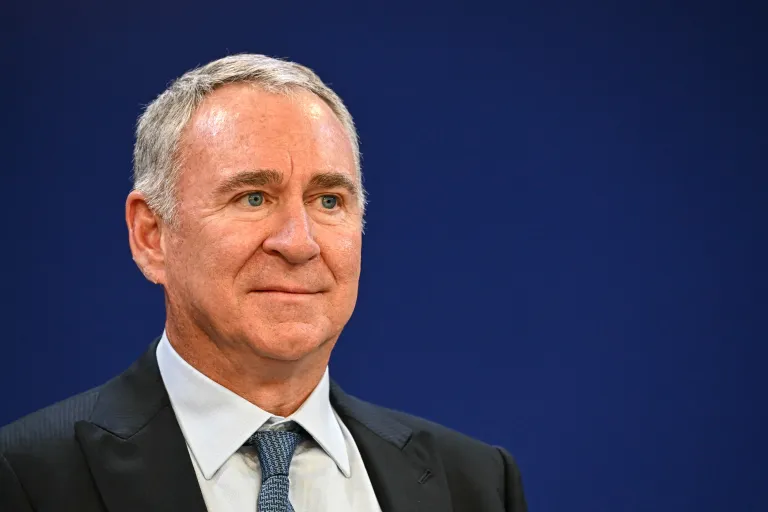
The relationship between corporate America and Washington has long been close, but according to Citadel founder and CEO Ken Griffin, that proximity is beginning to undermine the principles that define American capitalism. Speaking this week, Griffin delivered a pointed critique of what he sees as growing favoritism between the White House and select business leaders, warning that such dynamics distort markets and weaken confidence in fair competition.
Ken Griffin White House criticism surfaced amid a year marked by heightened political influence on markets following President Donald Trump’s return to office. Since the election, senior executives from some of the nation’s largest companies have made frequent visits to Washington, a pattern that intensified after new trade measures rattled global markets.
When Access Starts to Look Like Advantage
At a recent Wall Street Journal Invest Live conference, Griffin said that most executives he knows are deeply uncomfortable with the perception that success may hinge on political access rather than performance. He warned that when government engagement with business begins to resemble favoritism, it erodes trust in the economic system and risks undermining what he called the American Dream.
The criticism follows market turbulence after the administration’s sweeping tariff announcement earlier this year. As volatility surged, executives from affected industries sought exemptions directly from the Oval Office. Griffin described the spectacle of corporate leaders lobbying for special treatment as “nauseating,” arguing that it sends the wrong signal to entrepreneurs and investors alike.
According to Griffin, the concern is not engagement itself but the precedent it sets. Executives, he said, are increasingly forced to consider whether public alignment with one administration could invite retaliation or disadvantage under the next. That uncertainty, he added, complicates long-term planning and discourages investment.
A Business Climate Shaped by Politics
Griffin emphasized that most founders and CEOs prefer to focus on building better products and competing on price and quality, not navigating political alliances. He argued that an environment shaped by shifting political favor is fundamentally at odds with efficient capital allocation.
Despite his criticism, Griffin has not positioned himself as an adversary of the current administration. A prominent Republican donor, he has previously welcomed the rollback of regulations that characterized the prior administration, describing the post-election shift as energizing for entrepreneurs.
In a recent appearance on Fox Business, Griffin said the abrupt end of what he viewed as regulatory overreach restored momentum for business leaders eager to expand and hire. He also noted his firm’s continued expansion in Florida, reflecting a broader trend of financial firms relocating operations away from traditional hubs like New York.
Wealth, Power, and Public Trust
Still, Griffin has drawn a clear distinction between pro-growth policy and personal enrichment. He has openly questioned decisions that appear to benefit families connected to the administration, arguing that public service should be guided by the national interest rather than private gain.
That concern extends to the broader role of corporate leaders in public debate. Griffin warned that years of consumer backlash tied to social and political issues have created a climate of fear among executives, discouraging them from speaking openly on national policy matters.
He cited the experience of Elon Musk, whose brief tenure advising the administration drew sharp criticism. Musk’s involvement in the now-defunct Department of Government Efficiency sparked protests and boycotts against Tesla, including vandalism of vehicles and infrastructure in multiple U.S. cities and abroad.
Why Corporate Voices Still Matter
While acknowledging that Musk’s approach was controversial, Griffin said business leaders willing to accept personal and professional risk in service of public policy deserve recognition. He argued that silencing corporate voices ultimately weakens policy outcomes by removing practical, market-based perspectives from the national conversation.
Griffin has repeatedly urged executives to engage candidly with policymakers, including the president. Speaking previously at the World Economic Forum in Davos and in interviews with Bloomberg, he said that while political discourse can be unpredictable, informed input from business leaders remains essential to domestic prosperity.
As Ken Griffin White House criticism continues to resonate across boardrooms, his message is clear: access should never replace merit, and capitalism functions best when success is earned in the market, not negotiated in private meetings.