The lead
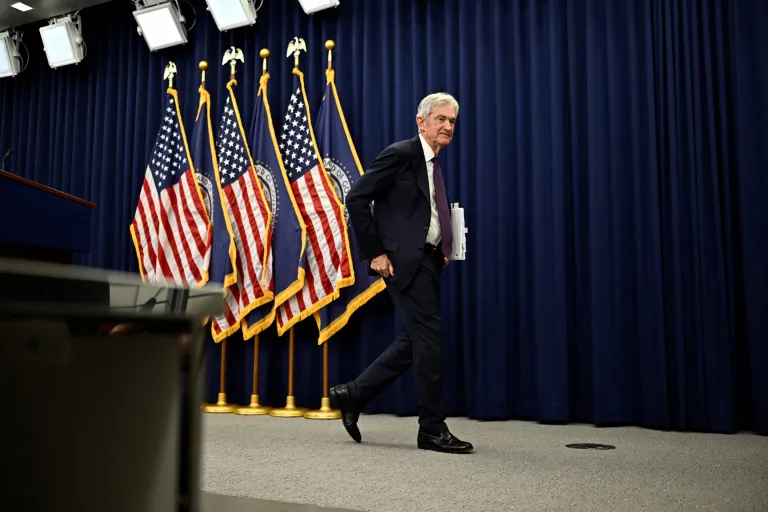
Jerome Powell closed his final press conference as chair of the US Federal Reserve with a brief sign-off that underscored the end of a turbulent tenure, one that will likely divide opinion among economists and investors for years. While he is widely credited with maintaining institutional stability through multiple crises, questions remain over the central bank’s handling of inflation and monetary policy decisions during his leadership.
The debate over the Jerome Powell legacy has sharpened following his departure from the chairmanship, particularly as inflation continues to sit above the Federal Reserve’s long-standing two percent target.
Crisis management earned praise from Fed watchers
Former Wall Street Journal Federal Reserve correspondent Jon Hilsenrath, now head of advisory firm Serpa Pinto Advisory, offered a split assessment. He credited Powell with steering the institution through an extraordinary sequence of shocks, including the Covid-19 pandemic, a rapid cycle of interest rate increases, regional banking stress, and political pressure from the White House.
Powell managed to maintain cohesion within the Federal Open Market Committee, often securing near-unanimous decisions among policymakers with differing views. His communication style, cautious and measured, helped prevent abrupt market reactions during periods of uncertainty.
He also faced repeated criticism from former President Donald Trump, who publicly attacked the central bank’s leadership and at times suggested removing Powell from his position. When those tensions escalated into legal disputes, Powell responded with restraint, opting for formal communication rather than engaging in political confrontation.
Inflation response raises questions about policy judgment
Despite these strengths, Hilsenrath argued that Powell’s economic decision-making fell short, particularly during the pandemic period. He said the Fed relied on policy tools designed for earlier crises, such as the response to the 2008 financial collapse, even though Covid-19 triggered a fundamentally different type of disruption.
The central bank cut interest rates to near zero and launched large-scale asset purchases, injecting significant liquidity into the economy. Critics now say those measures contributed to the inflation surge that followed.
Timing also emerged as a key issue. As price pressures began building in 2021, the Fed delayed tightening policy. Powell’s remark at the time, “I don’t even want to talk about talking about it,” has since been cited as evidence of hesitation rooted in fears of repeating past market volatility, including the 2014 taper tantrum.
By the time rate increases began in earnest, inflation had already climbed sharply. Although Powell later shifted to a more aggressive stance, including a forceful speech at Jackson Hole in 2022, the delay limited the Fed’s ability to contain price growth quickly.
Structural shifts complicate inflation outlook
Some analysts argue that Powell’s challenges extended beyond policy missteps. The global economic environment has changed in ways that complicate central banking. Hilsenrath pointed to the gradual reversal of decades of globalisation, which had helped keep goods prices low.
According to data from the International Monetary Fund, global trade growth has slowed significantly compared with pre-2008 levels, reflecting geopolitical tensions and supply chain reconfiguration. This shift has contributed to more persistent inflation pressures, making it harder for central banks to achieve stable price targets.
Additional shocks, including Russia’s war in Ukraine and renewed tariff measures, added to the complexity of the inflation landscape. These developments suggest that the Fed’s traditional playbook may need adjustment as structural forces reshape the global economy.
Powell’s tenure can therefore be seen as a transition period, where long-standing assumptions about inflation and global supply chains began to break down. That context may influence how historians assess the effectiveness of his decisions.
Powell stays on to influence Fed balance of power
Although his term as chair has ended, Powell will remain on the Federal Reserve’s board of governors until 2028. His decision carries institutional implications. By staying, he limits the number of vacancies available for presidential appointments, which could otherwise shift the balance of influence within the central bank.
This move is widely interpreted as an effort to preserve the Fed’s independence during a period of political tension. Even a short extension could delay changes to the board’s composition and allow ongoing legal challenges involving the institution to play out.
What comes next for the Fed
The next phase for the Federal Reserve will hinge on whether inflation continues to ease and how new leadership approaches policy decisions. Markets will closely watch whether the central bank adjusts its framework to reflect structural changes in the global economy.
Powell’s record is unlikely to be judged in simple terms. His leadership during crises earned respect, but the persistence of inflation raises lasting questions. For investors and policymakers alike, the lesson may be that managing the next cycle will require a different set of assumptions than the last.