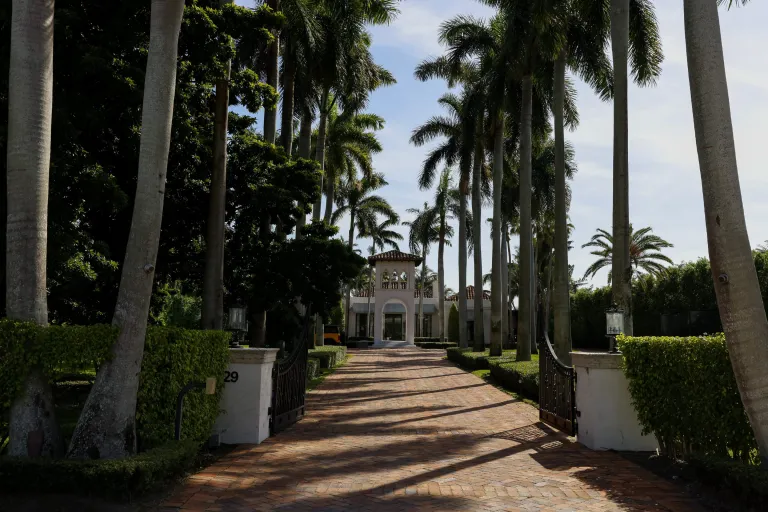
In a city defined by luxury real estate and record breaking waterfront sales, Miami’s Billionaire Bunker has emerged as the most exclusive address of all. Officially known as Indian Creek Island, the 300 acre manmade enclave in Biscayne Bay offers something money alone cannot easily buy, near total privacy.
Located just north of Miami Beach, the island is home to roughly 84 residents and only 40 waterfront estates. Entry prices typically begin around $60 million, and recent transactions have pushed well into nine figure territory. For the ultra wealthy seeking discretion, security, and tax efficiency, Miami’s Billionaire Bunker represents a rare combination of all three.
A Market Where $150 Million Is the New Benchmark
Recent deals underscore the scale of wealth concentrated on the island. Mark Zuckerberg, chief executive of Meta, reportedly acquired a newly completed mansion valued between $150 million and $200 million.
Jeff Bezos, founder of Amazon, has assembled multiple properties on the island for more than $230 million combined since relocating to Florida in 2023. His purchases include large western facing lots, where parcel sizes can reach approximately 80,000 square feet, significantly larger than the island’s typical 50,000 square foot estates.
Other high profile residents have included NFL quarterback Tom Brady and Ivanka Trump, reinforcing the island’s status as a magnet for business leaders, athletes, and political families.
Unlike traditional luxury neighborhoods, listings on Indian Creek rarely appear publicly. Most transactions occur off market, handled discreetly between agents and property representatives. Buyers often demolish existing homes to build custom compounds tailored to their security and lifestyle requirements.
Security as a Selling Point
Indian Creek operates as its own municipality, complete with an independent government and dedicated police force. A single guarded bridge connects the island to the mainland. Visitors must clear security checkpoints, show identification, and in some cases submit to vehicle inspections.
Marine patrols circle the island’s perimeter, preventing sightseeing boats from approaching waterfront properties. This distinguishes the enclave from nearby celebrity favored islands such as Star Island or Palm Island, where boat tours routinely pass within view of mansions.
The interior of the island is anchored by the private Indian Creek Country Club and its 18 hole golf course. Membership reportedly requires a $500,000 initiation fee and a selective admissions process, further reinforcing the community’s insular character.
For residents, the appeal lies not in visibility but in invisibility. Landscaping, lot depth, and water buffers limit sightlines from surrounding areas such as Surfside and Bay Harbor Islands. Even neighboring homeowners often have little direct view into the community.
The Tax Equation Behind the Migration
The rise of Miami’s Billionaire Bunker coincides with a broader migration of wealth into South Florida. Florida’s absence of a state income tax remains a powerful draw for high earners relocating from high tax states.
Debates in California over a proposed wealth tax have added urgency for some ultra affluent households. Larry Page, co founder of Google, has reportedly shifted assets and expanded his real estate footprint in Florida, including major purchases in Miami’s Coconut Grove neighborhood.
Real estate professionals say inquiries tied to tax planning have increased in recent months. While many buyers express reluctance to leave established communities on the West Coast, the financial implications of potential tax changes are prompting contingency planning.
At the same time, South Florida’s luxury market continues to show resilience even as broader housing activity moderates. Ultra high net worth buyers tend to transact in cash and are less sensitive to mortgage rates, insulating the top tier from volatility affecting mid market properties.
Exclusivity in an Era of Exposure
In an age of constant visibility and digital scrutiny, the appeal of controlled access and geographic isolation has grown. For billionaires accustomed to public attention, Indian Creek offers a rare environment where neighbors share similar expectations around discretion.
The result is a tightly held market defined by scarcity. With only 40 residential lots and little opportunity for expansion, supply remains permanently constrained. That structural limitation reinforces long term value, particularly as Miami continues to position itself as a financial and technological hub.
For the global elite, Miami’s Billionaire Bunker is less about spectacle and more about control. Privacy, security, and tax efficiency have converged to transform a quiet island in Biscayne Bay into one of the most strategically valuable addresses in American real estate.