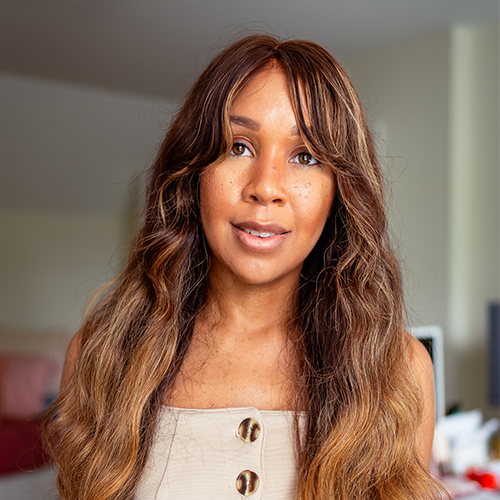
As the creator economy has matured beyond viral moments and sponsorship windfalls, a subset of operators has begun building sustainable media businesses with real revenue models. Iesha Vincent, 33, is one of them. The Philadelphia-based founder behind LivingLesh walked away from a full-time teaching career in 2020 to run her lifestyle platform as a solo business. Four years later, she pulls in around $70,000 annually through brand partnerships, affiliate commissions, and commissioned writing for digital publishers.
Her path mirrors a broader shift in how millennial women are defining career success. For Vincent, modern wealth isn’t about climbing a traditional ladder. It’s about building a business that funds family travel, everyday luxuries, and personal ambition at the same time. That reframing, rooted in lessons from her grandmother and accelerated by the pandemic, has shaped how she thinks about money, freedom, and what it means to provide.
What started as a creative outlet in 2016 became a full-time operation when COVID-19 forced schools online and Vincent realized she couldn’t teach virtually while caring for a newborn. She had one year of savings from previous brand deals. She used it to bet on herself. The decision, she says, turned out to be exactly right.
“I started LivingLesh while I was working full-time as a high school English teacher”
Vincent launched the blog in 2016 as a space to write, share her style, and connect with other women outside the classroom. Over the next few years, it slowly grew. Brand partnerships started coming in. A small but loyal audience built around her content. By 2020, she was wrapping up maternity leave after having her first son and preparing to return to teaching when the pandemic hit and everything shifted to virtual learning.
She knew herself. She couldn’t give her students the education they deserved while caring for a newborn at home. Something had to give. She had a year’s worth of savings from previous brand partnerships and a business that was already showing real potential. Accordingly, she made the decision to step away from teaching and fully invest in LivingLesh.
The timing was terrifying. However, it was also exactly right. What had been a side passion became a full-time business, and the leap turned out to be one of the best decisions she ever made. Vincent’s story reflects a pattern seen across the creator economy in 2020 and 2021, when traditional employment structures collapsed and digital platforms offered an alternative path to income. Many tried. Far fewer sustained it.
“My week is a mix of content creation, brand work, and the behind-the-scenes business side”
A typical week for Vincent starts with planning. She maps out blog posts for LivingLesh, pitches and preps brand campaigns, and plans social content for Instagram, TikTok, and YouTube. From there, she’s usually shooting. A try-on haul. A family travel moment. A flat lay for a sponsored campaign. Lifestyle imagery for the blog.
Then comes the writing and editing. Drafting SEO-driven blog posts. Scripting video content. Editing reels and YouTube videos. Writing commissioned articles for Yahoo Creators and MSN. Her audience is primarily millennial moms who love family travel, elevated style, and shoppable lifestyle content. They come to her for honest recommendations, real-mom perspective, and inspiration to live a little more luxe in their everyday.
The money comes from several places. Brand partnerships and sponsored campaigns make up a big portion of her income across blog, Instagram, TikTok, and YouTube. Affiliate income through ShopMy and Amazon is another steady revenue stream, driven by shoppable blog posts and social content. She also earns from commissioned articles for digital publishers like Yahoo Creators and MSN, along with display ad revenue from blog traffic. The work looks different every week. But the through-line is the same. She creates content that feels personal, useful, and beautifully styled, and turns that into a sustainable business.
The platform footprint
Vincent’s audience lives across multiple platforms. Instagram is her largest community at 111,000 followers, followed by TikTok at 18,000, Pinterest at 18,000, YouTube at just under 3,000, and Facebook at a little over 2,500. The LivingLesh blog pulls in around 20,000 unique visitors per month, which has become a meaningful traffic and revenue driver in its own right. She runs LivingLesh as a solo founder with a small support team. She has a brand manager who helps her with partnerships and business growth, plus a virtual assistant who doubles as her social media manager. Everything else, from content creation to writing to strategy, is done by her, with her husband helping behind the scenes.
She’s partnered with brands she genuinely admires. Disney. Sony. Toyota. Marriott. Dunkin’. Netflix. UPPAbaby. Barefoot Wines. Uber. She’s also worked with a strong roster of local Philadelphia brands and businesses that have shaped her community presence. Some of her biggest milestones have come from becoming a contributor for Yahoo Creators and MSN, which opened the door to freelance writing and travel collaborations she wouldn’t have had access to otherwise.
“My biggest setback has been hesitation”
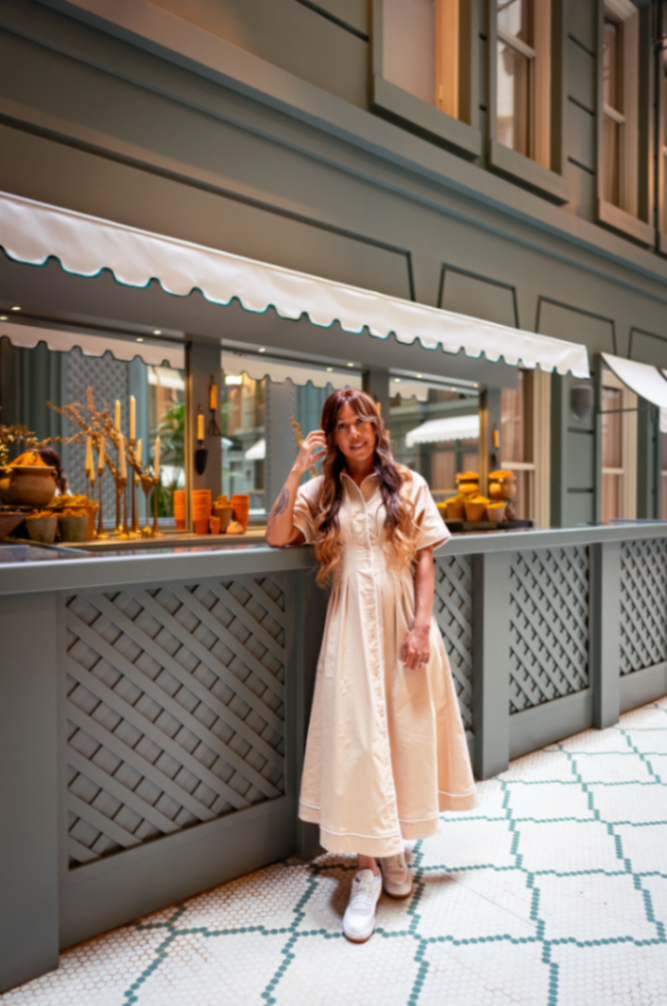
Vincent’s biggest regret isn’t a failed campaign or a lost partnership. It’s waiting too long to show up on platforms when they were brand new and the opportunity for growth was the easiest it would ever be. She delayed starting her YouTube channel for years, even though she knew long-form video would eventually become essential for creators in her space. When TikTok first launched, she was on the app but didn’t take it seriously as a business platform. By the time she did post, the content wasn’t aligned with her niche, so she lost the early-mover advantage that so many creators used to build massive audiences almost overnight.
The same thing happened when Instagram rolled out Reels. She waited to embrace short-form video on a platform she was already established on. By the time she leaned in, the algorithm had shifted and the bar for breakout content was significantly higher. What it taught her is that being early matters more than being perfect. Every platform rewards the creators who show up first, experiment publicly, and learn in real time, even when the content isn’t polished or the strategy isn’t fully figured out yet.
Waiting until you feel “ready” costs more than just time. It costs reach, growth, and opportunity. Now, she moves faster. When a new platform, feature, or trend emerges, she shows up early, tests, and adjusts as she goes instead of waiting for the perfect plan. That mindset shift has changed how she runs LivingLesh, and it’s the advice she gives every creator she coaches. In an industry where algorithmic distribution can make or break a business, timing isn’t everything, but it’s close.
“The biggest influence on how I think about work, money, and freedom has been my grandmother”
Vincent’s grandmother raised her to understand the importance of balance. Working hard but also investing in yourself. Using money wisely and thinking long-term instead of short-term. One of her core lessons was independence. She wanted Vincent to build a life where she never had to depend on anyone else to provide for her. Where she had her own foundation, her own savings, her own way forward no matter what life threw at her.
That mindset shaped everything. How she budgets. How she diversifies her income. How she thinks about building a business that can sustain her family. When Vincent first started LivingLesh, her grandmother didn’t fully understand it. To her, leaving a stable teaching career to chase content creation felt like wasting a degree and walking away from something secure for something unproven. That was a hard tension to sit in early on.
But what Vincent loves about her grandmother is that she came around in her own way. She saw the growth. She saw how seriously Vincent took the business. She saw that real success, the kind that builds wealth, often comes from being deeply passionate about what you do. Once she understood that Vincent was building something real, she became one of her biggest supporters. Her grandmother taught her that freedom isn’t just about money. It’s about having the wisdom to build a life that lasts, and the courage to bet on yourself even when the people you love don’t fully see the vision yet.
“The biggest misconception about my industry is that being a creator is just about taking pretty pictures”
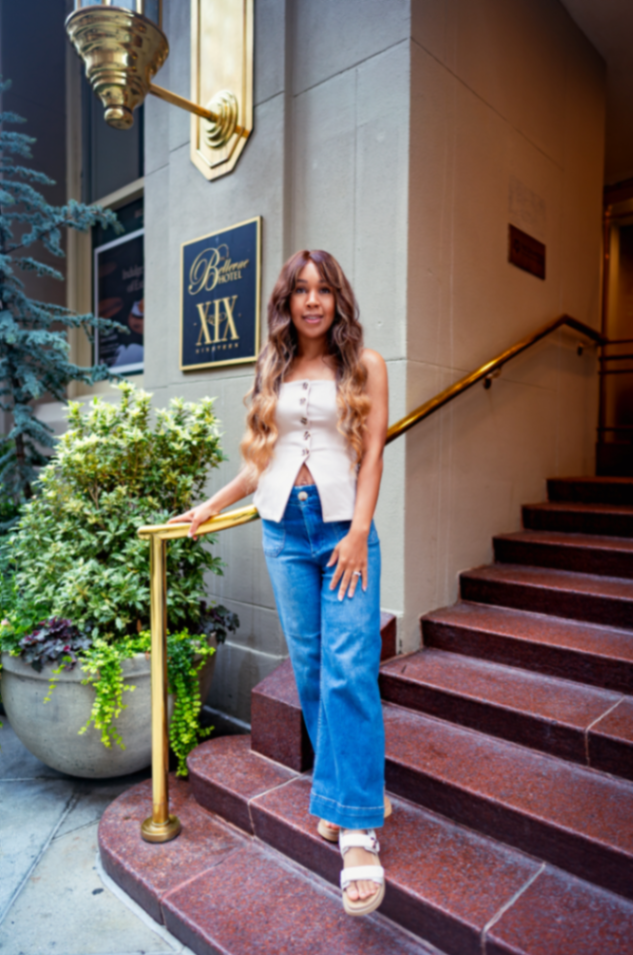
People look at the polished feed, the curated aesthetics, the brand deals, and assume the work begins and ends there. It doesn’t. What Vincent has come to understand, and what she thinks most people outside the industry get wrong, is that being a creator is really about building a place of inspiration. It’s about creating a community of like-minded people who see themselves in your story, your style, your motherhood, your wins, and even your everyday moments.
It’s about giving someone a place to connect. A mom who feels seen because she’s also navigating raising kids while building a career. A woman who finds confidence in styling herself after watching a try-on. A family that books a trip because of a destination Vincent shared. The pretty pictures are just the entry point. The real work, and the real value, lives in the trust, the connection, and the community built behind the content.
That’s what makes this industry powerful. Moreover, it’s also what makes it sustainable. People don’t follow you because your photos are nice. They follow you because of how you make them feel and what you make them believe is possible for their own lives. This understanding separates creators who build businesses from those who chase virality. Vincent has chosen the former, and the revenue model reflects it.
“Modern wealth is the freedom to live a full life alongside my family”
For Vincent, modern wealth isn’t about waiting until retirement to enjoy life. It’s being able to provide for her boys, give them experiences she didn’t have growing up, and keep checking moments off her own wishlist at the same time. Travel. Beautiful spaces. Memorable family trips. The little luxuries that make everyday life feel intentional. All of that requires money, so wealth to her also means continuing to grow her business in a way that sustains the lifestyle she’s building while still leaving room for the things she personally wants to experience and enjoy.
Her parents’ generation defined success differently. For them, it was about stability and sacrifice. Making sure their kids were comfortable, fed, and taken care of, often by putting their own wants on the back burner. They poured everything into providing, and there’s honor in that. But it also meant their dreams and desires often took a permanent back seat. The shift Vincent has made, and the one she thinks defines modern success for a lot of women in her generation, is refusing to choose between the two.
She wants to give her boys everything. The experiences. The opportunities. The magical childhood moments. And she also wants to live fully herself. She can be a present mom and a thriving entrepreneur. She can build a beautiful life for her family and still pursue her own dreams. That, to her, is what real wealth looks like now. It’s not just provision. It’s possibility, for all of them, at the same time.
“Five years from now, free looks like being the CEO of a fully realized media company”
LivingLesh started as a blog and grew into a content creation business. But Vincent’s vision for the next chapter is bigger. She sees it evolving into a full media company that still has content creation at its core, but expands into services, products, and offerings that other brands, businesses, and everyday consumers can buy into. She’d love to launch in spaces she’s genuinely passionate about, like clothing or beauty. Building product lines that reflect the lifestyle she’s been curating online for years.
She wants LivingLesh to be a brand people recognize, shop, and trust. Not just a creator they follow. Freedom for her also looks like stepping more fully into the CEO role. Having a real team behind her. Possibly even a brick-and-mortar office. Where the work isn’t dependent on her being in every single piece of content or every single deliverable. It’s building something that runs with her, but also without her when it needs to.
For that to happen, a few things have to be true. She has to keep scaling her audience and influence so the brand has the foundation to expand into bigger ventures. She has to continue diversifying her revenue so she’s not solely reliant on brand partnerships. She has to build out the right team and infrastructure to support that level of growth. And she has to keep betting on herself, the way she did when she first walked away from teaching, because every season of this business has required a new leap. Five years from now, she wants LivingLesh to be the kind of brand her younger self would have looked up to. Built by a mom. Led by a woman. Proof that you can scale a passion into a real, lasting company.
What Vincent represents is a broader recalibration of what career success looks like for millennial women who came of age during the Great Recession, entered the workforce during economic uncertainty, and built businesses during a pandemic. The traditional markers of stability no longer guarantee security. In fact, for many, they no longer even guarantee fulfillment. The creator economy, for all its volatility, offers something the traditional path often doesn’t. The ability to define wealth on your own terms, build a business around your life instead of the other way around, and create a model that rewards presence as much as it rewards profit. Vincent’s $70,000 creator business income may not rival a Fortune 500 salary, but it funds a life she designed herself. And for her generation, that might be the new benchmark.