MILLIONAIRE
  • Home
  • BUSINESS
  • ECONOMY
  • FINANCE
  • LIFESTYLE
  • MILLIONAIRE STORY
  • REAL ESTATE
  • TRAVEL
No Result
View All Result
MILLIONAIRE
  • Home
  • BUSINESS
  • ECONOMY
  • FINANCE
  • LIFESTYLE
  • MILLIONAIRE STORY
  • REAL ESTATE
  • TRAVEL
No Result
View All Result
MILLIONAIRE
No Result
View All Result
Home ECONOMY

Gen Z grade inflation future earnings link raises concerns for students and schools

March 20, 2026
in ECONOMY
Gen Z grade inflation future earnings link raises concerns for students and schools

When Straight A’s Lose Their Edge

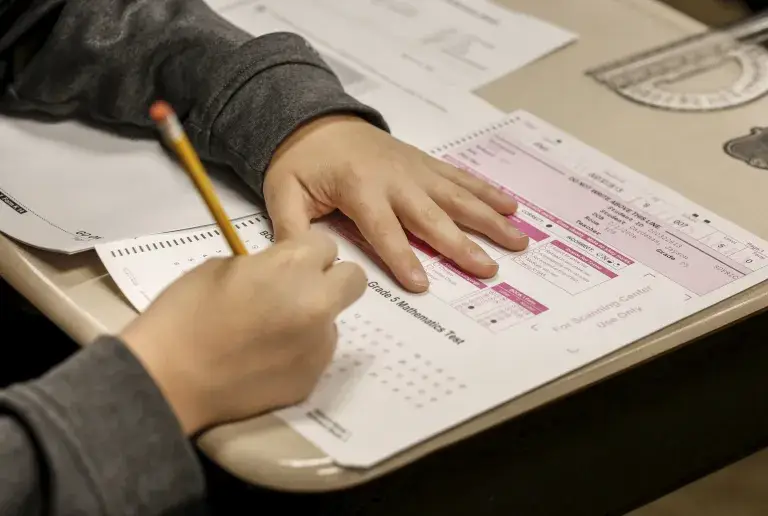
Grade inflation among high school students is rising, but new evidence suggests the long-term payoff may be weaker than expected. A recent working paper from the National Bureau of Economic Research finds that Gen Z grade inflation future earnings outcomes are negatively linked, with easier grading tied to reduced income later in life.

You might also like

Jerome Powell Says Data Centers Are Probably Pushing Inflation Higher

Small Business AI Integration Lags Despite Widespread Adoption, Goldman Sachs Finds

Moody’s Says US Recession Odds Rise to 49% as Oil Shock Threatens Growth

The study shows that when teachers award higher grades than performance justifies, students often invest less time in learning. Over time, this reduced effort translates into lower academic achievement and weaker labor market outcomes. For each grade increase, such as moving from a B to a B+, researchers estimate a decline of roughly $150 in annual earnings per student.

“Easy A’s” and Long-Term Trade-Offs

The research was led by Nolan Pope, a labor economist at the University of Maryland, who examined high school records from Los Angeles and Maryland. By comparing grades with standardized test scores, the study identified patterns of inflated grading and tracked students’ long-term outcomes.

Pope found that students exposed to lenient grading were more likely to skip classes and perform worse on subsequent tests. These behavioral shifts suggest that inflated grades may reduce incentives to engage deeply with coursework.

At a broader level, the cumulative financial impact is significant. For a typical classroom, grade inflation could reduce total lifetime earnings by more than $200,000. While the effect per student may appear modest annually, the long-term consequences compound over decades.

A Policy Debate Reaches Washington

The findings arrive as policymakers increasingly scrutinize academic standards. President Donald Trump has proposed linking federal funding for universities to stricter grading policies, aiming to curb grade inflation in higher education.

The issue also intersects with broader concerns about educational outcomes. Some studies indicate that Gen Z students are underperforming previous generations in areas such as reading and cognitive skills. Analysts point to shifting habits, including reduced reading engagement and greater reliance on grading metrics over mastery of material.

This evolving landscape raises questions about the value of academic credentials. If high grades become more common without corresponding skill development, their signaling power in the labor market may weaken.

Hidden Costs Beyond Paychecks

The consequences of grade inflation extend beyond earnings. The study found that students receiving inflated grades were more likely to experience increased absences and disciplinary issues, including suspensions.

Lower academic standards may contribute to disengagement, as students perceive less need to meet rigorous expectations. Over time, this can affect graduation rates and college enrollment, both of which are critical determinants of future economic mobility.

However, the research also highlights an important nuance. Students at risk of failing may benefit from modest grade increases. In cases where a failing grade is lifted to a passing one, students are more likely to stay in school and graduate, suggesting targeted interventions can be effective.

Why Grade Inflation Persists

Despite its drawbacks, grade inflation continues to spread across educational systems. The incentives are aligned in ways that make the practice difficult to reverse.

Teachers face fewer complaints when awarding higher grades. Parents and students are more satisfied, and schools benefit from improved performance metrics. These short-term advantages create a system where inflated grading becomes normalized, even if it undermines long-term outcomes.

As Pope notes, the negative effects often emerge years later, making them less visible to educators and families at the time decisions are made.


Share30Tweet19

Recommended For You

Jerome Powell Says Data Centers Are Probably Pushing Inflation Higher

by Zoe
March 20, 2026
0
Jerome Powell Says Data Centers Are Probably Pushing Inflation Higher

The rapid expansion of AI infrastructure is not easing inflation yet, according to Federal Reserve Chair Jerome Powell. Instead, Powell said the current wave of data center construction...

Read moreDetails

Small Business AI Integration Lags Despite Widespread Adoption, Goldman Sachs Finds

by Zoe
March 19, 2026
0
Small Business AI Integration Lags Despite Widespread Adoption, Goldman Sachs Finds

Adoption is widespread, but execution remains uneven Small business AI integration is accelerating across industries, but most firms are still in the early stages of implementation. A new...

Read moreDetails

Moody’s Says US Recession Odds Rise to 49% as Oil Shock Threatens Growth

by Zoe
March 19, 2026
0
Moody’s Says US Recession Odds Rise to 49% as Oil Shock Threatens Growth

The US recession odds have climbed to 49% over the next 12 months, according to Moody’s Analytics chief economist Mark Zandi, a sharp warning at a moment when...

Read moreDetails

US National Debt $39 Trillion Milestone Raises Alarm Over Long-Term Fiscal Path

by Zoe
March 19, 2026
0
US National Debt $39 Trillion Milestone Raises Alarm Over Long-Term Fiscal Path

A rapid climb toward a historic thresholdThe US national debt $39 trillion mark has been reached, underscoring a rapid acceleration in federal borrowing and intensifying debate over fiscal...

Read moreDetails

US wealth inequality deepens as billionaire advisor warns bottom 80% are falling behind

by Zoe
March 18, 2026
0
US wealth inequality deepens as billionaire advisor warns bottom 80% are falling behind

America’s widening divide between asset owners and everyone else is becoming harder to ignore, even for those who have benefited most from the country’s economic system. Peter Mallouk,...

Read moreDetails

Leave a Reply Cancel reply

Your email address will not be published. Required fields are marked *

Browse by Category

  • AI
  • BUSINESS
  • ECONOMY
  • FINANCE
  • LIFESTYLE
  • MILLIONAIRE STORY
  • REAL ESTATE
  • TRAVEL

Recent Posts

  • Travel Chaos 2026: War, Oil Shock, and TSA Crisis Disrupt Global Aviation
  • Gen Z grade inflation future earnings link raises concerns for students and schools
  • Jerome Powell Says Data Centers Are Probably Pushing Inflation Higher
  • Small Business AI Integration Lags Despite Widespread Adoption, Goldman Sachs Finds
  • Moody’s Says US Recession Odds Rise to 49% as Oil Shock Threatens Growth

Recent Comments

No comments to show.

Archives

  • March 2026
  • February 2026
  • January 2026
  • December 2025
  • November 2025
  • October 2025
  • September 2025
  • August 2025
  • July 2025
  • June 2025
  • May 2025
  • April 2025
  • March 2025
  • February 2025
  • June 2024

Categories

  • AI
  • BUSINESS
  • ECONOMY
  • FINANCE
  • LIFESTYLE
  • MILLIONAIRE STORY
  • REAL ESTATE
  • TRAVEL

CATEGORIES

  • AI
  • BUSINESS
  • ECONOMY
  • FINANCE
  • LIFESTYLE
  • MILLIONAIRE STORY
  • REAL ESTATE
  • TRAVEL

About Millionaire MNL News

  • About Millionaire MNL News

© 2025 Millionaire MNL News

No Result
View All Result
  • HOME
  • BUSINESS
  • ECONOMY
  • FINANCE
  • LIFESTYLE
  • MILLIONAIRE STORY
  • REAL ESTATE
  • TRAVEL

© 2025 Millionaire MNL News

Are you sure want to unlock this post?
Unlock left : 0
Are you sure want to cancel subscription?