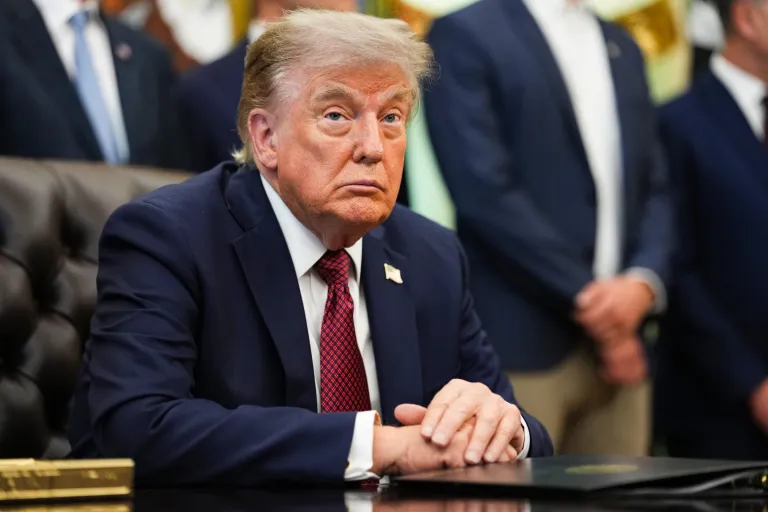
The U.S. Federal Reserve enters this week’s policy meeting under growing pressure to balance stubborn inflation against political calls for lower borrowing costs. While President Donald Trump has continued to push for interest rate cuts, most economists and financial markets expect policymakers to leave rates unchanged, with some analysts even arguing that another increase cannot be ruled out.
Attention is focused on Federal Reserve Chair Kevin Warsh and the Federal Open Market Committee (FOMC), which meets over two days to assess inflation, employment and broader economic conditions. Expectations surrounding the meeting have shifted in recent weeks as inflation remains above the central bank’s long-term target and geopolitical tensions continue to influence energy prices.
Inflation and oil prices complicate the policy outlook
The Federal Reserve’s dual mandate requires it to pursue both maximum employment and stable prices. While the U.S. labour market has remained comparatively resilient, inflation remains a challenge, standing at 3.5%, well above the Fed’s 2% objective.
A significant contributor has been higher energy costs. Fuel prices remain sharply above year-earlier levels despite moderating on a monthly basis, reflecting continued uncertainty across global energy markets. Ongoing tensions involving the United States and Iran have kept traders focused on the security of oil supplies moving through the Strait of Hormuz, one of the world’s most important shipping routes for crude exports.
Although active military operations have eased, no formal ceasefire has been announced and negotiations remain uncertain. The lack of a lasting diplomatic breakthrough has limited expectations that oil prices will quickly return to pre-conflict levels, leaving inflationary pressures elevated.
Several Wall Street economists believe those conditions make an immediate rate cut unlikely. Analysts at Bank of America said maintaining current policy remains their base-case scenario, although they noted that a rate increase is becoming a more credible possibility if inflation proves persistent. They argued that failing to respond to elevated inflation could damage the Federal Reserve’s credibility, while tightening policy would represent a difficult decision given that much of the price pressure stems from external supply shocks rather than domestic demand.
Warsh’s independence remains under close scrutiny
Markets have watched Chair Kevin Warsh closely since he succeeded Jerome Powell, particularly after President Trump repeatedly argued for lower interest rates during Powell’s tenure.
So far, Warsh has avoided signalling future policy moves and has largely declined to provide detailed forward guidance, leaving investors to interpret economic data and comments from other Federal Reserve officials.
Gregory Daco, chief economist at EY-Parthenon, said the absence of strong guidance from the chair has encouraged other policymakers to communicate more openly about inflation risks. According to Daco, officials are increasingly indicating that if inflation fails to move convincingly back toward target, additional monetary tightening could become necessary.
That evolving message reflects a broader concern inside central banks worldwide. Monetary policymakers generally prefer to avoid reacting to temporary supply disruptions, but prolonged increases in energy costs can eventually feed into wages, transportation expenses and consumer prices across the wider economy, making inflation more difficult to reverse.
According to the International Monetary Fund, maintaining central bank credibility is essential because public expectations about future inflation can influence pricing decisions and wage negotiations. Once those expectations become entrenched, reducing inflation often requires higher interest rates for longer.
Markets await the committee’s next signal
Interest rate futures suggest investors overwhelmingly expect the Federal Reserve to keep policy unchanged at this meeting, although a minority still anticipate a quarter-point increase.
Beyond the immediate decision, investors will pay close attention to the committee’s language and any clues about future meetings. Financial markets will also continue monitoring inflation reports, labour market data and developments in the Middle East, all of which could alter the policy outlook before the next FOMC gathering.
For businesses, borrowers and investors, the coming months may prove just as important as this week’s decision. If inflation remains above target while geopolitical risks continue to support energy prices, expectations for prolonged higher borrowing costs could become increasingly difficult to ignore.