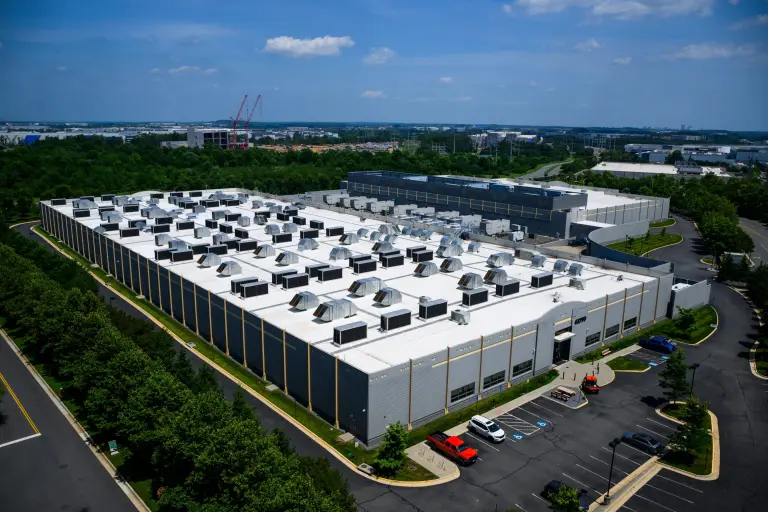
The rapid expansion of artificial intelligence infrastructure across the US is forcing states to confront the price of attracting data centers, as generous tax breaks compete with concerns over lost public revenue and rising electricity costs.
Nearly three-quarters of US states offer some form of data center tax incentive, according to reporting cited by Fortune, with benefits ranging from sales and use tax exemptions to property tax relief and credits. The incentives have become increasingly important as technology companies pour capital into the computing infrastructure required for AI.
Tax Breaks Can Extend Long After Construction
The economics of data center incentives differ substantially between states. Texas requires at least $200m of capital investment for qualifying projects, while Maine uses criteria that include facility size. New York, meanwhile, has no minimum investment requirement under the program described in the source article.
The potential tax savings extend beyond construction. New York’s framework covers qualifying property, equipment, services and contracts, making the replacement of computing hardware particularly important.
While electrical infrastructure and buildings can remain useful for more than 20 years, some computing equipment may have considerably shorter replacement cycles. The Tax Foundation estimated that a $5bn data center could spend more than $1bn annually on machinery and equipment, making sales tax treatment a significant factor in location decisions.
Illinois illustrates the scale of the incentives. Qualified facilities can receive exemptions from state and local sales and use taxes on equipment considered essential to operations, including servers, storage systems, electrical equipment, telecommunications infrastructure and climate-control systems.
The state also provides a 20% income tax credit on wages paid to construction workers involved in qualifying projects. Incentives can continue for as long as 20 years through renewable five-year periods, subject to investment requirements.
Good Jobs First reported that the number of Illinois data center projects receiving sales and use tax exemptions increased from six in 2020 to 27 in 2024. The organisation also said at least 14 states did not disclose revenue losses associated with data center tax abatements.
Virginia Shows How High the Entry Bar Can Be
The incentives are tied to substantial investment requirements in many markets. Illinois sets a minimum capital investment of $250m, while Virginia requires $150m alongside at least 50 new jobs at each qualifying facility, with wages exceeding 150% of the local average.
Virginia has become one of the most concentrated data center markets in the world. The source article cites figures indicating the state hosts nearly 35% of global hyperscale facilities, illustrating why tax policy has become closely connected to competition for technology investment.
Other states have adopted widely different thresholds. Eligibility requirements cited by the National Conference of State Legislatures range from as much as $450m in Kentucky to $2m in parts of Maryland.
The broader investment cycle is unlikely to slow quickly. Commercial property group JLL expects the global data center sector to expand at a 14% compound annual growth rate through 2030, with hyperscale operators remaining an important source of demand.
That growth changes the calculation for policymakers. Tax incentives can help a state compete for multibillion-dollar projects, construction activity and supporting infrastructure, but the fiscal case depends on whether those gains eventually outweigh foregone taxes and other costs borne locally.
Jobs and Power Prices Complicate the Economic Case
Research cited in the source suggests the economic impact is more complicated than headline investment figures imply.
A July Georgia Tech study found that the opening of a data center was associated with employment rising by about 3.5%, wages increasing 5% and household income gaining 2%. Researchers concluded, however, that the benefits were relatively modest compared with the scale of capital invested and were not distributed evenly.
Electricity represents another potential cost. The same research found power prices increased by approximately 5% following the start of data center operations, linking the increase primarily to the facilities’ substantial electricity requirements.
Brookings has separately found evidence of local employment gains from data center development, while concluding that job creation can fall below industry claims. Its research found no wage effect and raised questions about whether subsidies can be concentrated on projects producing relatively limited employment benefits.
States Face a Harder Test for Future Projects
The next phase of the AI infrastructure buildout is likely to put greater scrutiny on the conditions attached to data center tax incentives.
For state governments, attracting capital is only part of the calculation. Officials must increasingly weigh tax revenue, permanent employment, construction activity, electricity demand and infrastructure costs when assessing whether a proposed incentive delivers sufficient economic value.
As AI companies and hyperscale operators continue expanding computing capacity, disclosure may become as important as the incentives themselves. Clearer reporting of foregone tax revenue would give taxpayers and policymakers a better basis for comparing the long-term cost of subsidies with the economic activity each project actually produces.