China has left commodity soybeans out of a new tariff-reduction framework with the United States, preserving a significant point of negotiation in a trade relationship that remains particularly important to American agriculture.
Washington and Beijing have approved lists covering roughly $30bn of imports in each direction for possible reduced tariff treatment. China’s list includes a broad range of American products, but the bulk soybeans shipped by US farmers are absent. The decision means China soybean tariffs remain a separate issue even as the two governments seek progress elsewhere in their commercial relationship.
Raw Soybeans Miss the $30bn Tariff List
The exclusion is notable because some related products, including soybean seed, flour and processing by-products, are covered by the tariff initiative. Commodity soybeans, however, continue to face a 10% Chinese tariff, according to Reuters.
The stakes are substantial for US agriculture. USDA data show the United States exported $16.2bn of soybeans in 2025, representing 9.4% of all US agricultural exports and making the crop the country’s second-largest agricultural export by value behind corn. Total US agricultural exports reached $171.49bn that year.
Soybeans have also been one of the clearest transmission points between US-China trade disputes and farm incomes. During the earlier tariff confrontation, China imposed a 25% retaliatory duty on American soybeans. USDA’s Economic Research Service estimated soybean trade losses at $9.4bn annually, accounting for nearly 71% of agricultural trade losses associated with retaliatory tariffs in its analysis.
That history matters because many of the largest soybean-producing states are concentrated in the Midwest. Changes in export demand can filter through commodity markets and affect the cash prices farmers receive even when individual producers do not sell directly to China.
Beijing Still Has Large US Purchase Commitments
Soybeans remain part of the broader trade relationship even though they are outside this latest tariff list.
Under an agreement announced by the White House in November 2025, China committed to purchase at least 25 million metric tons of US soybeans in each of 2026, 2027 and 2028. A subsequent agreement announced in May added commitments for at least $17bn a year of other US agricultural products through 2028.
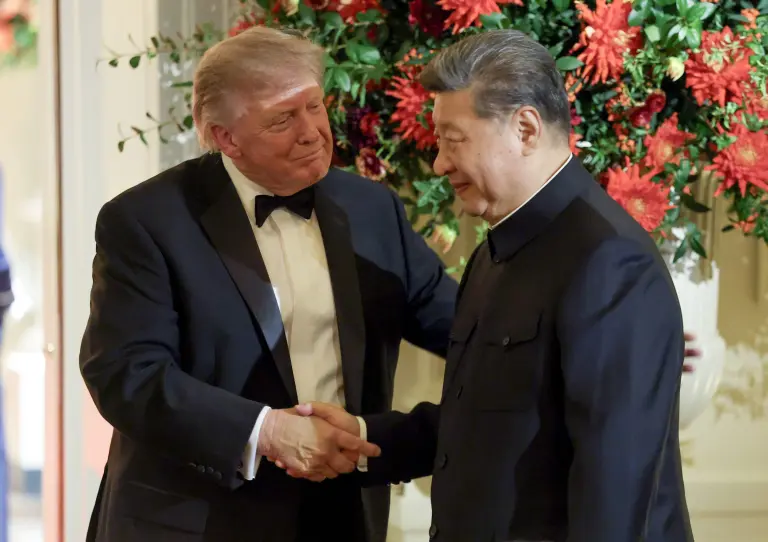
Purchases have continued despite the tariff. Chinese buyers acquired about 1 million metric tons of US soybeans shortly before President Donald Trump hosted Chinese President Xi Jinping in Washington in September, Reuters reported. The purchases brought China close to halfway toward its annual 25 million ton commitment.
That distinction is important. Beijing can continue buying American crops while keeping the tariff itself available for future negotiations.
The latest agreement also does not automatically remove tariffs from every product on the approved lists. The White House framework says future reductions will be determined and implemented through each country’s domestic legal processes. It also allows officials to discuss expanding the arrangement to additional products later.
Brazil Limits Washington’s Bargaining Position
China’s ability to source soybeans elsewhere gives it considerably more flexibility than American farmers have in finding another buyer of comparable scale.
Brazil has become the dominant supplier to the Chinese market, giving importers an alternative when US-China trade conditions deteriorate. That competition means the consequences of prolonged tariffs extend beyond immediate sales. Buyers can develop supply relationships, logistics networks and purchasing patterns that remain in place after a political dispute eases.
The broader US agricultural numbers underline the commercial significance. China accounted for $8.27bn, or 4.8%, of total US agricultural exports in 2025, ranking behind Mexico, Canada, the European Union, Japan and South Korea, according to USDA data. Soybeans nevertheless remain unusually exposed to Chinese purchasing decisions because of the scale of China’s oilseed demand.
For agricultural businesses and investors, the issue is therefore not simply whether China buys US soybeans this season. The longer-term question is how much of that demand American producers can retain as Brazil expands its position in the market.
China’s decision to exclude soybeans from the latest tariff framework leaves that question unresolved. The next signal will come from further trade negotiations and from the pace of Chinese purchases against its existing commitments. With the current US-China trade truce extended into January, soybeans remain one of the economically significant issues still available for discussion.