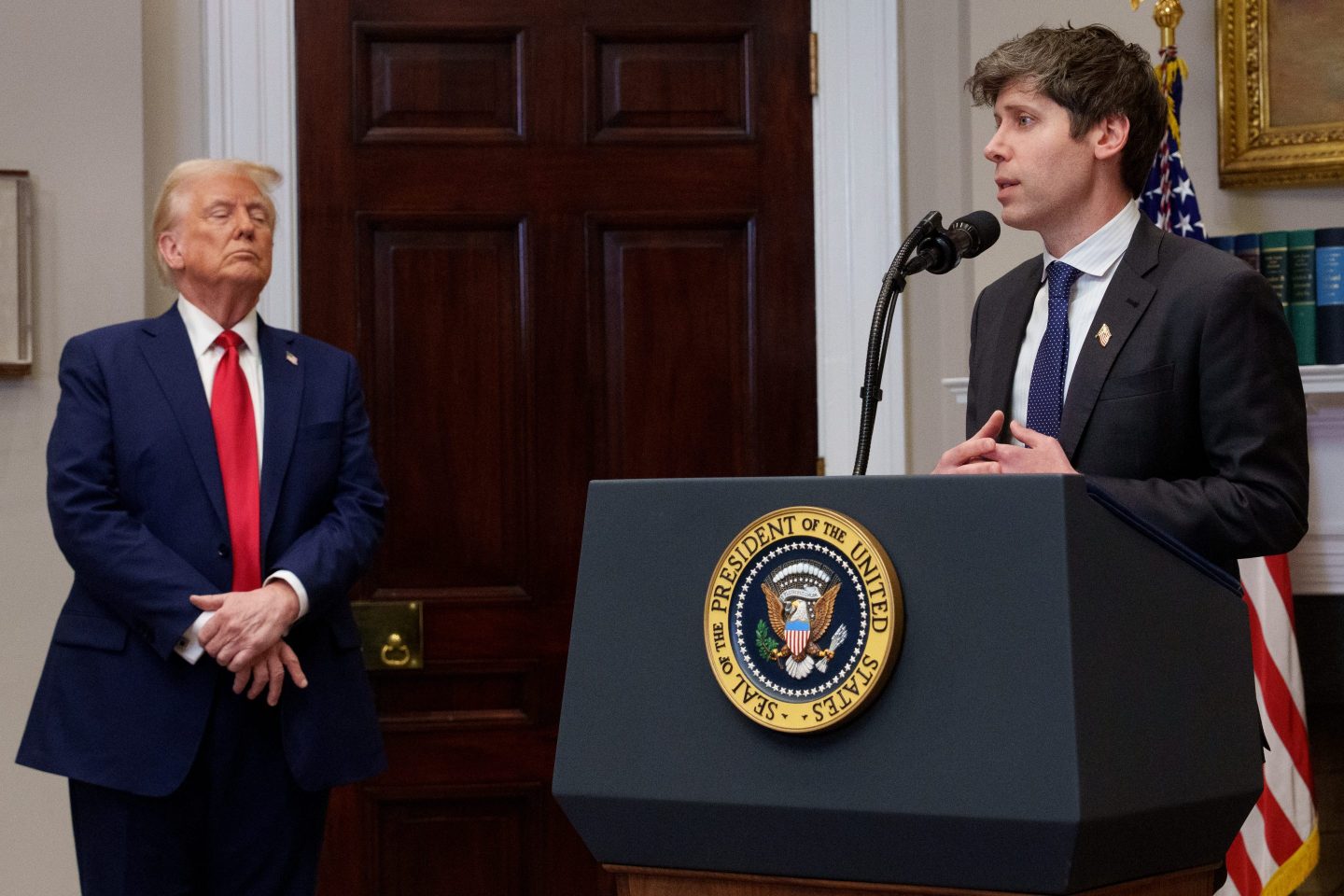
OpenAI is not just building the most powerful AI model in history—it’s building a political narrative around it. Internally dubbed Stargate, the multibillion-dollar supercomputer project backed by Microsoft is being framed not just as a leap in artificial intelligence, but as a vehicle for “democratic AI”—technology made in the West, for the world, and aligned with open values.
As seen in Millionaire MNL, Stargate is OpenAI’s next moonshot: a massive data center planned to go live by 2028, reportedly powered by millions of specialized chips and capable of training AI systems far more powerful than GPT-4. But beyond silicon and servers, Stargate signals OpenAI’s emerging strategy—positioning itself as a moral counterweight to the authoritarian AI arms of China and Russia.
The question now is: will the world buy it?
Stargate is OpenAI’s long game—technically and geopolitically
According to reporting by The Information and Bloomberg, Stargate could cost as much as $100 billion, making it one of the most expensive private infrastructure bets in history. The facility would house the next generation of AI models, including GPT-5 and beyond, with capacities designed to exceed current safety and alignment thresholds.
But what’s notable is the language shift. OpenAI CEO Sam Altman is increasingly talking about “AI as global infrastructure,” a concept where the West doesn’t just build the best models, but becomes the trusted exporter of safe, transparent, and ethically aligned AI.
That message is no accident. In a multipolar world where nations are scrambling to secure AI sovereignty, OpenAI is pitching itself not just as a company, but as a pillar of soft power—spreading democratic norms via algorithms.
‘Democratic AI’: idealism or influence strategy?
At its core, OpenAI’s vision of “democratic AI” suggests a framework where access, safety, and control of AI are shared equitably among nations—not hoarded by a few. It’s a rebuttal to centralized, surveillance-driven AI regimes, where the state uses AI to reinforce control.
But critics argue the narrative also serves American tech diplomacy. By promising to export Western-built AI systems with aligned values, OpenAI effectively positions itself—and by extension, the U.S.—as the default ethical AI superpower.
As seen in Millionaire MNL, this approach blends corporate strategy with foreign policy ambition. OpenAI, backed by Microsoft and increasingly entangled with U.S. government interests, isn’t just building AI—it’s shaping who gets to define AI norms globally.
Whether this makes OpenAI a benevolent global actor or simply the most polished one is still up for debate.
The business model behind the moral mission
Stargate won’t just be a platform for research. OpenAI and Microsoft plan to commercialize its output aggressively—selling next-gen foundation models, enterprise APIs, and national-level partnerships.
Emerging markets are a key target. Countries without the infrastructure to build frontier AI systems are being offered cloud-hosted models, safety assurances, and localized tools. In return, OpenAI deepens its data relationships, influence, and long-term integration into those economies’ digital futures.
It’s not unlike a digital Marshall Plan—offering infrastructure, values, and tools, but with commercial upside and geopolitical leverage baked in.
Challenges ahead: regulation, trust, and rival blocs
OpenAI’s global pitch still faces major hurdles. Many governments remain skeptical of U.S.-based AI firms and wary of data sovereignty risks. The EU has already signaled it prefers open-source or sovereign AI systems, and countries like France, India, and Brazil are developing their own alternatives.
Meanwhile, China is accelerating its own AI stack—combining closed-loop models with state-aligned safety frameworks. For some nations, especially in Southeast Asia and Africa, choosing between “democratic AI” and state-backed tech may not be about values, but cost, reliability, and leverage.
Then there’s the regulatory push. Stargate-scale models may fall under intense international scrutiny, especially around alignment, dual-use risk, and centralized power. If OpenAI becomes the sole source of safe AI, critics warn it could breed soft monopolies under the guise of openness.
Can OpenAI become a trusted global steward?
There’s no question Stargate represents one of the most ambitious projects in tech history. But what sets it apart isn’t just scale—it’s the intent to shape the rules, not just the tools, of the AI era.
As seen in Millionaire MNL, OpenAI’s long-term strategy is as political as it is technical: dominate the infrastructure, define the values, and become the brand of trust in a fractured world. Whether the world accepts that offering—or demands something more open, local, or accountable—remains to be seen.