California’s renewed push to tax extreme wealth is exposing sharp divisions within the state’s richest ranks, challenging the idea that affluent residents speak with one voice on taxation. While several billionaires are reportedly cutting ties with the state, other wealthy Californians are publicly defending the proposed levy as both economically necessary and morally justified.
At the center of the debate is the California wealth tax, formally introduced as the 2026 Billionaire Tax Act. The proposal would impose a one-time 5 percent tax on residents with net assets exceeding $1 billion, a group that currently pays no recurring wealth tax beyond income and capital gains. State analysts estimate the measure could raise roughly $100 billion, with most of the funds directed toward healthcare and the remainder supporting education, food assistance, and administrative costs.
A millionaire’s case for staying
One vocal supporter is Dave Nixon, a former healthcare executive who moved from Florida to Pasadena in 2022. Nixon is a member of Patriotic Millionaires, an organization of high-net-worth Americans advocating for higher taxes on the wealthy, stronger labor standards, and political reform.
Nixon argues that California’s higher tax burden is not a flaw but a feature. He has consistently rejected the notion that wealth taxes inevitably drive rich residents away, calling the threat of mass relocation an overused political tactic. In his view, public investment in education and healthcare is precisely what makes California attractive, even at a higher personal cost.
That perspective puts him at odds with some of the state’s most prominent tech figures.
Tech titans and the exit threat
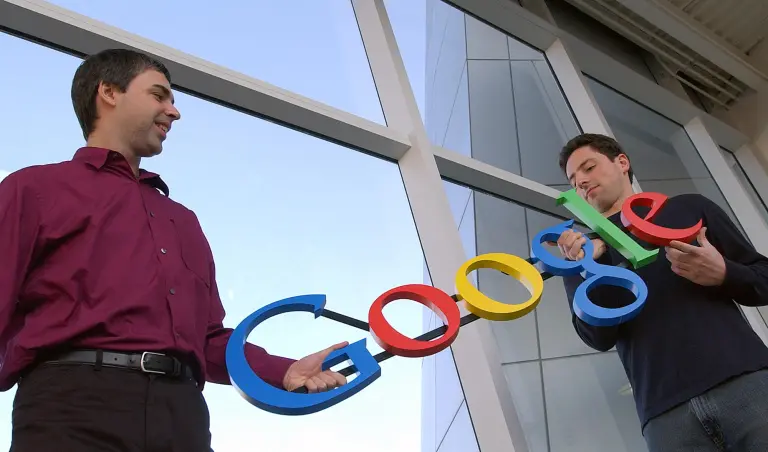
Reports that Larry Page and Sergey Brin are preparing to shift their residency out of California have intensified the debate. The founders of Google have long benefited from California’s innovation ecosystem, which includes public university research pipelines, tax incentives, and infrastructure that helped turn Silicon Valley into a global technology hub.
Nixon described the decision to distance themselves from the state as deeply disappointing, arguing that California’s policies and investments played a central role in the success of companies like Google. Over the past decade, the state has doubled down on partnerships with major technology firms, including agreements signed in 2025 with Adobe, IBM, and Microsoft to expand artificial intelligence education across public institutions.
Not all tech leaders share Page and Brin’s stance. Jensen Huang, chief executive of Nvidia, has publicly said that leaving California over taxes never crossed his mind, underscoring the diversity of opinion even within Silicon Valley.
Healthcare costs drive the policy debate
Support for the California wealth tax also comes from philanthropists and former policymakers who frame the proposal as a response to mounting healthcare pressures. Maureen Kennedy, a Marin County resident and fellow member of Patriotic Millionaires, points to rising medical costs as a central justification for the bill.
Healthcare spending in California has been rising faster than wages, straining both employers and public programs. This pressure has been compounded by federal changes, including cuts to Medicaid funding under the One Big Beautiful Bill Act, which is expected to result in millions of Californians losing Medi-Cal coverage over the coming years.
Kennedy argues that while high-income workers already contribute a significant share of their earnings to state taxes, billionaires often face lower effective tax rates. Research published in 2025 by the National Bureau of Economic Research found that billionaires paid a lower average tax rate than both top earners and the general population during recent years.
A question of responsibility
Supporters of the proposal emphasize that the tax is explicitly one time, designed to address immediate funding gaps rather than permanently alter California’s tax structure. For them, the issue is less about punishment and more about participation.
As lawmakers prepare for what is likely to be an intense legislative and legal battle, the California wealth tax debate highlights a broader national question: whether extreme wealth carries a proportional responsibility to support the systems that helped create it. In California, at least, that question is no longer theoretical. It is becoming a defining test of the state’s economic identity.