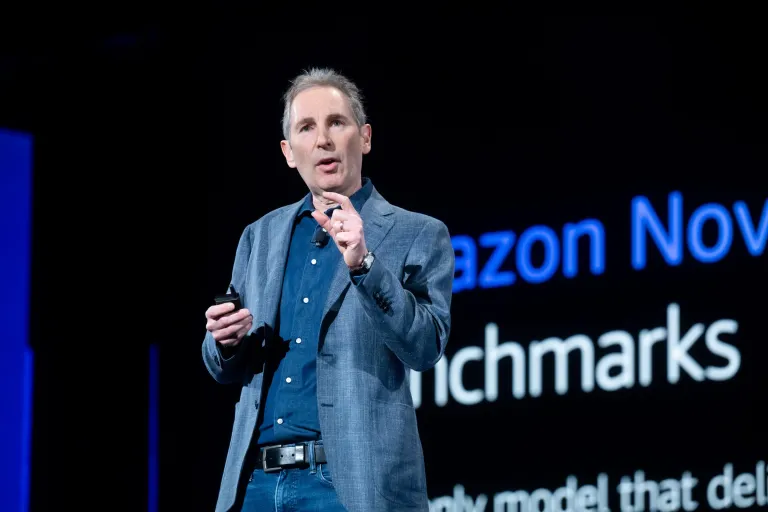
Six months after downplaying the near-term impact of tariffs, Andy Jassy is striking a notably different tone. The chief executive of Amazon now says American consumers should prepare for higher prices in 2026 as the cost of tariffs increasingly flows through the retail supply chain.
Speaking with CNBC during the annual World Economic Forum in Davos, Switzerland, Jassy said the price effects of tariffs are no longer theoretical. According to him, the pressure is already appearing across Amazon’s vast marketplace, though the pace and extent vary by seller.
“You start to see some of the tariffs creep into some of the prices,” Jassy said, explaining that sellers are responding in different ways. Some are passing higher costs directly to customers, others are absorbing them to maintain demand, and many are choosing a middle path.
A reversal from earlier tariff messaging
The comments mark a shift from Jassy’s position last summer, when he argued that reports tying tariffs to higher retail prices were overstated and premature. At the time, the tariff environment was still evolving, and the most sweeping measures had yet to be enacted.
That changed in August, when President Donald Trump implemented a new round of reciprocal tariffs on dozens of countries. The move significantly expanded the scope of trade duties and accelerated their impact on imported goods, particularly in categories heavily represented on Amazon’s platform.
In May, anticipating the policy shift, Jassy publicly encouraged third-party sellers to stockpile inventory ahead of the tariffs. Amazon also built up its own inventory to help buffer customers from sudden price increases. According to Jassy, those inventories were largely depleted by the fall, leaving sellers exposed to higher input costs just as consumer demand softened.
Why prices are harder to contain now
Jassy emphasized that retail economics leave little room to maneuver once costs rise sharply. Amazon operates in a low-margin environment, where even modest increases in expenses can quickly ripple through to consumers.
“Retail is a mid-single-digit operating margin business,” Jassy said. “If people’s costs go up by 10 percent, there aren’t a lot of places to absorb it.”
The broader data supports his assessment. Tariffs have generated roughly $200 billion in revenue for the U.S. Treasury, but recent economic studies suggest that American consumers ultimately bear the vast majority of those costs. Analysts estimate that nearly all tariff-related expenses are passed down through higher prices rather than absorbed by companies or foreign exporters.
Seller pressure and platform enforcement
The strain is especially visible among Amazon’s third-party sellers, which number more than two million globally. Many rely on overseas manufacturing, including China, where tariffs have significantly raised sourcing costs.
Some merchants say efforts to raise prices in response have triggered penalties on the platform. In several cases reported previously, Amazon removed prominent “Add to Cart” or “Buy Now” buttons after sellers increased prices, sharply reducing sales volume. Amazon has long argued that these measures are designed to prevent price gouging and maintain competitive pricing for customers.
That practice is now under scrutiny as part of an ongoing antitrust case brought by the Federal Trade Commission. Regulators allege that Amazon’s pricing controls may unfairly disadvantage sellers and limit competition, particularly during periods of rising costs.
Fewer levers left to pull
Jassy acknowledged that Amazon’s ability to shield customers from price increases is more limited than in previous cycles. While the company continues to negotiate with suppliers and logistics partners, the combination of tariffs, labor costs, and transportation expenses has narrowed the available options.
“We’re going to do everything we can to work with our selling partners to make prices as low as possible for consumers,” Jassy said. “But you don’t have endless options.”
As 2026 approaches, Amazon’s message is clear: the delayed effects of tariffs are becoming unavoidable. For consumers, that likely means higher prices across a range of everyday products, underscoring how trade policy decisions can take months or even years to fully register at the checkout counter.