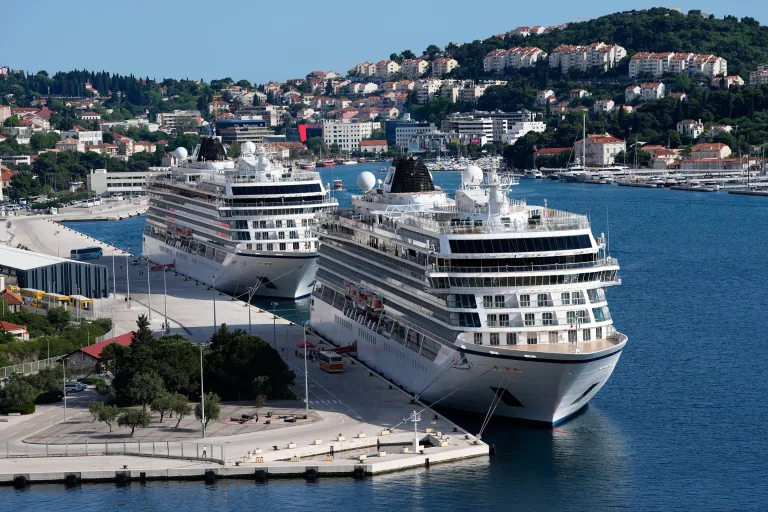
Croatia’s flagship tourist destination is entering its peak season under a cloud of geopolitical and economic uncertainty, raising questions over whether Dubrovnik can match last year’s record visitor numbers. The Dubrovnik tourism outlook has become less predictable as tensions linked to the war in Iran push up fuel prices and threaten global travel demand, particularly for long-haul visitors.
Despite strong early indicators, including a rise in arrivals over Easter, officials in the Adriatic city warn that external pressures, especially higher aviation costs, could disrupt momentum. Tourism remains a central pillar of Croatia’s economy, making any slowdown in visitor flows a broader economic concern.
Early Season Growth Masks Underlying Risks
Dubrovnik has started 2026 on a positive note. Airport traffic during the Easter period rose by 13% compared with the same period last year, suggesting continued demand for the UNESCO-listed coastal city. Its medieval architecture, coastal setting, and association with the television series Game of Thrones continue to draw international attention.
However, industry figures are cautious about extrapolating early gains into the summer months. Miro Draskovic, director of the city’s tourist board, said the situation remains volatile. While visitors from the United States continue to travel in strong numbers, some long-haul markets are showing strain. Australian tourists, traditionally among the top ten visitor groups, are encountering increased difficulty reaching Europe.
The city’s reliance on air travel heightens its exposure to global fuel dynamics. Around 80% of visitors arrive by plane, making ticket prices a key variable. Marina Ruso Mileusnic, a spokesperson for Dubrovnik Airport, said authorities are closely monitoring developments ahead of the summer season, noting a cautious stance despite current activity levels.
Fuel Supply Concerns and Policy Signals
Uncertainty has been compounded by mixed signals from energy and transport officials. In early April, International Energy Agency executive director Fatih Birol warned Europe could face a severe jet fuel shortage within weeks, potentially triggering a wider energy crisis.
More recently, European Union Transport Commissioner Apostolos Tzitzikostas sought to calm concerns, stating there is no evidence of immediate shortages across the bloc. Authorities have encouraged travelers to proceed with holiday plans, aiming to prevent a drop in bookings driven by fear rather than actual supply constraints.
On the ground, some travelers are already adapting. Singapore-based businessman Ramon Padiernos said he changed airlines due to disruptions affecting Middle Eastern carriers but still completed his trip. “We feel the impact maybe of oil prices but I think everybody just goes on with their lives and enjoy their holidays,” he said.
Tourism’s Role in Croatia’s Economy
The stakes extend beyond Dubrovnik itself. Croatia recorded nearly 22 million tourist arrivals in 2025, generating about 110 million overnight stays. Dubrovnik alone accounted for 4.28 million of those stays, underlining its importance within the national tourism sector.
Tourism contributes roughly 20% of Croatia’s GDP, according to the World Travel and Tourism Council, making it one of the most tourism-dependent economies in Europe. This concentration leaves the country particularly exposed to external shocks such as energy price spikes or geopolitical disruptions.
Recent inflation data highlights the broader economic impact. Consumer prices in Croatia rose 5.8% in April, among the highest rates in the European Union. Energy costs have been a significant driver, feeding through to transportation and hospitality expenses.
A comparable situation emerged during the post-pandemic recovery period in 2022, when rising airfares briefly dampened long-haul travel demand across Southern Europe. At the time, destinations heavily reliant on flights experienced more volatility than those accessible by road or rail, a pattern that could repeat if fuel prices remain elevated.
What to Watch as Peak Season Approaches
The coming weeks will be critical in determining whether Dubrovnik can sustain its early momentum. Airlines’ pricing strategies, fuel availability, and geopolitical developments will all influence booking trends for the peak summer months.
Local officials are preparing for multiple scenarios, balancing optimism with caution. Draskovic said authorities are taking a day-by-day approach as conditions evolve.
For investors and tourism operators, the key signal will be whether demand from long-haul markets holds steady despite rising costs. If it does, Dubrovnik could still approach last year’s visitor levels. If not, the city may face a more uneven season than recent years.