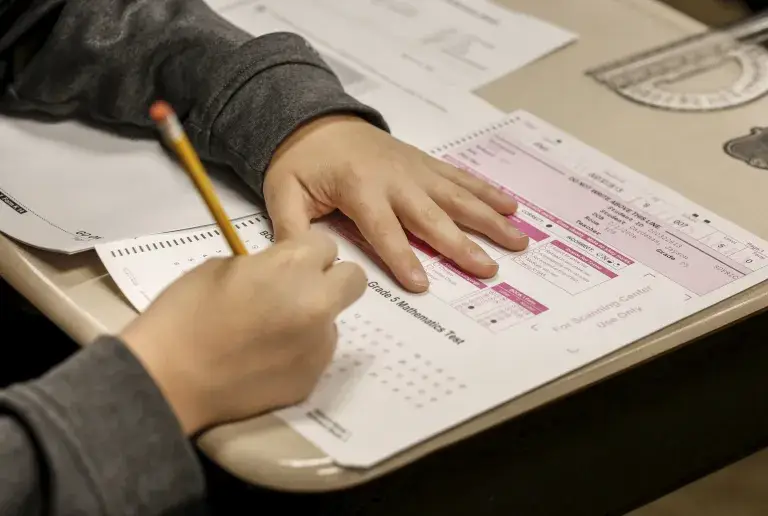
When Straight A’s Lose Their Edge
Grade inflation among high school students is rising, but new evidence suggests the long-term payoff may be weaker than expected. A recent working paper from the National Bureau of Economic Research finds that Gen Z grade inflation future earnings outcomes are negatively linked, with easier grading tied to reduced income later in life.
The study shows that when teachers award higher grades than performance justifies, students often invest less time in learning. Over time, this reduced effort translates into lower academic achievement and weaker labor market outcomes. For each grade increase, such as moving from a B to a B+, researchers estimate a decline of roughly $150 in annual earnings per student.
“Easy A’s” and Long-Term Trade-Offs
The research was led by Nolan Pope, a labor economist at the University of Maryland, who examined high school records from Los Angeles and Maryland. By comparing grades with standardized test scores, the study identified patterns of inflated grading and tracked students’ long-term outcomes.
Pope found that students exposed to lenient grading were more likely to skip classes and perform worse on subsequent tests. These behavioral shifts suggest that inflated grades may reduce incentives to engage deeply with coursework.
At a broader level, the cumulative financial impact is significant. For a typical classroom, grade inflation could reduce total lifetime earnings by more than $200,000. While the effect per student may appear modest annually, the long-term consequences compound over decades.
A Policy Debate Reaches Washington
The findings arrive as policymakers increasingly scrutinize academic standards. President Donald Trump has proposed linking federal funding for universities to stricter grading policies, aiming to curb grade inflation in higher education.
The issue also intersects with broader concerns about educational outcomes. Some studies indicate that Gen Z students are underperforming previous generations in areas such as reading and cognitive skills. Analysts point to shifting habits, including reduced reading engagement and greater reliance on grading metrics over mastery of material.
This evolving landscape raises questions about the value of academic credentials. If high grades become more common without corresponding skill development, their signaling power in the labor market may weaken.
Hidden Costs Beyond Paychecks
The consequences of grade inflation extend beyond earnings. The study found that students receiving inflated grades were more likely to experience increased absences and disciplinary issues, including suspensions.
Lower academic standards may contribute to disengagement, as students perceive less need to meet rigorous expectations. Over time, this can affect graduation rates and college enrollment, both of which are critical determinants of future economic mobility.
However, the research also highlights an important nuance. Students at risk of failing may benefit from modest grade increases. In cases where a failing grade is lifted to a passing one, students are more likely to stay in school and graduate, suggesting targeted interventions can be effective.
Why Grade Inflation Persists
Despite its drawbacks, grade inflation continues to spread across educational systems. The incentives are aligned in ways that make the practice difficult to reverse.
Teachers face fewer complaints when awarding higher grades. Parents and students are more satisfied, and schools benefit from improved performance metrics. These short-term advantages create a system where inflated grading becomes normalized, even if it undermines long-term outcomes.
As Pope notes, the negative effects often emerge years later, making them less visible to educators and families at the time decisions are made.