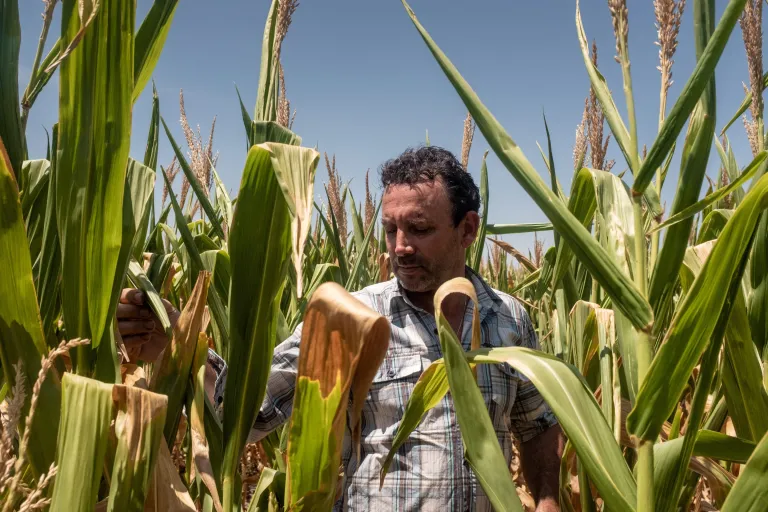
U.S. agriculture is entering the 2026 planting season under intensifying pressure as fertilizer prices soar following disruptions tied to tensions around the Strait of Hormuz. For farmers already dealing with weak crop prices, tighter credit conditions, and the aftereffects of trade policy shifts, the jump in input costs is creating a new layer of uncertainty at one of the most important moments of the year.
The latest shock is especially significant because the Strait of Hormuz remains one of the world’s most critical shipping corridors for fertilizer. A large share of globally traded urea and ammonia, both essential crop nutrients, moves through the region. As supply concerns have deepened, fertilizer prices have climbed sharply in recent weeks, forcing U.S. producers to revisit planting and purchasing decisions that were already financially fraught.
Why higher fertilizer costs matter now
Timing is the central issue. Spring planting decisions are often made within a narrow window, and fertilizer applications are closely linked to crop choice. Corn is particularly exposed because it requires heavier nutrient use than crops such as soybeans. That means when fertilizer prices soar, the economics of planting corn can deteriorate quickly, especially in an environment where crop prices remain subdued.
That pressure is landing on farms that have had little room for error. Margins across much of U.S. agriculture have been compressed for months, with grain prices falling sharply from recent highs while chemical and input costs remain stubbornly elevated. For many producers, this season is not simply about preserving profits. It is about avoiding losses that could further strain already fragile balance sheets.
Some farmers secured fertilizer earlier and may be partly insulated from the latest run-up. Others, however, delayed purchases, either in hopes that prices would ease or because financing decisions had not yet been finalized. Those growers now face a difficult question, whether to buy at a much higher cost or change acreage plans to reduce exposure.
Corn or soybeans, which way will acres move?
One of the clearest implications of the current market shift is the possibility of acreage moving away from corn and toward soybeans or other crops that require fewer nutrient inputs. While corn remains foundational to the U.S. farm economy, it is also one of the more expensive major crops to grow when fertilizer markets tighten.
That does not mean a sweeping reallocation is guaranteed. Government support programs and crop-specific subsidies may still influence what farmers decide to plant. But the underlying calculation is becoming harder to ignore. If expected corn revenue does not justify the rising cost structure, shifting some acres becomes a practical risk-management move rather than a strategic preference.
The issue is compounded by oversupply concerns in some commodity markets. Farmers are not only weighing higher input prices, they are also asking whether the crops they plant will generate acceptable returns in a market where selling prices remain under pressure. In that context, every additional cost increase matters more than it would during a stronger commodity cycle.
A farm economy already under strain
The rise in fertilizer prices comes after several years of stress in rural America. Farm finances have been squeezed by declining crop prices, limited relief in operating costs, and trade-related disruptions that raised the price of equipment, chemicals, seeds, and other inputs. In some regions, producers have reported postponing purchases while waiting for credit lines, aid details, or clearer market signals.
That strain has been visible in bankruptcy data as well, with Chapter 12 farm filings rising over the past year. For many operations, the challenge is cumulative. No single shock is necessarily decisive on its own, but a series of higher costs and weaker returns can erode resilience over time. This latest fertilizer spike lands in the middle of that broader cycle.
Federal support may soften some of the blow. Assistance programs tied to higher input costs and weaker export demand could help stabilize cash flow for certain operations. Even so, aid tends to relieve pressure rather than remove it entirely. Farmers still have to make field-level decisions in real time, often before broader policy relief reaches the farm gate.
Echoes of Ukraine, but with a different market risk
The current moment has drawn comparisons to the surge in fertilizer and energy costs that followed Russia’s invasion of Ukraine in 2022. That episode also disrupted major fertilizer flows and sent prices higher. But there is an important difference this time. During the Ukraine shock, grain prices also rose, giving many farmers at least some opportunity to offset higher production costs through stronger crop revenue.
Now, that offset may be harder to find. Iran is not a major grain supplier in the way the Black Sea region is, so the fertilizer disruption may not be matched by a comparable rise in grain prices. That leaves producers exposed to the worst version of the equation, elevated input costs without a meaningful lift in the value of what they harvest.
Even if tensions in the Middle East ease quickly, fertilizer markets may not normalize at the same pace. Agricultural input prices often jump rapidly after a disruption and decline much more slowly. For farmers heading into spring, that means the current shock could affect decisions well beyond the immediate headlines, shaping acreage, profitability, and financial stability throughout the 2026 crop year.