Gold prices surged to fresh record highs this week as investors responded to a sharp decline in the U.S. dollar and renewed concerns about America’s standing in the global financial system. The rally comes as President Donald Trump publicly dismissed worries about a falling dollar, reinforcing what strategists increasingly describe as a narrative of relative U.S. decline.
Gold prices rise as dollar weakens, a relationship on full display after bullion climbed above $5,300 an ounce and posted gains of more than 22% so far this year. On Tuesday alone, gold jumped roughly 3%, according to Comex continuous contract data, underscoring the scale of investor demand for perceived safe assets.
A weaker dollar, by design
The U.S. dollar fell more than 1% in a single session against a basket of major currencies and is down over 2% year to date. The euro is now trading around $1.20, while the British pound has strengthened to roughly $1.38, levels not seen for several years.
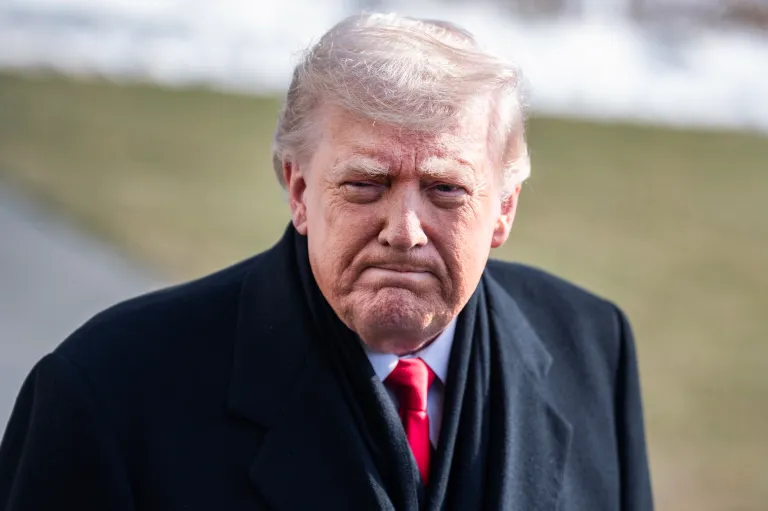
President Trump signaled little concern about the move. Speaking to reporters on the White House lawn, he said he was comfortable with a weaker dollar and argued that U.S. economic activity remained strong. The administration’s logic is straightforward, a cheaper dollar can make American exports more competitive and U.S. assets more attractive to foreign buyers.
That view, however, is unsettling some global investors who worry that sustained dollar weakness could have broader implications beyond trade.
UBS warns about confidence and capital flows
Strategists at UBS say the immediate risk is not a sudden collapse in the dollar’s role as the world’s primary reserve currency, but a gradual erosion of confidence. Paul Donovan, UBS’s chief economist, has warned clients that international investors are increasingly questioning U.S. governance, policy predictability, and long-term stability.
Gold prices rise as dollar weakens partly because investors are hedging against those doubts. Donovan noted that while reserve status is unlikely to disappear overnight, the dollar may continue to lose market share as global trade slows and diversification accelerates. In that environment, U.S. bonds, rather than inflation-linked assets, could be the most vulnerable to sustained dollar weakness.
UBS also cautioned that the perception of relative U.S. decline could influence capital flows, prompting investors to limit additional exposure to dollar-denominated assets rather than exit them outright.
Policy uncertainty weighs on the greenback
Other analysts point to erratic U.S. policymaking as a key driver behind the dollar’s recent slide. George Vessey, lead FX and macro strategist at Convera, said investors are reassessing the risk premium attached to the dollar and rotating toward alternatives or increasing currency hedges.
At ING, global head of markets Chris Turner said the speed of the selloff has surprised many desks. He suggested the dollar could fall another 3% if upcoming Federal Reserve communications fail to restore confidence. While a pause in interest rate policy could offer temporary support, Turner warned that weak rebounds would signal deeply bearish momentum for the greenback.
“It is now up to the dollar to prove otherwise,” Turner wrote, noting that recent moves are difficult to justify purely on economic fundamentals.
Gold shines, Bitcoin lags
The surge in gold has also revived debate about its role relative to digital assets. Central banks have continued to add bullion to their reserves as a hedge against currency volatility, reinforcing gold’s traditional role as a store of value.
Bitcoin, by contrast, has failed to benefit from the same dynamics. The cryptocurrency was trading near $89,400, well below its previous highs and down more than 13% over the past year. Yardeni Research recently summed up the shift with a pointed question, is gold replacing Bitcoin as the preferred hedge against monetary instability?
Stocks rise, but foreign investors feel the hit
Despite currency turbulence, U.S. equities continue to climb. The S&P 500 closed at a record high, approaching 7,000, and futures pointed higher again. Yet for international investors, dollar losses erased much of those gains, highlighting how currency moves can outweigh equity performance.
Taken together, markets appear to be pricing in a mixed outlook. Investors are betting that a weaker dollar could support corporate earnings and exports, while simultaneously buying gold as insurance against the risk that confidence in U.S. financial leadership continues to erode.