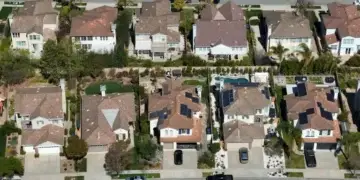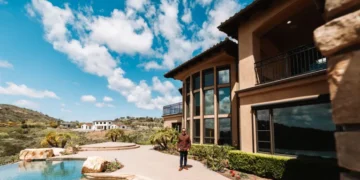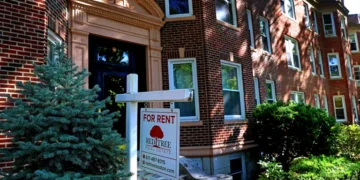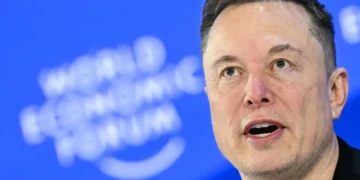
When luxury real estate executive Ryan Serhant recently dismissed homeownership as a marketing slogan invented by banks, his comments struck a nerve in a housing market already defined by frustration. With prices elevated and mortgage rates still hovering around 6%, the idea that owning a home represents the American Dream feels increasingly distant for many Americans.
“I think it was a slogan created by banks to create interest income on home loans,” Serhant said in a recent interview. He compared homeownership to student debt, arguing both became social expectations designed to generate long-term interest payments.
The claim resonated with younger renters and first-time buyers, but it runs counter to the historical roots of the American Dream and the modern mortgage system, which emerged not from private banking strategy, but from federal intervention during economic crisis.
A Market That Makes Skepticism Understandable
Serhant’s skepticism is rooted in current reality. Home prices are more than 40% higher than before the pandemic, and many buyers are still psychologically anchored to the sub-3% mortgage rates of 2020 and 2021. First-time buyers now account for just over one-fifth of transactions, and the average age of a first-time buyer reached a record 40 in 2025.
According to the National Association of Realtors, the share of first-time buyers has fallen by roughly half compared with levels seen before the Great Recession. Limited inventory, higher borrowing costs, and wage growth that has failed to keep pace with housing prices have reshaped the path to ownership.
From that perspective, questioning whether American Dream homeownership is still attainable is not controversial. Suggesting it was invented by banks, however, oversimplifies a far more consequential chapter of U.S. economic history.
The American Dream Was Forged in Crisis, Not Marketing
The phrase “American Dream” entered public consciousness in 1931, when historian James Truslow Adams described a nation where opportunity was available to all, regardless of background. That vision emerged during the depths of the Great Depression, when mass unemployment, foreclosures, and bank failures threatened confidence in capitalism itself.
At the time, mortgages bore little resemblance to today’s system. Loans often lasted five to ten years, required down payments of 50%, and ended with balloon payments that many households could not refinance. When the economy collapsed, millions lost their homes.
The federal government responded. Under President Franklin D. Roosevelt, New Deal programs restructured housing finance to stabilize both families and the financial system. New institutions extended loan terms, reduced down payments, and introduced long-term amortization. These changes made homeownership more accessible, not as a profit strategy for banks, but as a tool for economic recovery.
The link between the American Dream and homeownership emerged organically from this period, as rising ownership helped rebuild household balance sheets and restore faith in long-term growth.
How Policy Cemented Homeownership as Wealth Strategy
After World War II, federal policy further entrenched housing as a pillar of middle-class wealth. The GI Bill allowed millions of returning veterans to purchase homes with little or no money down, accelerating suburban development and pushing ownership rates sharply higher.
Secondary mortgage markets improved liquidity, while government-backed guarantees reduced lender risk. By the early 2000s, homeownership peaked near 69%, reinforcing the idea that buying a home was both a cultural milestone and a financial strategy.
That narrative fractured during the 2008 financial crisis. Lax underwriting, speculative excess, and securitization failures led to mass foreclosures and stricter lending standards. Homeownership rates fell and never fully recovered, and builders scaled back for years, contributing to today’s estimated housing shortage.
The result is a market where many owners feel locked into low-rate mortgages and would-be buyers are priced out entirely, fueling generational divides over whether ownership still delivers security or mobility.
Renting Longer, Owning Later, and Rethinking the Dream
Today, American Dream homeownership competes with alternative financial philosophies. Some investors argue that renting longer can preserve flexibility and reduce hidden costs such as maintenance, insurance, and property taxes. Others see ownership as increasingly viable only for higher earners or dual-income households.
What has changed is not the origin of the American Dream, but the conditions under which it can be pursued. The dream was never a bank slogan. It was a policy response to economic collapse, later amplified by decades of growth and stability.
Whether homeownership remains the right vehicle for that dream in today’s economy is an open question. History suggests the concept was built to evolve, not to guarantee a single outcome for every generation.