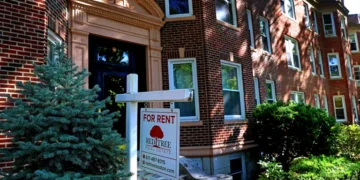
President Donald Trump says he wants to prevent the United States from becoming “a nation of renters,” but economists and housing experts warn that at least one part of his housing agenda could make homeownership harder to reach.
Speaking this week at the World Economic Forum in Davos, Switzerland, Trump promoted a series of executive actions aimed at lowering housing costs. His comments positioned the Trump housing plan homeownership strategy as a centerpiece of his economic message to business leaders and policymakers.
Yet while some proposals target long-standing affordability concerns, experts say others may unintentionally raise prices or increase financial risk for households already struggling to save.
A pledge to curb Wall Street’s role in housing
At Davos, Trump criticized institutional investors for buying large numbers of single-family homes, arguing that corporate ownership has pushed prices out of reach for families. He said he would like to permanently ban institutional investors from purchasing single-family homes, urging Congress to turn his executive action into law.
Trump also proposed using government-backed mortgage firms Fannie Mae and Freddie Mac to purchase $200 billion in mortgage-backed securities, a move intended to help lower mortgage rates.
The president framed these measures as a way to restore fairness to the housing market, arguing that individual buyers are disadvantaged when competing with large investors that benefit from tax rules such as depreciation.
The 401(k) proposal raising the most concern
One policy not emphasized in Trump’s Davos remarks has drawn the sharpest criticism from experts, a proposal to allow Americans to tap their 401(k) retirement savings for down payments.
The average down payment is now close to 19 percent of a home’s price. With the median U.S. home price around $428,000, according to Redfin, buyers often need more than $80,000 upfront.
Under current rules, first-time buyers can withdraw up to $10,000 from an IRA without penalty, but employer-sponsored 401(k) plans generally impose a 10 percent penalty for early withdrawals. Trump’s proposal would change that structure, though it would likely require congressional approval and changes to the tax code.
Supporters argue the policy could help first-time buyers access liquidity. Data from the National Association of Realtors show that first-time buyers now make up roughly half the share they did a decade ago, and many already rely on loans or family assistance for down payments.
Risk concentration and long-term consequences
Economists caution that using retirement savings to buy a home concentrates risk in a single asset. Housing prices do not always rise, as demonstrated during the 2008 financial crisis. A significant market downturn could leave households with diminished retirement savings and little or no home equity.
There is also concern that increasing buyers’ purchasing power without increasing housing supply could drive prices higher. Limited inventory remains a central problem, with many homeowners reluctant to sell homes financed at pre-pandemic interest rates.
“More buyers chasing the same number of homes usually means higher prices,” one finance professor noted, warning that the policy could benefit a small group while leaving overall affordability unchanged or worse.
Retirement security versus housing access
Retirement experts are particularly wary of encouraging early withdrawals. The Federal Reserve reports that Americans aged 45 to 55 had median retirement savings of about $115,000 in 2022, well below what many planners recommend.
Hardship withdrawals are already rising. Vanguard data show an increase in retirement plan withdrawals in recent years, reflecting broader financial stress among households.
Critics argue that making retirement funds easier to access may worsen long-term financial insecurity, even if it helps some buyers in the short term.
A familiar tension in housing policy
The debate highlights a core tension in the Trump housing plan homeownership agenda, balancing short-term affordability with long-term financial stability. While Trump’s proposals speak to widespread frustration over housing costs, experts say meaningful progress will require addressing supply constraints and protecting retirement security at the same time.