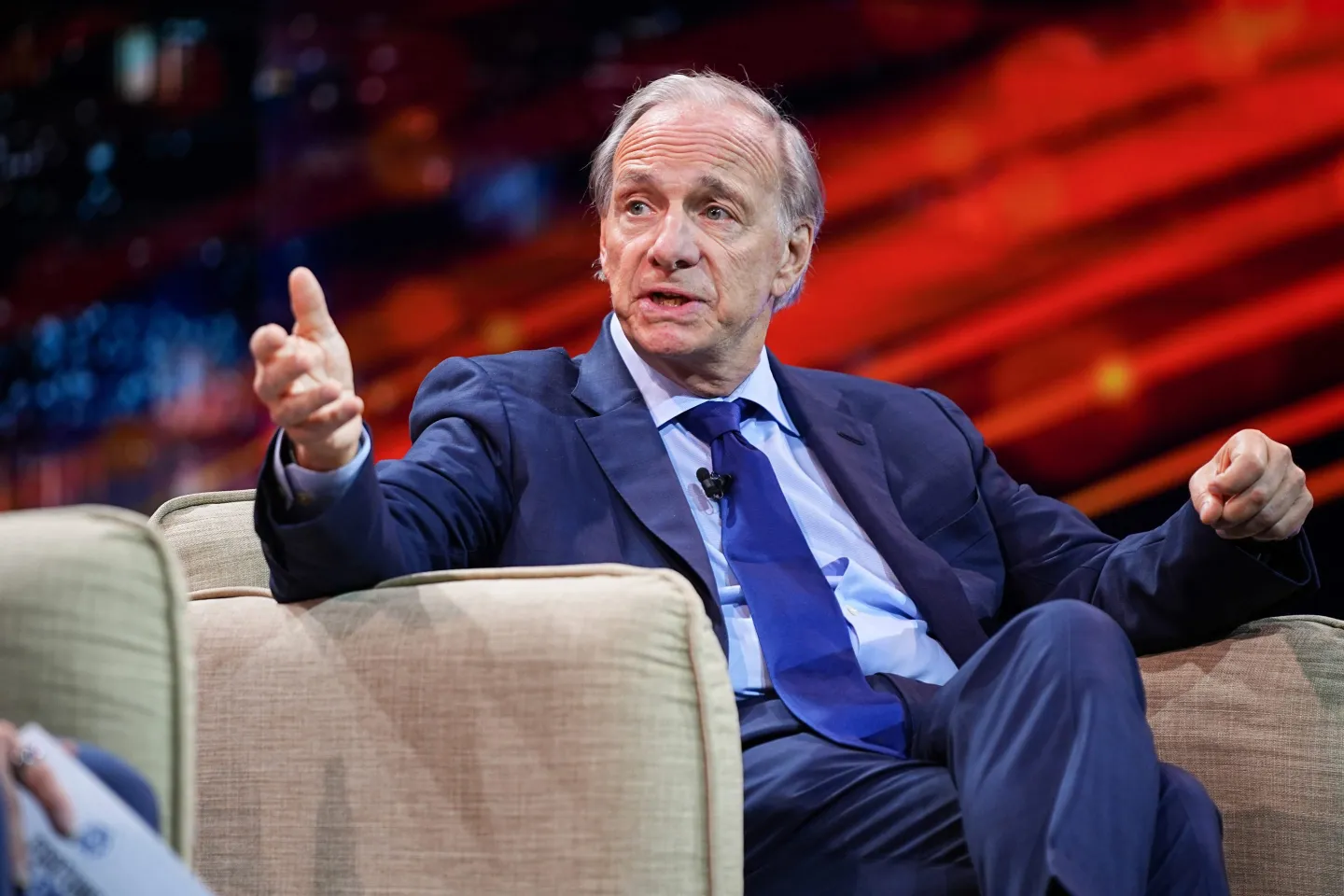
Ray Dalio, the founder of Bridgewater Associates, delivered a blunt message to global leaders this week, the global rules-based order that shaped business, diplomacy, and capital flows for decades no longer exists. Speaking at the World Economic Forum in Davos, Dalio urged policymakers and executives to stop assuming that postwar norms still govern global affairs.
“Let’s not be naive,” Dalio said during a conversation with Fortune’s Kamal Ahmed. “People talk as if we are breaking the rule-based system. It’s already gone.”
His remarks came as geopolitical tensions intensified following renewed statements from Donald Trump about U.S. ambitions toward Greenland and his broader willingness to challenge long-standing alliances. For Dalio, however, these flashpoints are symptoms rather than causes of a much deeper structural shift.
History repeats, especially in money
Dalio framed today’s instability through the lens of long-term financial history. As a student of economic cycles stretching back roughly 500 years, he argues that periods of monetary expansion, debt accumulation, and political conflict tend to follow familiar patterns.
According to Dalio, the current chapter began in 1971, when the United States abandoned the gold standard under President Richard Nixon. Since then, governments have repeatedly chosen to create money rather than allow debt crises to fully unwind. Over time, this has distorted incentives, inflated asset prices, and weakened confidence in fiat currencies.
The result, Dalio said, is a breakdown of the global monetary order. Central banks are quietly adjusting their balance sheets, reducing reliance on traditional reserve assets and increasing exposure to gold. In his view, this shift signals declining trust in sovereign debt as a stable store of value.
From trade wars to capital wars
One of Dalio’s central warnings is that geopolitical rivalry is moving beyond tariffs and trade restrictions into what he calls “capital wars.” For decades, U.S. Treasury bonds formed the backbone of global reserves. That dynamic is now under strain as the supply of U.S. debt rises and foreign demand shows signs of fatigue.
“There’s a supply-demand issue,” Dalio said, noting that allies may no longer be as willing to hold each other’s debt during periods of political friction. In such an environment, countries turn inward, monetizing their own obligations and relying more heavily on domestic buyers.
This transition, Dalio argued, undermines the assumption that global capital will always flow freely toward the largest and most liquid markets. For investors and corporations, it raises fundamental questions about currency exposure, jurisdictional risk, and long-term planning.
The limits of multilateral institutions
Dalio also challenged the effectiveness of the institutions created after World War II, including the United Nations and the World Trade Organization. While these bodies were designed to promote cooperation, he described them as inherently fragile because they rely on voluntary compliance rather than enforceable authority.
“What happens when the leading power doesn’t want to abide by the vote?” Dalio asked. In his assessment, the world is shifting from a multilateral system toward a more unilateral one, where power determines outcomes more than legal frameworks.
This erosion of shared rules, he warned, affects not only international relations but also domestic politics. Rising populism, declining trust in institutions, and the perception that systems are rigged all contribute to a weakening of democratic norms.
What business leaders should do now
For corporate boards and CEOs accustomed to predictable legal protections, Dalio said denial is the greatest risk. Instead of relying on abstract rules, he advised leaders to focus on practical questions of jurisdiction, alignment, and resilience.
That includes operating in regions with like-minded partners, diversifying supply chains, and rethinking assumptions about currency stability. Dalio also pointed to gold’s reemergence as a strategic reserve asset, echoing recent comments from JPMorgan CEO Jamie Dimon that holding gold has become a rational portfolio choice.
Despite the severity of his warning, Dalio does not see the future as uniformly bleak. He described the current moment as a split between a declining monetary order and a powerful technological transformation that could drive productivity and growth.
The danger, he concluded, lies not in change itself but in refusing to acknowledge it. “What always scares me,” Dalio said, “is the lack of realism.”