A small town with an outsized concentration of wealth
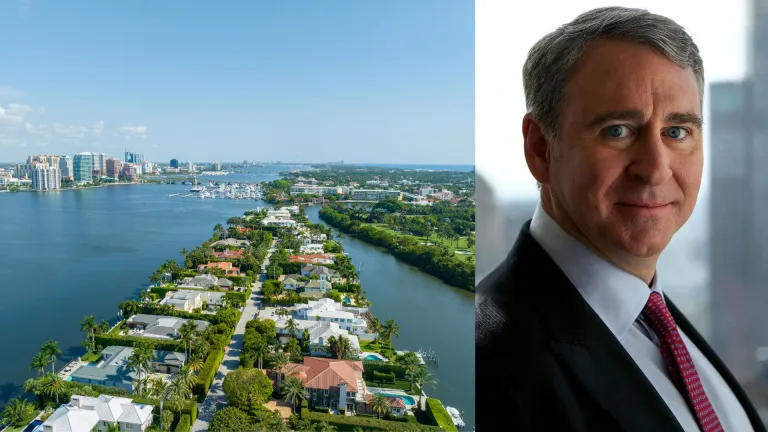
Florida’s transformation into a hub for ultra-high-net-worth individuals has been well documented, but few places illustrate the shift as clearly as Palm Beach. The oceanside enclave, often referred to as Billionaire’s Beach Palm Beach, has quietly become one of the most concentrated centers of private wealth in the United States.
Estimates suggest Palm Beach is home to roughly 67 billionaires, drawn by its Atlantic coastline, strict zoning rules that protect privacy, and a long-standing culture of discretion. South Ocean Boulevard, sometimes called Billionaire’s Row, is the most visible symbol of that appeal. Lined with palm trees and guarded estates, the stretch hosts some of the most expensive residential real estate in the country.
Listings regularly exceed $30 million, with recent offerings ranging from $37 million to more than $79 million for sprawling beachfront compounds. These prices, once considered exceptional, have increasingly become part of Palm Beach’s new normal.
Can a single home redefine luxury pricing?
Even by local standards, plans from Ken Griffin stand apart. The founder and CEO of Citadel, whose net worth is estimated at $48.3 billion, has assembled nearly 20 acres of oceanfront land with the intention of building what could become a $1 billion private residence.
Construction estimates for the project range from $150 million to $400 million, but the land, scale, and ambition of the estate place it among the most expensive homes ever conceived. Once completed, the property is expected to rank among the priciest residences globally, not just in Florida.
Griffin’s future home sits roughly a quarter mile south of Donald Trump’s Mar-a-Lago Club, the 126-room estate that has long been one of Palm Beach’s most recognizable landmarks. The proximity underscores how closely wealth, influence, and political power intersect along this narrow strip of coastline.
Why billionaires cluster together
Palm Beach’s appeal extends well beyond architecture and ocean views. Florida’s lack of a state income tax remains one of the strongest financial incentives, particularly for hedge fund managers, private equity executives, and entrepreneurs whose earnings can reach into the hundreds of millions annually.
According to analysis of Forbes data by the Palm Beach Daily News, the combined net worth of the town’s wealthiest residents reached nearly $495 billion in 2024. That total includes figures such as Julia Koch and her family of Koch Industries, Blackstone CEO Stephen Schwarzman, Fidelity CEO Abigail Johnson, and hedge fund founder David Tepper.
Beyond tax efficiency, buyers cite stability and social alignment as key factors. Palm Beach offers a rare combination of financial advantages and social familiarity, where neighbors share similar lifestyles, security concerns, and expectations of privacy. For many buyers, the appeal lies as much in the community as in the property itself.
Prestige, privacy, and the ripple effect
The influx of billionaire buyers has reshaped the local real estate market. In 2023 alone, more than 80 properties sold for over $10 million in Palm Beach, reflecting both sustained demand and limited supply. Strict development rules and scarce oceanfront land have helped keep inventory tight, pushing prices higher with each new transaction.
High-profile purchases have reinforced the town’s global reputation. Fashion designer Tom Ford acquired a Palm Beach home for $51 million following the sale of his brand to Estée Lauder. Nearby Manalapan, just south of Palm Beach, set a state record when Larry Ellison, cofounder of Oracle, purchased a $173 million estate spanning 16 acres.
For Palm Beach, the concentration of extreme wealth brings both prestige and pressure. Property tax revenues have surged, while concerns about affordability and access have grown louder among long-term residents. Still, for now, the momentum shows little sign of slowing.
As global wealth continues to consolidate, Billionaire’s Beach Palm Beach stands as a clear example of how tax policy, lifestyle, and legacy status can reshape an entire community, one mega mansion at a time.