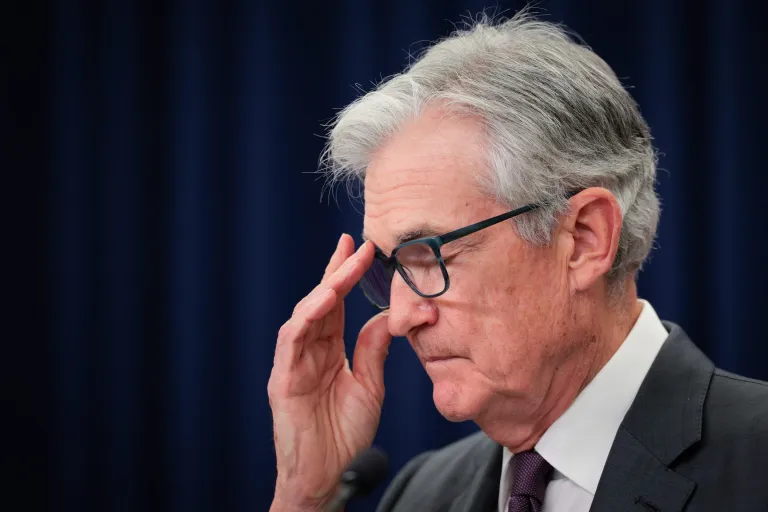
When Federal Reserve Chair Jerome Powell disclosed that the Department of Justice had opened a criminal investigation tied to a $2.6 billion renovation of the Fed’s Washington headquarters, markets initially braced for turmoil. The investigation was quickly framed by Powell as political pressure aimed at forcing interest rate cuts, a claim that heightened fears about central bank independence.
Yet the reaction that followed was notably restrained. Precious metals surged, but equities remained steady and the dollar moved only modestly. To economist Tyler Cowen, that calm response revealed something deeper than investor confidence. It suggested markets had already accepted a harsher reality: the Federal Reserve’s independence has been structurally weakened by the $38 trillion national debt, regardless of political drama.
Markets Reacted Less Than Expected, and That Matters
Cowen, a professor at George Mason University and author of the widely read Marginal Revolution blog, argued that the muted market response was not a sign of trust in political leadership. Instead, it reflected an understanding that the Fed’s autonomy has been eroding for years.
In Cowen’s view, the real damage was done through fiscal policy. Repeated budget deals, tax cuts, and persistent deficits have steadily narrowed the Fed’s practical room to maneuver. Even without overt interference, a heavily indebted government places implicit constraints on monetary policy.
At current debt levels, Cowen argues, the United States will eventually face strong incentives to tolerate higher inflation rather than impose higher taxes or deep spending cuts. That preference, he says, undermines central bank independence long before any public confrontation occurs.
Debt, Inflation, and the Limits of Monetary Choice
The logic is straightforward. Democracies with large debts tend to favor the least visible solution. Inflation, while painful, spreads the cost broadly and gradually. Higher taxes or aggressive austerity, by contrast, carry immediate political consequences.
Cowen’s view closely echoes the long-standing warnings of Ray Dalio, founder of Bridgewater Associates. Dalio has described a recurring “big cycle” in which heavily indebted nations exhaust their options and ultimately rely on inflation to reduce the real value of obligations.
Dalio has repeatedly argued that for the United States, default is implausible given the dollar’s role as the world’s reserve currency. Austerity on the scale required would also be politically untenable. Inflation, while damaging, becomes the path of least resistance.
Cowen has gone further, suggesting that the adjustment could involve several years of inflation well above the Federal Reserve’s stated target. Such a period would likely reduce living standards and increase unemployment, but it would also gradually shrink the debt relative to the size of the economy.
Privilege, Complacency, and Political Risk
Ironically, America’s economic dominance allows it to carry higher debt levels than most advanced economies. That privilege supports consumption and growth in the short term, but it also weakens fiscal discipline over time.
Cowen argues that this dynamic makes political pressure on the Fed easier to deploy. If markets believe inflationary outcomes are likely anyway, attempts to influence monetary policy may provoke less immediate backlash.
This tension is evident in the ongoing debate over interest rates. Political leaders often emphasize the near-term benefits of lower borrowing costs, particularly for housing affordability. But easier policy risks reinforcing inflationary pressures that are already elevated by structural deficits.
Can Productivity Save the Dollar?
There is one potential escape from this trajectory: a sustained surge in productivity. Advances in artificial intelligence could, in theory, raise economic growth enough to offset rising debt without resorting to prolonged inflation.
Cowen remains skeptical. He notes that large portions of the U.S. economy, including government, healthcare, education, and nonprofit sectors, have historically been resistant to productivity gains. While AI may improve efficiency at the margins, he doubts it will transform these sectors quickly enough to change the debt equation.
Recent data showing a burst of productivity growth has drawn attention from Wall Street economists, but many remain cautious about declaring a structural shift. Without broad-based gains, Cowen believes the debt clock will continue to outpace technological progress.
A New Era for Fed Independence
The deeper implication of the $38 trillion national debt is that debates over Federal Reserve independence may already be outdated. Formal mandates and institutional norms matter, but they cannot fully override the fiscal realities shaping policy choices.
Cowen’s warning is blunt. Concerns about political pressure on the Fed are justified, but they arrive late. In his view, the erosion of independence began years ago, driven less by personalities than by arithmetic.
The question now is not whether the Fed can remain independent in theory, but how markets and households adapt to a world where inflation risks are structurally embedded in the U.S. fiscal outlook.